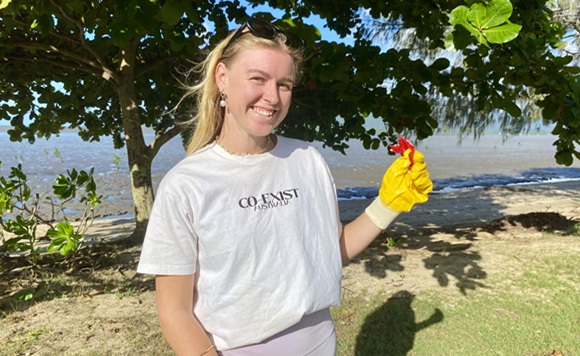
Co-exist Cairns: Next Generation of Coastal Carers
Co-exist Cairns is a new environmental (ad social) group for 18-30 year olds.

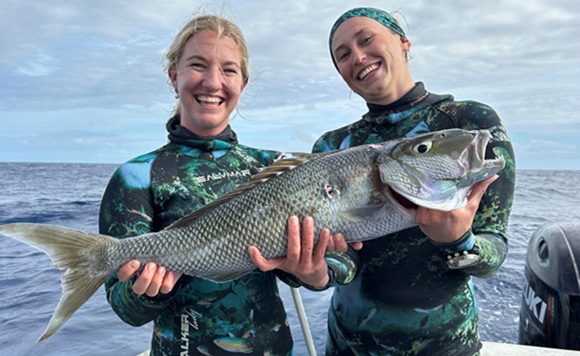
Where do you start with Ella Wagner? She’s enjoying a winning season of marlin fishing right now and she’s just been filmed for an upcoming television series.
But alongside the reef fishing is a passion for spearfishing that sees her spend as much time in the water as on it. So we’ll dive into that with her today:
Why spearfishing?
I was the kid who kissed fish and released them! When you’re under the water you actually see the reef life, the animals in their natural habitat. It’s a connection and appreciation that ties in with sustainable fishing.
What do you like to target?
When I’m reef spearfishing, it’s red emperor, nannygai, coral trout and tusker fish. In blue water, I’m looking for Mahi Mahi, Spanish mackerel, dog tooth tuna and job fish.
Most satisfying catch:
Probably a Mahi Mahi off the Daintree coast. I’d spent so much time in the water before that, watching their behaviour.
Do you have a standout experience?
Lots of them! One is spearfishing with friends in about 15 metres of water on the reef and watching whales come towards us with calves. They were so calm, sussing us out with their big eyes. The calves were on the other side of them, but they nosed them around and stayed next to us for ages. It was like they were showing them off to us. Whales underwater are amazing. You hear their ‘song’ before they come in. The size and nature of them – they make you feel so insignificant.
What sustainable fishing practices do you live by?
Spear-fishing is probably the most sustainable type of fishing – there is no by-catch, you can select the size and species and leave no trace. Knowing your species, the size limits, bag limits, closures and protected species is important. And avoiding obviously spawning fish or breeding aggregations. I live by taking only what I intend to eat. When we’re hosting line-fishing charters with families, we do half a day of snorkelling to see the fish, learn about ocean creatures and behaviours. When we are fishing it’s mostly catch and release because many visitors to Cairns are only here for a short time.
Top tips for spearfishing:
Look out for the clean water, the flat day, the right currents. Stay calm and relaxed – fish are more likely to move around you. And wait that extra moment before pulling the trigger. Be stealthy: Hide behind something, know where fish will be. Look for the pressure point of a reef. Go in with a dive buddy and always have their back. And respect your limits: Never push your breath hold. Don’t try to do your longest dive. You might need a reserve ‘tank’.
What about sharks?
We see a lot of them. 99% of the time they’re just big fish. You can tell if they’re looking for a meal or not – if their pectoral fin is up, if they’re swimming up high. The snap of the speargun rubbers can bring them in. They associate it with an easy feed. In deep water, targeting dog tooth tuna, spearfishing can really become a team sport. If it’s too sketchy, we leave. I’ve also been in shallow water at Jewel Reef with bull sharks all around us. My buddy and I went back-to-back and made our way back to the boat.
What keeps you going back for more?
The thrill never fades. I’ve got such an appreciation for the water, for where we’re getting this source of food from. And I love teaching people, watching them fall in love with being in and on the ocean as much as I have. Being out there is just as magical now as it was the first time.
Co-exist Cairns is a new environmental (ad social) group for 18-30 year olds.
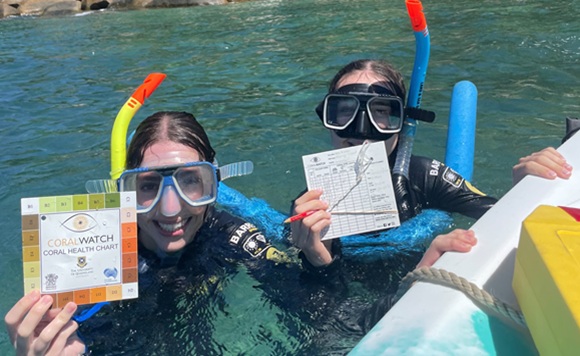
Co-exist Cairns is a new environmental (ad social) group for 18-30 year olds.
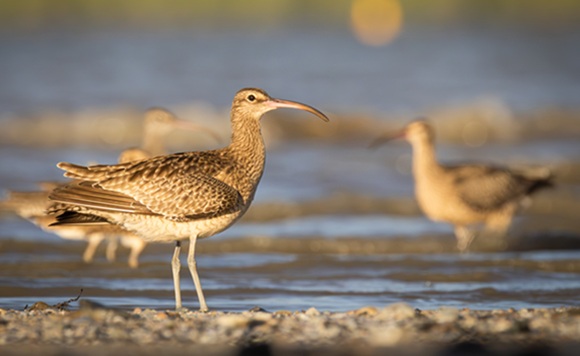
Whimbrels migrate thousands of miles to feed along the Cairns Esplanade each year.

Martine joined the Wet Tropics Waterways team as a Science Technical Officer in early 2024. She is an environmental scientist and ecologist and has worked on water quality and aquatic ecology projects as a consultant and in private industry for over 20 years. She is using her experience in statistical programming and database development to develop new systems for the Report Card.

Richard has been the Science Technical Officer for Wet Tropics Waterways since 2016. His role involves producing the annual results for the waterway health assessment of the wet tropics region using data from a wide range of sources, to present as scores and grades, as well as developing new indicators to address knowledge and monitoring gaps. He works in collaboration with technical staff at other regional report cards.
Richard has a background in freshwater ecology research projects and environmental assessments with CSIRO, University of Queensland, Queensland Government and as a consultant. For a long time he’s been interested in freshwater aquaculture and continues this interest through farming freshwater crayfish, alongside other farming activities.

Simon has over 30 years’ experience advocating for waterways across academia, government and the private sector. He started out in marine botany with a fascination for seagrass, mangroves and macroalgae, and has gone on to lead major environmental initiatives both in Australia and overseas. He has established report cards in eight countries.
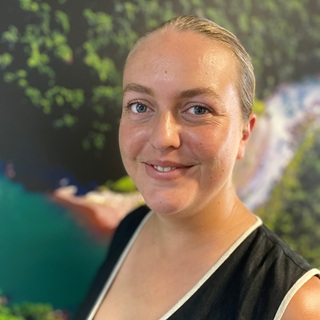
Rowan is a conservation scientist with a background in wildlife science and tropical ecology. She holds a Bachelor of Wildlife Science from the University of Queensland and has recently completed a Master of Tropical Biology and Conservation at James Cook University.
Rowan brings experience in science communication, with a strong interest in connecting people with conservation outcomes. In her role with Wet Tropics Waterways, she supports initiatives that combine scientific knowledge with community outreach to help protect the Wet Tropics and Great Barrier Reef catchments, and to strengthen collaboration between researchers, stakeholders, and the wider community.