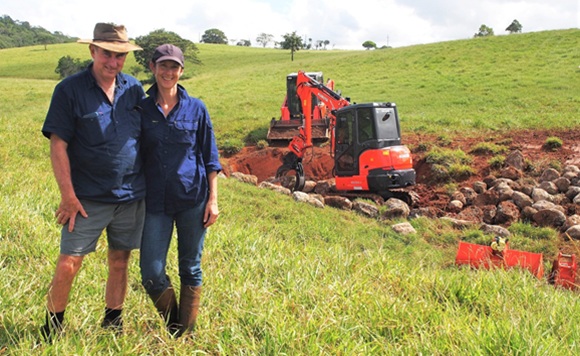
Turning the Tide on Erosion
Graziers on the Tablelands are doing their bit to reduce sediment runoff

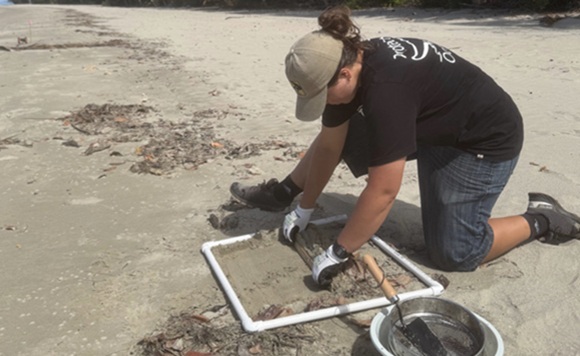
Surveys at ten coastal sites in the Wet Tropics are taking a closer look at what’s washing up along the Reef.
So far, the news is encouraging. While microplastics have been recorded along these shorelines, contamination levels remain low likely due to lower population density and less urban pressure than more heavily populated areas.
What are microplastics?
Microplastics are tiny plastic particles less than five millimetres in size. Some are intentionally this small — such as microbeads that were once used in cosmetics or the microfibres from synthetic clothing. However, most microplastics recorded in the Wet Tropics are hard fragments, indicating they originate from the larger plastic that have broken up.
Why are they a problem?
Unlike organic materials, plastic does not biodegrade. Instead, it breaks up into smaller and smaller pieces that can exist in the environment for decades or even centuries.
Many microplastics eventually settle in sediments — which are important feeding grounds for fish, crustaceans and other aquatic species. They can also act like tiny chemical sponges, absorbing pollutants including heavy metals, pesticides and hydrocarbons. This cocktail of contaminants may then be ingested by marine life. The full ecological impacts are still not fully understood but research suggests microplastics can cause stress, physical injury and feeding problems for aquatic organisms.
How do microplastics reach the Reef?
Microplastics enter waterways through litter, landfill leaching, stormwater runoff and sometimes wastewater treatment systems. Major sources include fibres shed from synthetic clothing during washing, microscopic particles from vehicle tyres wearing down on roads, fragments from paints and coatings, and the breakdown of ageing plastic materials and infrastructure.
Microplastics can also be transported over longer distances by ocean currents so some particles found on the Reef may have originated from outside the region.
What is being done to reduce plastic pollution?
A range of initiatives are underway. In Queensland, the state government has introduced bans on several single-use plastic items. Locally there are programs such as Plastic Free Places which is helping hospitality businesses in Cairns and Port Douglas to transition away from disposable plastics. Globally, the United Nations is working towards a plastics treaty, aimed at reducing plastic pollution across its entire lifecycle.
What can we do about it in the Wet Tropics?
The Australian Microplastic Assessment Project (AUSMAP) has partnered with Tangaroa Blue Foundation through the ReefClean Project since 2019. It is funded by the Australian Government’s Reef Trust. Visit tangaroablue.org and https://www.ausmap.org/hotspot-map for more information.
Graziers on the Tablelands are doing their bit to reduce sediment runoff
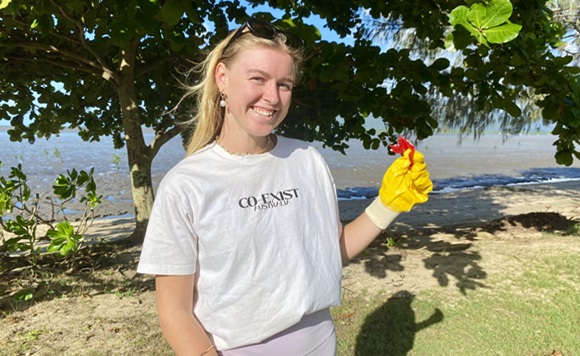
Co-exist Cairns is a new environmental (ad social) group for 18-30 year olds.
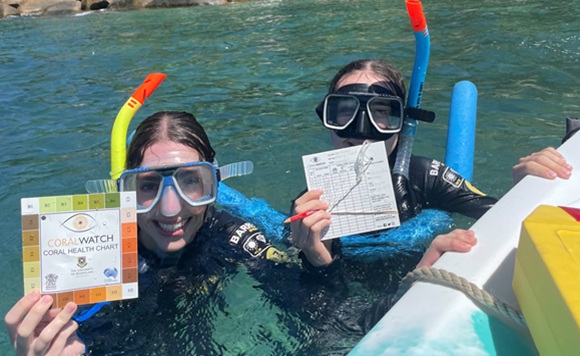
Co-exist Cairns is a new environmental (ad social) group for 18-30 year olds.

Martine joined the Wet Tropics Waterways team as a Science Technical Officer in early 2024. She is an environmental scientist and ecologist and has worked on water quality and aquatic ecology projects as a consultant and in private industry for over 20 years. She is using her experience in statistical programming and database development to develop new systems for the Report Card.

Richard has been the Science Technical Officer for Wet Tropics Waterways since 2016. His role involves producing the annual results for the waterway health assessment of the wet tropics region using data from a wide range of sources, to present as scores and grades, as well as developing new indicators to address knowledge and monitoring gaps. He works in collaboration with technical staff at other regional report cards.
Richard has a background in freshwater ecology research projects and environmental assessments with CSIRO, University of Queensland, Queensland Government and as a consultant. For a long time he’s been interested in freshwater aquaculture and continues this interest through farming freshwater crayfish, alongside other farming activities.
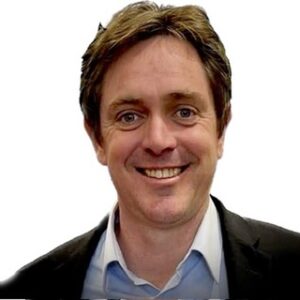
Simon has over 30 years’ experience advocating for waterways across academia, government and the private sector. He started out in marine botany with a fascination for seagrass, mangroves and macroalgae, and has gone on to lead major environmental initiatives both in Australia and overseas. He has established report cards in eight countries.
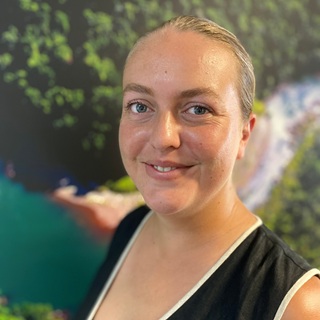
Rowan is a conservation scientist with a background in wildlife science and tropical ecology. She holds a Bachelor of Wildlife Science from the University of Queensland and has recently completed a Master of Tropical Biology and Conservation at James Cook University.
Rowan brings experience in science communication, with a strong interest in connecting people with conservation outcomes. In her role with Wet Tropics Waterways, she supports initiatives that combine scientific knowledge with community outreach to help protect the Wet Tropics and Great Barrier Reef catchments, and to strengthen collaboration between researchers, stakeholders, and the wider community.