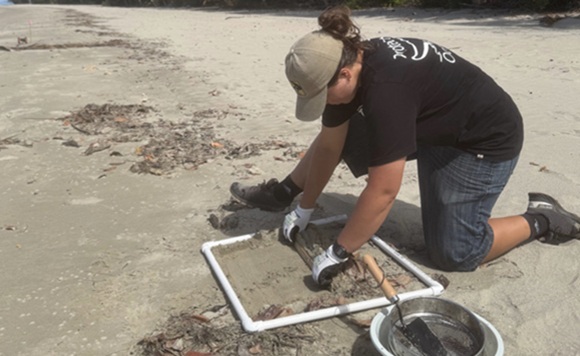
Microplastics: Tiny Plastics, Big Problem
Contamination levels are low in the Wet Tropics but we need to stay vigilant

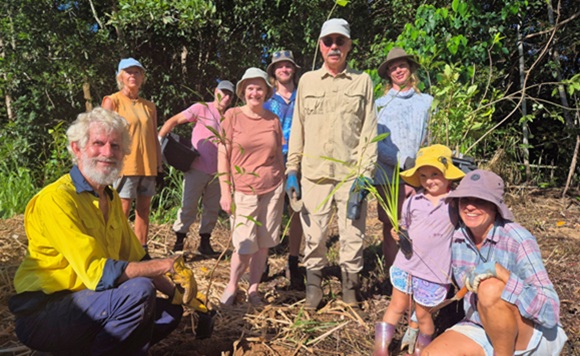
Peter Rowles is in his happy place – he’s on the shovel digging holes for trees and native grasses near the banks of a creek. To get to this stage has been a mission in itself – the banks were covered in guinea grass a few short months ago and para grass was doing its best to smother the waterway.
“You could barely see the creek line,’’ he says. “And big chunks of the bank were being ripped out in floods.”
Peter and a crew of volunteers are less than a kilometre from the ocean at Mission Beach, on private land in a cassowary corridor that connects the coastal wetlands with world-heritage rainforest. It’s known as Lot 66 or ‘Garrett’s Corridor’ because Midnight Oil frontman and former Federal Environment Minister Peter Garrett stepped in 18 years ago to stop any development on the land.
It’s now a nature refuge owned by Queensland Trust for Nature, and conservation group ‘C4 – Community for Coastal and Cassowary Conservation’ is steadily working to restore deforested and degraded areas.
“We started in 2014, revegetating in the middle of a pile of grass where some land was cleared by the previous owners to plan residential lots,’’ Peter says.
“There was one dead wattle in amongst the guinea grass. The goal is to return this land to something resembling the forest that was there originally.”
The group’s current, and final, section of revegetation work is along an unnamed waterway that flows into Wongaling Creek and then the ocean.
Volunteers are planting Lomandra grass on the banks, and establishing native trees – from seeds collected locally and grown in the C4 nursery – on land behind the creek.
They’ve chosen species that cassowaries will be able to walk through easily, with deep enough roots to also stablise the creek bank.
“We needed natives that can create a canopy to shade out weeds,’’ Peter says. “But we also need to select a range of species that don’t grow too high, given the nearby powerlines, and that improve driver visibility compared to a wall of guinea grass. That way a cassowary has less chance of ‘popping out’ onto the road.”
C4 has been tree-planting and controlling weeds in rainforest and beach areas around Mission Beach, and at Smith’s Gap between El Arish and Feluga, for the last 30 years. Volunteers range from children to octogenarians. The group actively looks for new areas where revegetation can make a real difference – especially patches of cleared or degraded land alongside forests, creeks and wildlife corridors.
Contamination levels are low in the Wet Tropics but we need to stay vigilant
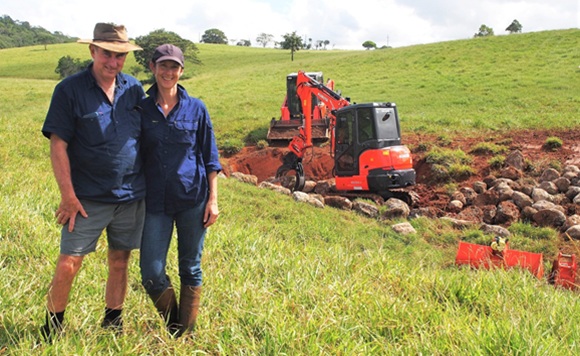
Graziers on the Tablelands are doing their bit to reduce sediment runoff
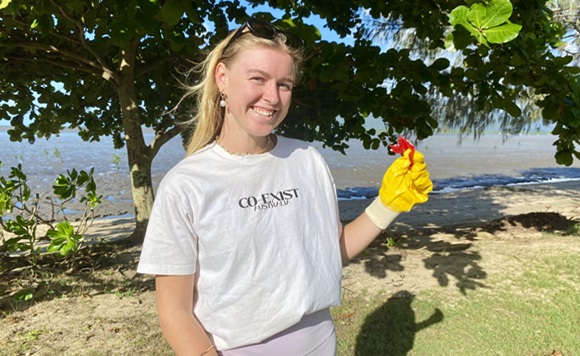
Co-exist Cairns is a new environmental (ad social) group for 18-30 year olds.

Martine joined the Wet Tropics Waterways team as a Science Technical Officer in early 2024. She is an environmental scientist and ecologist and has worked on water quality and aquatic ecology projects as a consultant and in private industry for over 20 years. She is using her experience in statistical programming and database development to develop new systems for the Report Card.

Richard has been the Science Technical Officer for Wet Tropics Waterways since 2016. His role involves producing the annual results for the waterway health assessment of the wet tropics region using data from a wide range of sources, to present as scores and grades, as well as developing new indicators to address knowledge and monitoring gaps. He works in collaboration with technical staff at other regional report cards.
Richard has a background in freshwater ecology research projects and environmental assessments with CSIRO, University of Queensland, Queensland Government and as a consultant. For a long time he’s been interested in freshwater aquaculture and continues this interest through farming freshwater crayfish, alongside other farming activities.
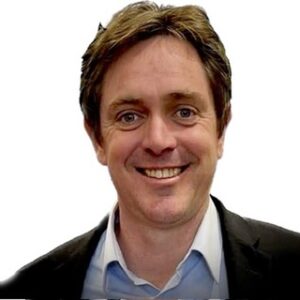
Simon has over 30 years’ experience advocating for waterways across academia, government and the private sector. He started out in marine botany with a fascination for seagrass, mangroves and macroalgae, and has gone on to lead major environmental initiatives both in Australia and overseas. He has established report cards in eight countries.
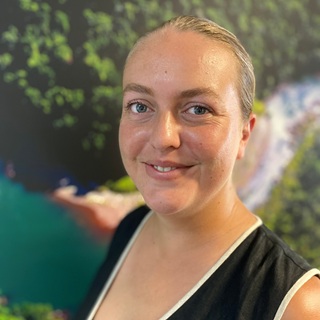
Rowan is a conservation scientist with a background in wildlife science and tropical ecology. She holds a Bachelor of Wildlife Science from the University of Queensland and has recently completed a Master of Tropical Biology and Conservation at James Cook University.
Rowan brings experience in science communication, with a strong interest in connecting people with conservation outcomes. In her role with Wet Tropics Waterways, she supports initiatives that combine scientific knowledge with community outreach to help protect the Wet Tropics and Great Barrier Reef catchments, and to strengthen collaboration between researchers, stakeholders, and the wider community.