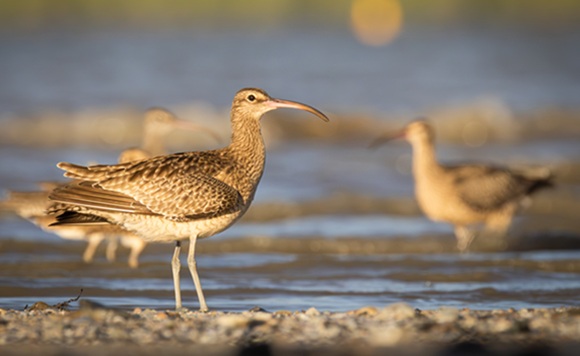
World Travelling Whimbrels
Whimbrels migrate thousands of miles to feed along the Cairns Esplanade each year.

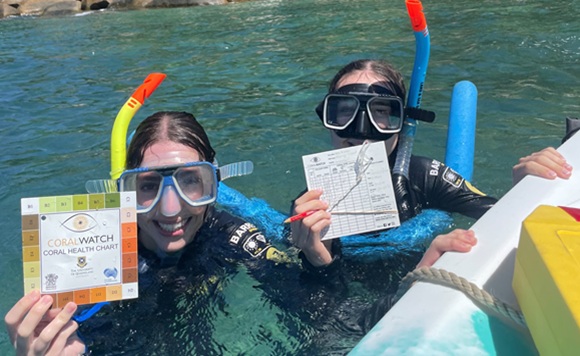
High school students are planting trees on rainforest edges, removing rubbish from mangroves and surveying coral as part of a program that is turning visitors into ‘citizen scientists’ with a passion for our patch.
The Wet Tropics region is globally significant for its interconnected World Heritage areas – the Great Barrier Reef and ancient rainforests – but many students only come across these ecosystems in textbooks.
A Cairns-based educational tour company, Small World Journeys, is helping to bring textbook learnings to life.
Over 1540 students from nearly 50 schools are now travelling to the Wet Tropics each year. Many begin their journey high in rainforest catchments before heading out onto the Reef and experiencing first-hand how the region’s ecosystems are connected.
“Our programs are all about hands-on learning,” Small World Journeys’ Rachael MacLeod says.
“Students don’t just hear about conservation — they take part in it.”
On Fitzroy Island, off Cairns, teenagers are part of reef monitoring programs such as CoralWatch and on the outer Great Barrier Reef Eye on the Reef, recording sightings that are used by scientists.
“This is often the first time they are seeing coral up close,” Rachael says.
“Last year, our students made more than 6000 coral observations.
“By identifying corals and recording reef conditions, they help with datasets that researchers can use over time, and they learn why long-term monitoring matters.”
Along the way, students also begin to understand how tightly connected the region’s ecosystems are – seeing how they link together from mountain streams all the way to coral reefs.
The pressures facing tropical environments are also part of the program.
“We show students the impacts of human activity and what’s being done to address them.” Rachael says.
“We talk about things like Crown-of-thorns starfish and how they are a natural part of the Reef, but how large outbreaks are linked to poor water quality that is caused by human impacts.
“It’s really cool to see their faces when they start to understand the connections.”
Picnic Point School student Mariah Bizri, from Sydney, says she learnt she learnt so much from her trip to the Wet Tropics.
‘We saw how coral lives and reproduces, and the relationship between species in ecosystems, the effect of invasive and overpopulated species on the local environment, the human impacts on the environment, the role of indigenous people in maintaining and using the land, and the contemporary and traditional management strategies.”
These kinds of learnings are turning young visitors into stewards.
“Our students are actively contributing to solutions,” Rachael says.
“Last year they planted 1176 trees and removed many kilos of rubbish from mangroves.
“One of the key lessons they learn is that everyone can make a difference, even through simple daily actions like composting lunch leftovers and collecting soft plastic waste for re-use.
“Collectively, small individual actions can add up to positive change.”
Whimbrels migrate thousands of miles to feed along the Cairns Esplanade each year.
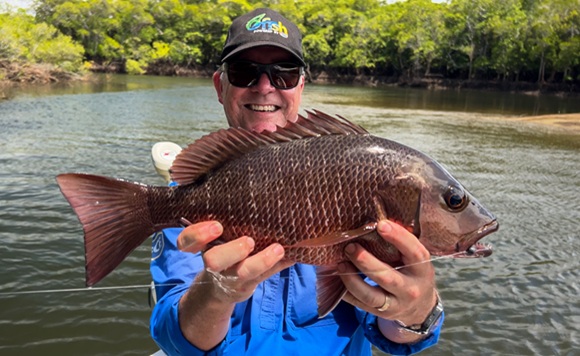
OzFish are restoring urban creeks in Cairns and discovering an amazing diversity of species.

Ranger groups are expanding and building capacity across the region

Martine joined the Wet Tropics Waterways team as a Science Technical Officer in early 2024. She is an environmental scientist and ecologist and has worked on water quality and aquatic ecology projects as a consultant and in private industry for over 20 years. She is using her experience in statistical programming and database development to develop new systems for the Report Card.

Richard has been the Science Technical Officer for Wet Tropics Waterways since 2016. His role involves producing the annual results for the waterway health assessment of the wet tropics region using data from a wide range of sources, to present as scores and grades, as well as developing new indicators to address knowledge and monitoring gaps. He works in collaboration with technical staff at other regional report cards.
Richard has a background in freshwater ecology research projects and environmental assessments with CSIRO, University of Queensland, Queensland Government and as a consultant. For a long time he’s been interested in freshwater aquaculture and continues this interest through farming freshwater crayfish, alongside other farming activities.
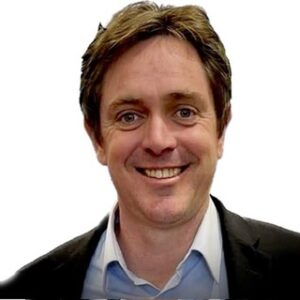
Simon has over 30 years’ experience advocating for waterways across academia, government and the private sector. He started out in marine botany with a fascination for seagrass, mangroves and macroalgae, and has gone on to lead major environmental initiatives both in Australia and overseas. He has established report cards in eight countries.
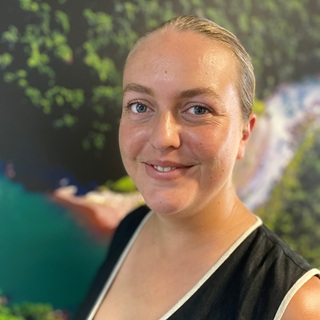
Rowan is a conservation scientist with a background in wildlife science and tropical ecology. She holds a Bachelor of Wildlife Science from the University of Queensland and has recently completed a Master of Tropical Biology and Conservation at James Cook University.
Rowan brings experience in science communication, with a strong interest in connecting people with conservation outcomes. In her role with Wet Tropics Waterways, she supports initiatives that combine scientific knowledge with community outreach to help protect the Wet Tropics and Great Barrier Reef catchments, and to strengthen collaboration between researchers, stakeholders, and the wider community.