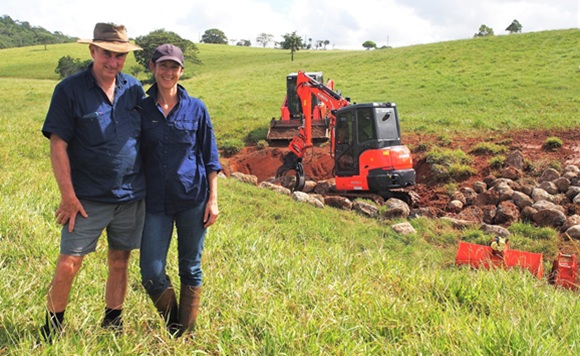
Turning the Tide on Erosion
Graziers on the Tablelands are doing their bit to reduce sediment runoff

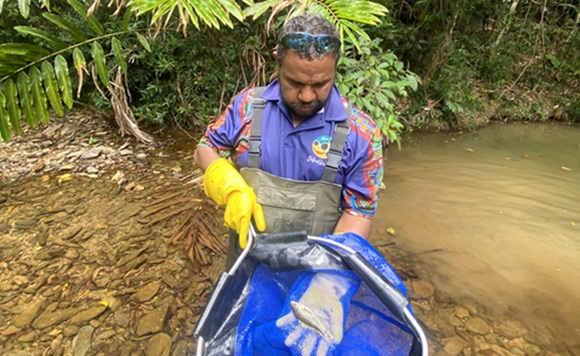
It’s not every day you uncover a new species. So when Brad Pusey and Mark Kennard spotted a “little fish with a blue-green tinge” in the Bloomfield River catchment during surveys more than 30 years ago, they were excited for science.
“We didn’t know what it was, it didn’t ‘key out’ in a taxonomic sense,” Mark, who was a young research assistant at the time, says.
The pair named the species the Bloomfield River cod, or ‘Guyu wujalwujalensis’, in recognition of the Kuku-Yalanji Aboriginal people and the nearby Wujal Wujal community. It’s now known to be one of Australia’s rarest and most geographically isolated freshwater fish – only living between Bloomfield Falls and Roaring Meg Falls and, remarkably, living 1,500km north of its closest relative.
Brad and Mark, who are both professors at Griffith University’s Australian Rivers Institute, say there is still so much we don’t know about the ‘relict’ species – a remnant from a fish group that once ranged widely across the continent. And they say new threats, including bigger floods and introduced fish species, are making it vital to learn more.
WORKING TOGETHER TO SAVE A SPECIES
They’ve partnered with Jabalbina Yalanji Aboriginal Rangers and a range of other stakeholders to blend western science with traditional knowledge. Together they’re exploring unsurveyed sections of waterways and using new technology – from drones to electrofishing, underwater cameras and environmental DNA sampling – to monitor the cod population.
The team is also recording water quality and habitat condition data, and collecting samples of the cod and its food sources for laboratory analysis.
Bobby Kulka, an Eastern Kuku-Yalanji Traditional Owner, welcomes working together.
“We all learn so much from each other. It’s vital for the species. These fish have been here for a long time. We want them to continue to be here.”
The new challenges for Bloomfield River cod include habitat changes after extreme floods and the arrival of Tully grunter and eel-tailed catfish from other Wet Tropics rivers, as well as non-native guppy fish.
“It is unknown how, why or when these species were introduced into this river, but all three are widespread and abundant,” Mark says.
“They’re a significant risk because of competition for food and space, and the potential for predation on cod eggs and larvae.”
RIVER SURVEYS, DNA SAMPLING AND GENETICS
Researchers want to know a whole lot more about the Bloomfield River Cod’s genetic diversity and biology.
“To help this species, we need to better understand how many there are, what their distribution is, how genetically diverse the population is, how long they live, when they reproduce, what they eat and what external factors impact them,” Mark says.
“And we are looking for signals from the Bloomfield River cod’s very interesting past by sampling its DNA in the present.”
The research team is also developing a monitoring method that Jabalbina Rangers will use to track the health of cod populations and their habitats long after the current project is over.
A PART OF EVOLUTIONARY HISTORY
The risk of losing yet another species to human impacts is far too great to ignore, Brad says.
“This fish is a really significant part of the biodiversity of Australia, and it’s a significant part of the evolutionary history of fauna given the current distribution of the other members of its family – in southern areas.”
Bobby sees the research as a gateway for the younger generation.
“We can take this knowledge into the schools. This is our fish. We need to take care of it, look after the ecosystem and be proud of the work that’s going on.”
This project is led by Griffith University in partnership with Jabalbina Yalanji Aboriginal Corporation and its Eastern Kuku-Yalanji people. Other key collaborators include the Queensland Government, Terrain NRM, the Wet Tropics Waterways Partnership, Wet Tropics Management Authority and James Cook University. It is supported by the Australian Government through the National Environmental Science Program (Resilient Landscapes Hub) and through the jointly funded Commonwealth-State Disaster Recovery Funding Arrangements.
Graziers on the Tablelands are doing their bit to reduce sediment runoff
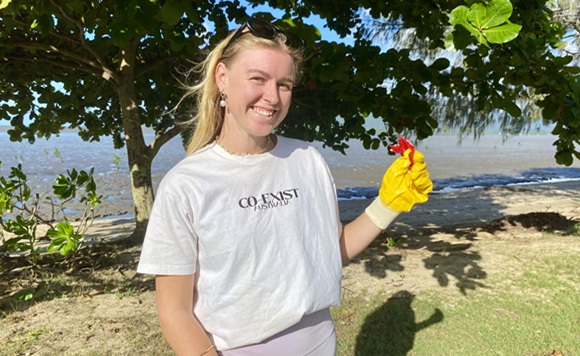
Co-exist Cairns is a new environmental (ad social) group for 18-30 year olds.
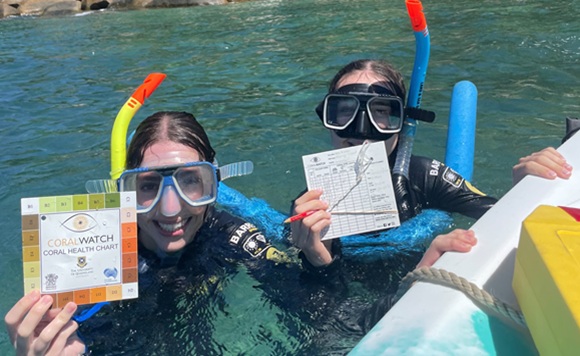
Co-exist Cairns is a new environmental (ad social) group for 18-30 year olds.

Martine joined the Wet Tropics Waterways team as a Science Technical Officer in early 2024. She is an environmental scientist and ecologist and has worked on water quality and aquatic ecology projects as a consultant and in private industry for over 20 years. She is using her experience in statistical programming and database development to develop new systems for the Report Card.

Richard has been the Science Technical Officer for Wet Tropics Waterways since 2016. His role involves producing the annual results for the waterway health assessment of the wet tropics region using data from a wide range of sources, to present as scores and grades, as well as developing new indicators to address knowledge and monitoring gaps. He works in collaboration with technical staff at other regional report cards.
Richard has a background in freshwater ecology research projects and environmental assessments with CSIRO, University of Queensland, Queensland Government and as a consultant. For a long time he’s been interested in freshwater aquaculture and continues this interest through farming freshwater crayfish, alongside other farming activities.
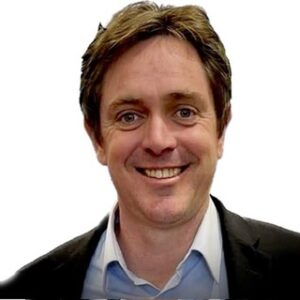
Simon has over 30 years’ experience advocating for waterways across academia, government and the private sector. He started out in marine botany with a fascination for seagrass, mangroves and macroalgae, and has gone on to lead major environmental initiatives both in Australia and overseas. He has established report cards in eight countries.
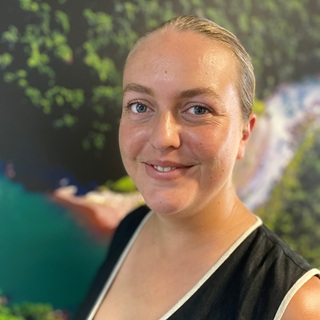
Rowan is a conservation scientist with a background in wildlife science and tropical ecology. She holds a Bachelor of Wildlife Science from the University of Queensland and has recently completed a Master of Tropical Biology and Conservation at James Cook University.
Rowan brings experience in science communication, with a strong interest in connecting people with conservation outcomes. In her role with Wet Tropics Waterways, she supports initiatives that combine scientific knowledge with community outreach to help protect the Wet Tropics and Great Barrier Reef catchments, and to strengthen collaboration between researchers, stakeholders, and the wider community.