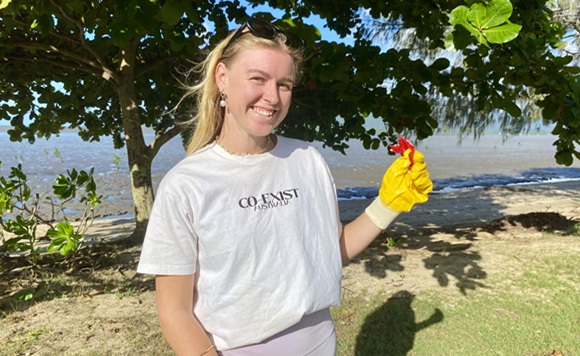
Co-exist Cairns: Next Generation of Coastal Carers
Co-exist Cairns is a new environmental (ad social) group for 18-30 year olds.

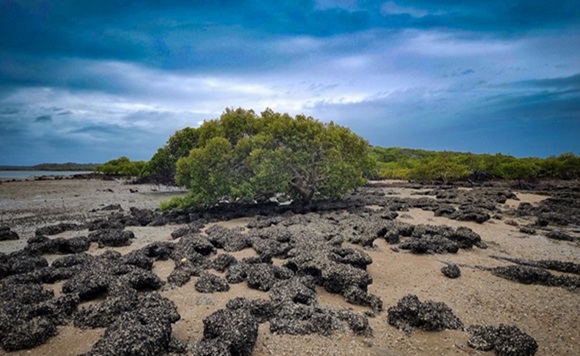
What is an oyster reef?
Oyster reefs are dense clusters of oysters that grow on hard surfaces like rocks, old shells, or even other oysters and whelks in shallow coastal waters. These reefs provide vital habitat for marine life.
Why are they endangered?
Globally, over 85% of oyster reefs have been lost due to destructive harvesting, dredging, pollution, disease, and coastal development. In Australia, the loss is estimated at more than 95%. A major driver of this decline was the widespread harvesting of oysters for their shells, which were burned to produce lime—a key ingredient in cement. While these figures mostly relate to southern temperate waters, oyster reefs are now being discovered across tropical Australia, although there is little evidence yet of how extensive they once were.
What’s the situation in Queensland?
A recent Griffith University study uncovered historic mentions in local newspapers of 23 oyster reefs across 14 locations between Townsville and Port Douglas—most of them long forgotten. Connecting with Traditional Owners may help to bridge the scientific knowledge gap. OzFish has mapped and helped ground-truth many of these sites and has discovered numerous remnant reefs—but only in remote areas. Priority reefs are being selected for restoration.
What do we know about tropical oysters?
Tropical oysters show greater species diversity, grow more quickly and reproduce more often than their southern counterparts.
Why restore reefs?
Oyster reefs provide powerful ecological benefits. They stabilise shorelines, filter and clean water, and create vital habitat for a rich community of invertebrates like crabs, worms, and prawns, which are important food sources for fish.
How much water can they filter?
A single adult oyster can filter up to 180 litres of water per day. Multiply that by thousands or even millions of oysters, and you’ve got a natural water purification system that can dramatically improve water quality.
How are they being restored?
Despite the scale of decline, oyster reef restoration is proving successful both overseas and around Australia. The process involves laying down hard surfaces like recycled oyster shell or limestone and allowing wild oyster larvae to settle—or adding hatchery-grown spat (young oysters) and protecting the site so the reef can grow.
How can you get involved?
OzFish is building a national database of the remaining tropical shellfish reefs. If you spot a reef or shellfish cluster, you can help by reporting it at: ozfish.org.au/projects/great-shellfish-hunt
Co-exist Cairns is a new environmental (ad social) group for 18-30 year olds.
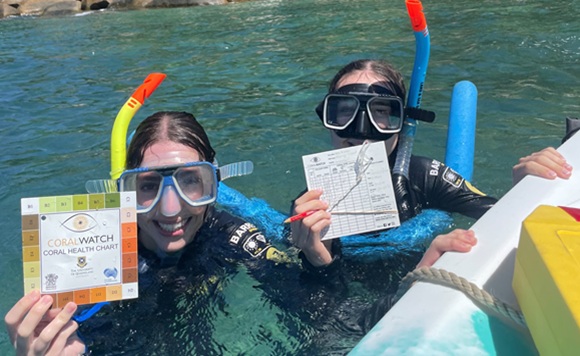
Co-exist Cairns is a new environmental (ad social) group for 18-30 year olds.
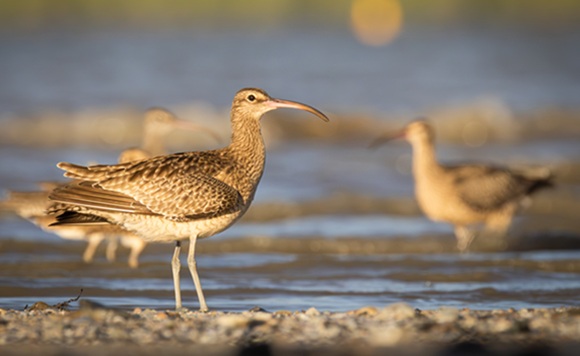
Whimbrels migrate thousands of miles to feed along the Cairns Esplanade each year.

Martine joined the Wet Tropics Waterways team as a Science Technical Officer in early 2024. She is an environmental scientist and ecologist and has worked on water quality and aquatic ecology projects as a consultant and in private industry for over 20 years. She is using her experience in statistical programming and database development to develop new systems for the Report Card.

Richard has been the Science Technical Officer for Wet Tropics Waterways since 2016. His role involves producing the annual results for the waterway health assessment of the wet tropics region using data from a wide range of sources, to present as scores and grades, as well as developing new indicators to address knowledge and monitoring gaps. He works in collaboration with technical staff at other regional report cards.
Richard has a background in freshwater ecology research projects and environmental assessments with CSIRO, University of Queensland, Queensland Government and as a consultant. For a long time he’s been interested in freshwater aquaculture and continues this interest through farming freshwater crayfish, alongside other farming activities.

Simon has over 30 years’ experience advocating for waterways across academia, government and the private sector. He started out in marine botany with a fascination for seagrass, mangroves and macroalgae, and has gone on to lead major environmental initiatives both in Australia and overseas. He has established report cards in eight countries.
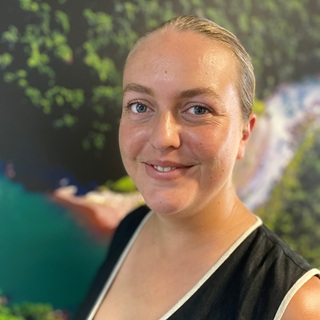
Rowan is a conservation scientist with a background in wildlife science and tropical ecology. She holds a Bachelor of Wildlife Science from the University of Queensland and has recently completed a Master of Tropical Biology and Conservation at James Cook University.
Rowan brings experience in science communication, with a strong interest in connecting people with conservation outcomes. In her role with Wet Tropics Waterways, she supports initiatives that combine scientific knowledge with community outreach to help protect the Wet Tropics and Great Barrier Reef catchments, and to strengthen collaboration between researchers, stakeholders, and the wider community.