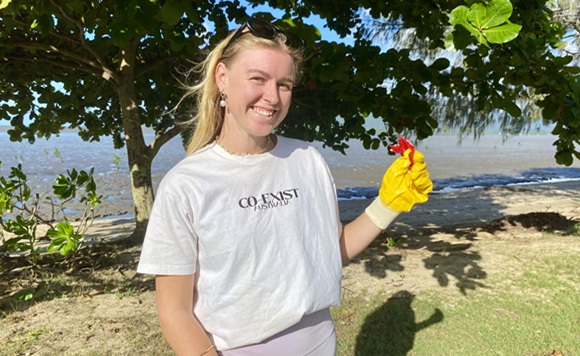
Co-exist Cairns: Next Generation of Coastal Carers
Co-exist Cairns is a new environmental (ad social) group for 18-30 year olds.


You don’t have to cane the land to grow cane. That’s the message from farmers like Bruce Cotterill and his son Todd who are improving the land and the water flowing through it as part of their sugar cane operations.
Bruce is a third-generation cane farmer at Aloomba, south of Cairns, and he doesn’t need to look any further than his own cane blocks to see major changes in the way the land is being managed these days.
“Back in my grandfather’s time they’d put nine bags (of fertiliser) on and then one more for the Gods – just in case,’’ he says. “They’d work the ground until the soil was so fine it’d blow away. That was the way people farmed at the time.
“We can’t afford to farm like that anymore – economically with the costs of fertiliser and fuel, and also environmentally.”
Bruce is among more than 150 Wet Tropics growers who are being supported through the Queensland Government’s Sugarcane Practice Change Program to boost farm productivity and, in doing so, improve the quality of water in our catchments.
Through the ‘Going the Distance’ project run by Farmacist, he has been working with agronomist Dan Knowles to fine tune his nutrient management plan, improve the farm’s drainage systems, and manage sedge, a non-native weed invading low-lying, poorly drained cane paddocks and natural ecosystems across the region.
“One of the things we’ve been doing is putting in grassed headlands where gullies have formed in the middle of cane blocks,’’ he says. “We are doing this block by block, as they come out of (cane) rotation.
“With the new headlands, the water flows through grassland rather than cane land during heavy rain.
“To achieve this, we’ve lost about one and a half kilometres, collectively, from cane blocks. But these were low-performing areas, and there are benefits all round. The water flowing through is cleaner and the drainage changes are also helping with sedge control.”
Bruce says working with an agronomist has given him access to aerial and soil mapping technology to accurately map the poorer-performing cane areas.
That’s helped with both the drainage changes and farm nutrient management planning – ensuring ameliorants like lime are used at the best time to maximise nutrient uptake and minimise runoff, and nutrients including zinc and magnesium are accurately applied to crops for well-rounded nutrition based on soil sample results.
He says the work has helped to reduce his fertiliser use.
“We’ve gradually cut back to close to 12 per cent below recommended rates. We are improving soil health through multi-legume fallow crops. Instead of just the traditional soybean or cow pea to put nitrogen back in the soil, we’re also using sunn hemp and sunflower for a better all-round effect.
“The roots of sunn hemp are bigger and they loosen up the soil, and the nitrogen accumulated in the crop doesn’t disappear immediately. It’s more gradual, over a number of years.
“And with GPS (global positioning systems), these days we can map the farm, keep our vehicle use on the inter-row spaces and reduce soil compaction. It’s a big advancement.”
The 110-hectares of cane land farmed by Bruce borders Behana Creek, which flows into the Mulgrave River about 20 kilometres from where it meets the ocean at Russell Heads. With such a handy location, the Cotterill family has fished in the creek, river and ocean for many years.
“We love the waterways on and near the farm, and going out on the ocean. Living where we do, the way we see it we are stewards of what goes into the creeks, rivers and ocean and how it all looks.”
The Going the Distance project is delivered by Farmacist as part of the $4.38 million Sugarcane Practice Change Program funded through the Queensland Government’s Queensland Reef Water Quality Program.
Co-exist Cairns is a new environmental (ad social) group for 18-30 year olds.
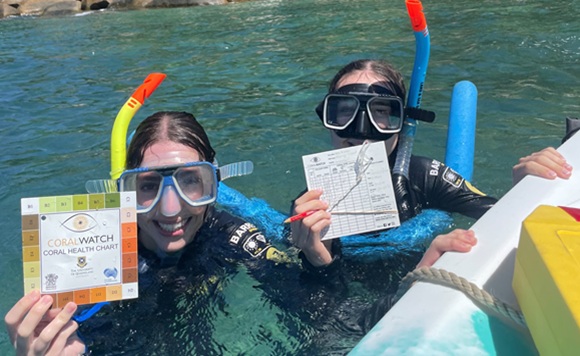
Co-exist Cairns is a new environmental (ad social) group for 18-30 year olds.
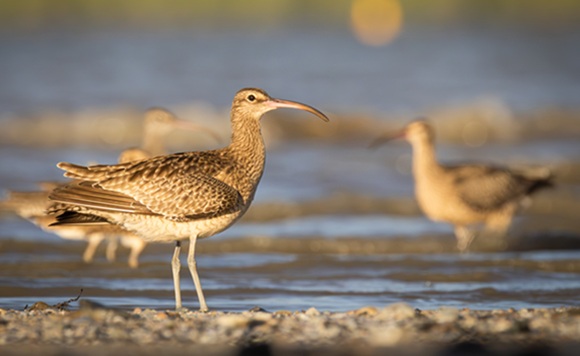
Whimbrels migrate thousands of miles to feed along the Cairns Esplanade each year.

Martine joined the Wet Tropics Waterways team as a Science Technical Officer in early 2024. She is an environmental scientist and ecologist and has worked on water quality and aquatic ecology projects as a consultant and in private industry for over 20 years. She is using her experience in statistical programming and database development to develop new systems for the Report Card.

Richard has been the Science Technical Officer for Wet Tropics Waterways since 2016. His role involves producing the annual results for the waterway health assessment of the wet tropics region using data from a wide range of sources, to present as scores and grades, as well as developing new indicators to address knowledge and monitoring gaps. He works in collaboration with technical staff at other regional report cards.
Richard has a background in freshwater ecology research projects and environmental assessments with CSIRO, University of Queensland, Queensland Government and as a consultant. For a long time he’s been interested in freshwater aquaculture and continues this interest through farming freshwater crayfish, alongside other farming activities.
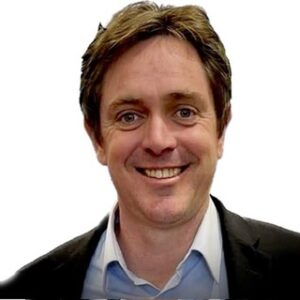
Simon has over 30 years’ experience advocating for waterways across academia, government and the private sector. He started out in marine botany with a fascination for seagrass, mangroves and macroalgae, and has gone on to lead major environmental initiatives both in Australia and overseas. He has established report cards in eight countries.
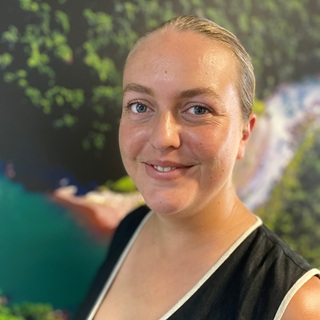
Rowan is a conservation scientist with a background in wildlife science and tropical ecology. She holds a Bachelor of Wildlife Science from the University of Queensland and has recently completed a Master of Tropical Biology and Conservation at James Cook University.
Rowan brings experience in science communication, with a strong interest in connecting people with conservation outcomes. In her role with Wet Tropics Waterways, she supports initiatives that combine scientific knowledge with community outreach to help protect the Wet Tropics and Great Barrier Reef catchments, and to strengthen collaboration between researchers, stakeholders, and the wider community.