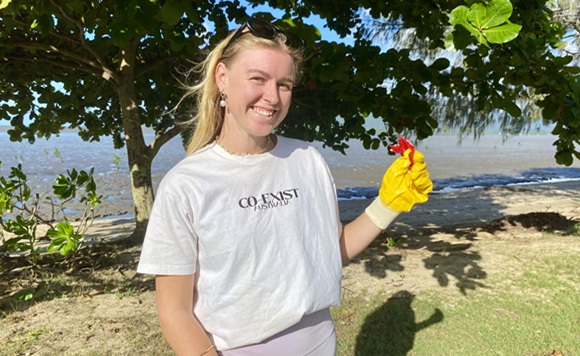
Co-exist Cairns: Next Generation of Coastal Carers
Co-exist Cairns is a new environmental (ad social) group for 18-30 year olds.

The high diversity of freshwater fish species found in the Wet Tropics reflects the region’s long geological history, numerous river systems and strong connectivity between rainforest, rivers, estuaries and the sea.
Many species found here are endemic, meaning they occur nowhere else on Earth. Some species rely on movement between freshwater and marine environments to complete their life cycles, making healthy, connected waterways essential for their survival.
Below is a closer look at some of the remarkable native fish species found in Wet Tropics waterways, with a focus on their ecology, behaviour and conservation.
Cairns Rainbowfish (Cairnsichthys rhombosomoides)
 The Cairns rainbowfish is restricted to the Wet Tropics, where it occupies clear, flowing lowland streams with good water quality and shaded banks.
Although small, this species plays an important role in stream food webs by feeding on aquatic insects, algae and small invertebrates. Males establish small territories and become especially colourful during breeding, with shimmering hues created by microscopic scale structures that reflect light rather than pigment.
Because they rely on clean water and intact stream habitats, Cairns rainbowfish are sensitive to sediment runoff, nutrient enrichment and altered flow conditions.
Mulgrave Goby (Glossogobius bellendenensis)
 Endemic to the Wet Tropics, the Mulgrave goby is most often found in freshwater streams with rocky substrates and flowing water.
Despite its modest size, it is a strongly territorial species. Males defend nesting areas and use bright orange fin displays during breeding and competition.
Early life stages are thought to drift downstream, with juveniles later returning upstream, meaning the species depends on unimpeded movement along waterways.
Cling gobies – specialists of fast-flowing streams
 The Wet Tropics supports a remarkable variety of cling gobies, including opal, black and orange cling gobies, many of which have very limited distributions.
These fish are adapted to steep rainforest streams, using fused pelvic fins that form a suction disc. This allows them to cling to rocks and climb waterfalls in high-flow environments that few other fish can access.
Several species have life cycles that include marine larval stages, followed by upstream migration as juveniles. For rare species such as the opal cling goby, disruption to this movement can have severe consequences. The opal cling goby is listed as critically endangered, with threats including habitat disturbance and barriers to fish passage.
Wet Tropics Tandan (Tandanus tropicanus)
 The Wet Tropics tandan is a freshwater catfish found only in the region and was formally recognised as a distinct species in 2014.
It inhabits pools and slower-flowing sections of streams, particularly where sandy or gravel substrates are present.
During the dry season, adults construct large circular nests by shifting rocks and sediment, a behaviour associated with reproduction.
As a long-lived species, the Wet Tropics tandan is especially vulnerable to changes in flow regimes, increased sediment loads and habitat modification.
Lake Eacham Rainbowfish (Melanotaenia eachamensis)
 This species was once thought extinct after being displaced by introduced fish in Lake Eacham. Later discoveries of nearby populations provided a second chance for its survival.
The species remains endangered due to predation, competition and hybridisation, highlighting the risks associated with moving fish between waterways — even when those fish are native to the region.
Bloomfield Cod (Guyu wujalwujalensis)
 The Bloomfield cod is a rare freshwater fish found only in the upper Bloomfield River and a few nearby streams in the Wet Tropics. It is a medium-sized fish, typically reaching 30–40 cm in length, with a robust body and striking patterning that helps it blend into rocky streambeds.
Bloomfield cod are ambush predators, feeding on smaller fish and aquatic invertebrates. It prefers fast-flowing, clear rainforest streams with rocky substrates and abundant cover such as boulders, logs, and overhanging vegetation.
Like many Wet Tropics endemics, Bloomfield cod are highly sensitive to habitat changes. Their restricted range, combined with threats such as competition from pest fish and barriers to movement, makes them vulnerable to population decline.
To find out more about how this species was discovered listen to our podcast with Professor Mark Kennard.
Hogan’s Sole (Leptachirus triramus)
 Known only from the Daintree River and described in 2008, Hogan’s sole is a bottom-dwelling fish adapted to sandy streambeds.
Its flattened body provides camouflage and allows it to exploit habitats that are easily overlooked during surveys.
Freshwater Moray (Gymnothorax polyuranodon)
 This species is unique worldwide as the only moray eel that spends most of its life in freshwater.
It inhabits clear streams with rocky substrates and is a powerful predator. Like other morays, it possesses pharyngeal jaws — a second set of jaws used to grasp and swallow prey.
Long-finned Eels (Anguilla spp.)
 All eel species in the Wet Tropics share a remarkable life cycle. Adults migrate from freshwater rivers to the Coral Sea to spawn, after which the adults die.
Larvae drift back towards the coast before juveniles migrate upstream into freshwater systems. This journey makes eels highly vulnerable to barriers, flow changes and habitat loss.
Pacific Blue Eye (Pseudomugil signifer)
 Pacific blue eyes are small schooling fish found in lowland creeks, wetlands and slow-flowing streams.
They feed mainly on plankton and small insects and form an important link between microscopic food sources and larger predators. Males develop prominent yellow fins that are used in visual displays during courtship and competition.
Loss of shallow wetlands and floodplain habitats poses a risk to local populations.
Jungle Perch (Kuhlia rupestris)
 Jungle perch are frequently seen in swimming holes and clear rainforest streams. They rely heavily on food that originates from the surrounding rainforest, including insects and fallen fruits.
This species is catadromous, spending most of its life in freshwater but migrating downstream to estuaries or coastal waters to spawn. Juveniles then make their way back upstream.
Any structure (fish barrier) that blocks this movement — such as poorly designed culverts or weirs — can disrupt the species’ life cycle.
Spangled Perch (Leiopotherapon unicolor)
 Spangled perch are among Australia’s most adaptable freshwater fish. They tolerate a wide range of conditions, including warm temperatures, low oxygen levels and highly variable water availability.
During wet-season floods, they can disperse across temporary waterways, allowing them to recolonise habitats when conditions improve.
Snakeheaded Gudgeon (Giuris margaritacea)
 Also known as mud cod, this species typically occupies slow-flowing backwaters, swamps and floodplain habitats.
It is an ambush predator, feeding on insects, crustaceans and small fish. Despite living in murky environments, snakeheaded gudgeons often display striking colour patterns and are frequently observed forming stable pairs.
Barramundi (Lates calcarifer)

Barramundi are one of Queensland’s most recognisable fish and rely on connected waterways across multiple habitats.
They are sequential hermaphrodites, beginning life as males and transitioning to females as they grow. Juveniles use freshwater wetlands and floodplain habitats before moving into estuaries and coastal waters.
Barriers to movement, loss of wetlands and altered river flows can all reduce successful breeding and recruitment.
Mangrove Jack (Lutjanus argentimaculatus)
 Mangrove jack follow a complex life cycle that spans freshwater streams, estuaries and coral reefs.
Juveniles shelter in freshwater and estuarine habitats, while adults migrate offshore to spawn. This dependence on multiple ecosystems means the species is particularly sensitive to breaks in habitat connectivity.
Silver Grunter (Pomadasys argenteus)
 Silver grunter begin life in freshwater streams, where juveniles display bold stripes and colouration. As they mature, they move downstream into estuaries and coastal waters and gradually lose these markings.
They feed along the streambed, often disturbing sediment while foraging.
Why healthy waterways matter
Native fish of the Wet Tropics depend on:
Protecting these conditions helps maintain not only fish diversity, but the broader ecological health and resilience of Wet Tropics waterways.
Co-exist Cairns is a new environmental (ad social) group for 18-30 year olds.
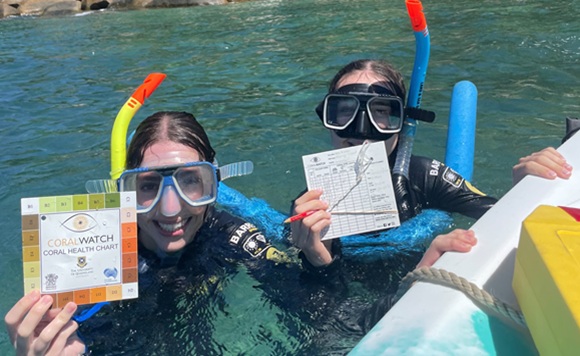
Co-exist Cairns is a new environmental (ad social) group for 18-30 year olds.
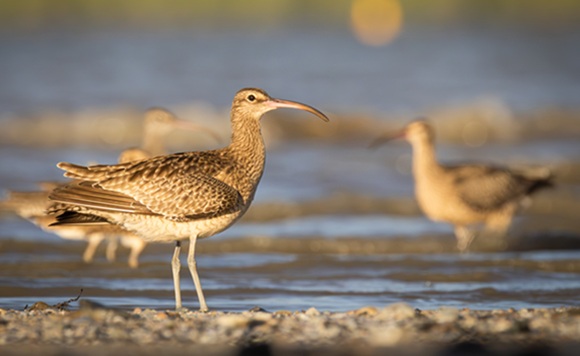
Whimbrels migrate thousands of miles to feed along the Cairns Esplanade each year.

Martine joined the Wet Tropics Waterways team as a Science Technical Officer in early 2024. She is an environmental scientist and ecologist and has worked on water quality and aquatic ecology projects as a consultant and in private industry for over 20 years. She is using her experience in statistical programming and database development to develop new systems for the Report Card.

Richard has been the Science Technical Officer for Wet Tropics Waterways since 2016. His role involves producing the annual results for the waterway health assessment of the wet tropics region using data from a wide range of sources, to present as scores and grades, as well as developing new indicators to address knowledge and monitoring gaps. He works in collaboration with technical staff at other regional report cards.
Richard has a background in freshwater ecology research projects and environmental assessments with CSIRO, University of Queensland, Queensland Government and as a consultant. For a long time he’s been interested in freshwater aquaculture and continues this interest through farming freshwater crayfish, alongside other farming activities.

Simon has over 30 years’ experience advocating for waterways across academia, government and the private sector. He started out in marine botany with a fascination for seagrass, mangroves and macroalgae, and has gone on to lead major environmental initiatives both in Australia and overseas. He has established report cards in eight countries.
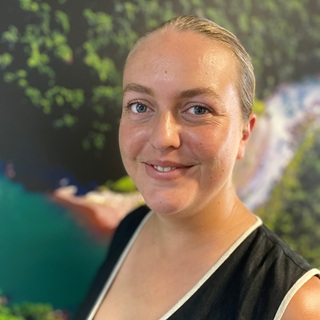
Rowan is a conservation scientist with a background in wildlife science and tropical ecology. She holds a Bachelor of Wildlife Science from the University of Queensland and has recently completed a Master of Tropical Biology and Conservation at James Cook University.
Rowan brings experience in science communication, with a strong interest in connecting people with conservation outcomes. In her role with Wet Tropics Waterways, she supports initiatives that combine scientific knowledge with community outreach to help protect the Wet Tropics and Great Barrier Reef catchments, and to strengthen collaboration between researchers, stakeholders, and the wider community.