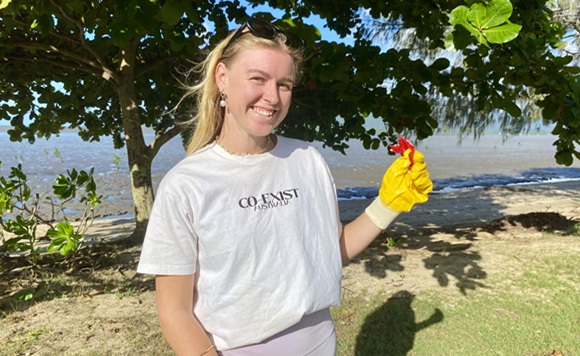
Co-exist Cairns: Next Generation of Coastal Carers
Co-exist Cairns is a new environmental (ad social) group for 18-30 year olds.

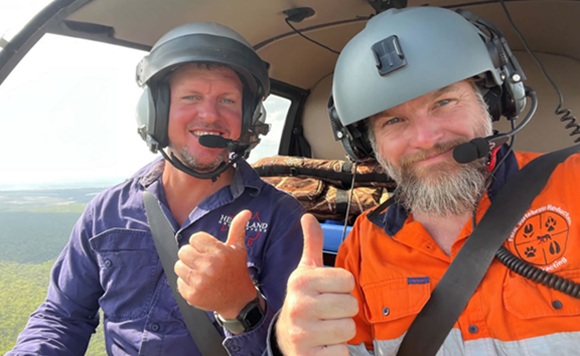
A passion for the great outdoors and the environment led Nathan Ravenscroft into aerial pig control after a career in the military.
Ten years later, he runs a thriving business across northern Australia and has recently been circling the Ingham region’s floodplains and coastal fringes – where healthy wetlands play a vital role in improving water quality before it reaches the Great Barrier Reef.
“The work is more challenging in the Wet Tropics because of the complex terrain, the mix of different land tenures and a range of hazards — from powerlines and trees to insect swarms and fast-changing weather conditions,” Nathan says.
“You need a detailed understanding of the landscape and highly qualified and experienced pilots who know the local area.”
He says Hinchinbrook has a “moderate” pig problem compared to other regions like Cape York or Gulf Country.
“We generally remove around 100 pigs per trip. Aerial control is one tool – there is also a lot of important work happening on the ground, including baiting and trapping.”
Feral pigs are more than an agricultural pest. They tear up wetlands, increase erosion, damage turtle nesting sites and degrade the natural filtration systems that protect downstream rivers and the Reef lagoon. Controlling their numbers is critical to safeguarding both productive farmland and fragile ecosystems.
Nathan says success depends on combining local knowledge with science.
“We rely heavily on landholders to help pinpoint where pigs are active. We also use data to guide our timing. We need pigs to be on the move to detect them easily, and their activity is influenced by sun and moon cycles. They’re generally more active during full and new moon periods.”
Hinchinbrook Shire Council’s biosecurity team has been working with Nathan for several years as part of the Hinchinbrook Community Feral Pig Management Program, a coordinated community feral pig control program. Mayor Ramon Jayo says pigs are “everyone’s problem”.
“Back in 2009 we brought key stakeholders together to develop a strategy. At the time, feral pigs were costing our sugarcane industry $1.2 million a year, and they were also ripping up wetlands and waterways,” Mayor Jayo said.
“An effective control program needs the whole community to be involved in control work and reporting sightings. Our feral pig coordinator supports landholders with training, advice and access to traps and affordable bait. Ultimately, it’s a shared effort.”
The program has recently received a boost through the Herbert Integrated Project, a new multi-faceted reef water quality project funded by the Queensland Government, allowing the council to scale up control efforts and trial new technology in high-priority wetland areas.
“We’re focusing on about 10,000 hectares of coastal fringe wetlands where pigs cause significant damage,” Mayor Jayo says.
“We know from DNA research that there are three family groups in the Hinchinbrook region — a coastal group, a floodplain group and one in the high country. Tracking collars have shown they tend to stay within a two-kilometre home range, which means it’s feasible to target smaller areas and eradicate local populations.”
Alongside aerial control and trapping, new AI-enabled cameras are monitoring eight pig hotspots. The system sends images when pigs are detected, reducing the need for constant trap inspections.
“Technology is helping to make the program more efficient and manageable,” Mayor Jayo says.
“While we’re unlikely to completely eradicate feral pigs, we are making a measurable impact. Annual cane losses have dropped from $1.2 million to around $300,000, and before-and-after images of wetlands show clear environmental recovery.”
Feral pig fast facts:
The feral pig control program is only one element of the multi-faceted Herbert Integrated Project (HIP). The HIP is delivering practical, community driven solutions for landscape and wetland repair, ensuring better water quality for the reef and creating new opportunities for the region.
The HIP is funded through the Queensland Government’s Queensland Reef Water Quality Program and delivered by Terrain NRM in partnership with many stakeholders including Hinchinbrook Shire Council, Herbert Cane Productivity Services Ltd, Canegrowers and TropWATER.
Co-exist Cairns is a new environmental (ad social) group for 18-30 year olds.
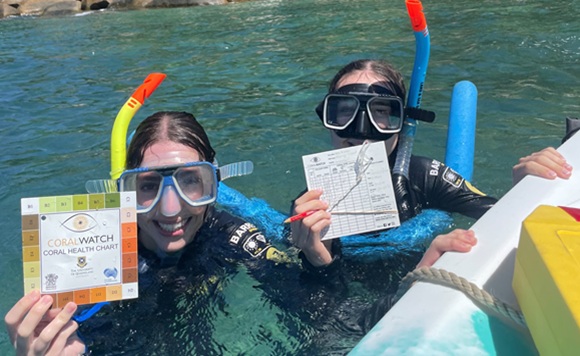
Co-exist Cairns is a new environmental (ad social) group for 18-30 year olds.
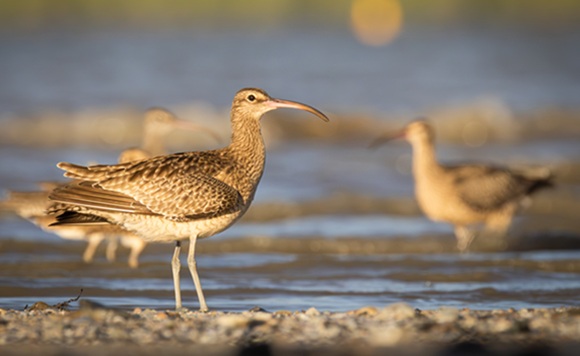
Whimbrels migrate thousands of miles to feed along the Cairns Esplanade each year.

Martine joined the Wet Tropics Waterways team as a Science Technical Officer in early 2024. She is an environmental scientist and ecologist and has worked on water quality and aquatic ecology projects as a consultant and in private industry for over 20 years. She is using her experience in statistical programming and database development to develop new systems for the Report Card.

Richard has been the Science Technical Officer for Wet Tropics Waterways since 2016. His role involves producing the annual results for the waterway health assessment of the wet tropics region using data from a wide range of sources, to present as scores and grades, as well as developing new indicators to address knowledge and monitoring gaps. He works in collaboration with technical staff at other regional report cards.
Richard has a background in freshwater ecology research projects and environmental assessments with CSIRO, University of Queensland, Queensland Government and as a consultant. For a long time he’s been interested in freshwater aquaculture and continues this interest through farming freshwater crayfish, alongside other farming activities.
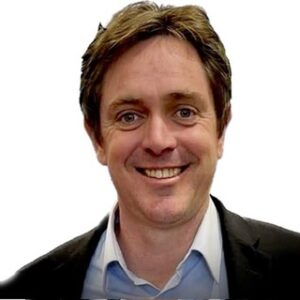
Simon has over 30 years’ experience advocating for waterways across academia, government and the private sector. He started out in marine botany with a fascination for seagrass, mangroves and macroalgae, and has gone on to lead major environmental initiatives both in Australia and overseas. He has established report cards in eight countries.
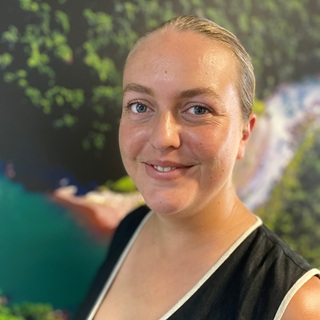
Rowan is a conservation scientist with a background in wildlife science and tropical ecology. She holds a Bachelor of Wildlife Science from the University of Queensland and has recently completed a Master of Tropical Biology and Conservation at James Cook University.
Rowan brings experience in science communication, with a strong interest in connecting people with conservation outcomes. In her role with Wet Tropics Waterways, she supports initiatives that combine scientific knowledge with community outreach to help protect the Wet Tropics and Great Barrier Reef catchments, and to strengthen collaboration between researchers, stakeholders, and the wider community.