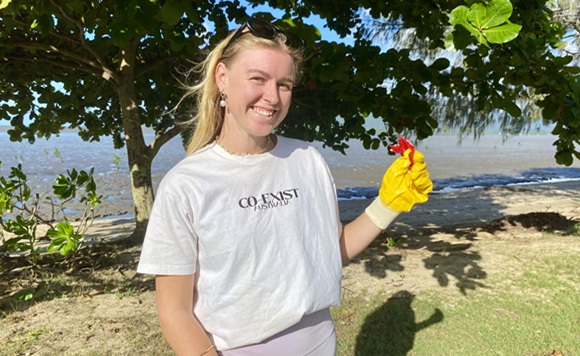
Co-exist Cairns: Next Generation of Coastal Carers
Co-exist Cairns is a new environmental (ad social) group for 18-30 year olds.


Have you ever seen a butterfly out over the ocean, kilometres from the Wet Tropics mainland, and wondered where in the world it is going? How about thousands of butterflies, travelling in a cluster?
Cairns botanist and naturalist Ashley Field says it’s an amazing sight. He has seen dense clouds of butterflies off Cairns, Kurrimine Beach and Mission Beach over the years, as well as thousands gathered on shorelines from Port Douglas to Halifax Bay preparing to take flight.
“You’ll see them roosting on twigs in the undergrowth, in their thousands, ready to fly, waiting for the right conditions, circling in the undergrowth,’’ he says.
“They can wait for weeks or months. Then they’re off over the ocean, flying together in a direct path to an island. I’ve seen masses of Blue Tiger butterflies in a gentle glide, low to the water, on their way to Fitzroy Island, and others going out to Hinchinbrook Island, the Barnard and Family islands or to one of the biggest areas of Palm and Magnetic Islands.
“It’s always when the sea is very calm and it’s spectacular every time.”
During winter a range of butterfly species – from Blue Tigers to Common Crows – migrate from inland dry vine forests to mainland littoral rainforests and then on to our islands. It’s called ‘overwintering’. They put their lives on hold, not eating or drinking much, not bothering to be territorial and, with their hormones switched off, not reproducing.
Without the eating and drinking, they need to stay in a moist environment. “The islands can be slightly warmer and more humid, with a more stable climate, so that may be why they go there,’’ Ashley says. “Many fly back at the end of October with the lull in the winds.”
The importance of littoral rainforest
He says littoral rainforest – a unique type of forest native to our coastline and islands – is extremely important to the migratory process. The butterflies rely on host plants in these forests for nectar and shelter, and it’s mutually beneficial because they’re pollinators for forest species.
But littoral rainforest is critically endangered. Urban development competes with these now patchy forest areas for ocean views, and the forests are also up against non-native species and climate change, with sea level rises and the threat of more intense and frequent cyclones.
Aside from supporting butterflies, littoral rainforest is important for the coastline. The many roots of its trees and plants stabilise our foreshores, and it’s a buffer for winds and for our mangrove areas. It’s also home to more than 70 threatened species and plants, from the southern cassowary to the magnificent broodfrog.
How we can help
Organisations have been meeting across the Wet Tropics to talk about ways to better protect littoral rainforest, known as the ‘rainforest that meets the reef’.
Scientists from CSIRO and James Cook University have worked with the Queensland Herbarium to update littoral rainforest mapping and have also mapped potential sea-level rise and storm surge scenarios so we can better evaluate the potential impacts of proposed developments and climate change.
Terrain NRM, the region’s natural resource management organisation, has brought together researchers, Traditional Owners, government agencies and coastal councils to identify the most important, vulnerable and improvable areas of littoral rainforest. With funding from the Australian Government, it is planning partnership projects to remove non-native species from littoral rainforest in the Hinchinbrook, Cassowary Coast and Douglas regions.
“The good news is littoral rainforest is a pretty resilient type of forest if we give it its space and keep weeds out,’’ Ashley says. “And it produces a lot of fruit, which birds and bats rely on for food just as butterflies do, so the fruit seeds and pollen are moved to other areas for germination.”
Littoral Rainforest – What is it?
Terrain NRM’s Forest Resilience Project is funded by the Australian Government’s Saving Native Species program.
Co-exist Cairns is a new environmental (ad social) group for 18-30 year olds.
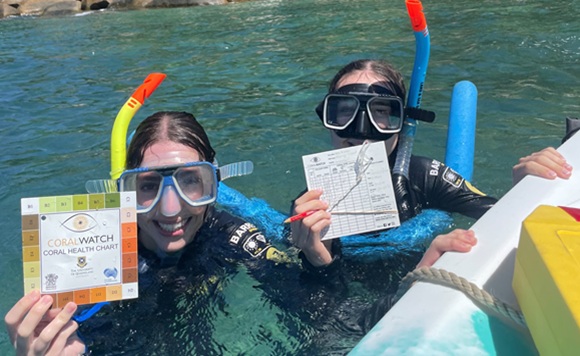
Co-exist Cairns is a new environmental (ad social) group for 18-30 year olds.
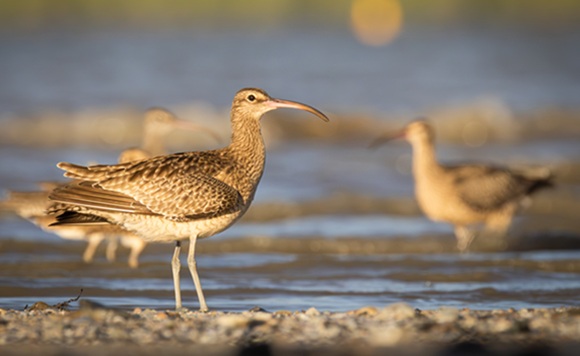
Whimbrels migrate thousands of miles to feed along the Cairns Esplanade each year.

Martine joined the Wet Tropics Waterways team as a Science Technical Officer in early 2024. She is an environmental scientist and ecologist and has worked on water quality and aquatic ecology projects as a consultant and in private industry for over 20 years. She is using her experience in statistical programming and database development to develop new systems for the Report Card.

Richard has been the Science Technical Officer for Wet Tropics Waterways since 2016. His role involves producing the annual results for the waterway health assessment of the wet tropics region using data from a wide range of sources, to present as scores and grades, as well as developing new indicators to address knowledge and monitoring gaps. He works in collaboration with technical staff at other regional report cards.
Richard has a background in freshwater ecology research projects and environmental assessments with CSIRO, University of Queensland, Queensland Government and as a consultant. For a long time he’s been interested in freshwater aquaculture and continues this interest through farming freshwater crayfish, alongside other farming activities.

Simon has over 30 years’ experience advocating for waterways across academia, government and the private sector. He started out in marine botany with a fascination for seagrass, mangroves and macroalgae, and has gone on to lead major environmental initiatives both in Australia and overseas. He has established report cards in eight countries.
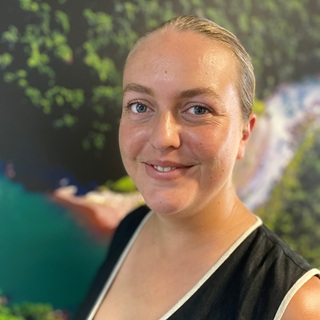
Rowan is a conservation scientist with a background in wildlife science and tropical ecology. She holds a Bachelor of Wildlife Science from the University of Queensland and has recently completed a Master of Tropical Biology and Conservation at James Cook University.
Rowan brings experience in science communication, with a strong interest in connecting people with conservation outcomes. In her role with Wet Tropics Waterways, she supports initiatives that combine scientific knowledge with community outreach to help protect the Wet Tropics and Great Barrier Reef catchments, and to strengthen collaboration between researchers, stakeholders, and the wider community.