
Cane Farmers: Going the Distance
150 cane farmers are participating in a project to boost productivity and water quality

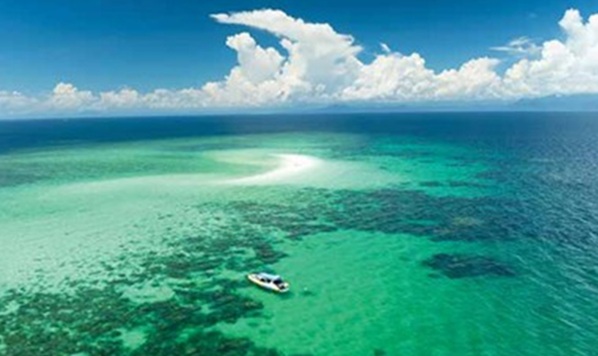
A small public notice in an Innisfail newspaper ignited the ‘Save the Reef’ campaign in the late 1960s. It was an application to mine coral for agricultural lime at Ellison Reef off Mission Beach, where the reef’s coral was “dead”, following a cyclone.
At Mission Beach, artist John Busst saw the notice. He convinced marine scientists from the University of Queensland to come and dive the reef in “two tiny homemade boats that were unsafe at any speed”. (Those are the words of one of the divers!)
After five days on the ocean, they recorded more than 90 coral species and over 200 fish species, describing Ellison as a “perfectly normal coral reef”. Their data helped to win a court case opposing the application, led by John Busst and members of the Queensland Littoral Society and the newly formed Wildlife Preservation Society of Queensland.
Seeing this as a test case for widespread mining, they together launched a campaign for the Great Barrier Reef to become a marine park. It happened, but not overnight. In the years that followed, the entire Queensland coastline opened up to oil exploration, there was a joint enquiry by the Queensland and Australian governments into oil drilling on the reef, which was upgraded to a Royal Commission, the Australian Government leadership changed and there was a whole lot of campaigning.
The Great Barrier Reef Marine Park Act was passed in 1975, establishing a Marine Park Authority to manage the newly created Great Barrier Reef Marine Park in partnership with the Queensland Government.
The first sections of park were declared several years later, and the reef became a World Heritage listed area in 1981, recognising its “outstanding universal value”.
The Great Barrier Reef Marine Park Authority still has a big role to play – from monitoring reef health and running the Crown-of-thorns Starfish Control Program to making sure people are following zoning rules and doing the right thing while out enjoying the reef.
It’s a team effort – the Authority works closely with lots of partners including Traditional Owner groups, the tourism industry, councils and schools. In another milestone, it has been 20 years since the first agreement was made between a Traditional Owner group, the Great Barrier Reef Marine Park Authority and the Queensland Government.
And 22 years since the Reef Guardian Schools program began. There are now 100 Wet Tropics schools involved in it. A Reef Guardian Councils program was also set up and all the Wet Tropics councils – Cairns, Cassowary Coast, Douglas, Hinchinbrook, Mareeba, Tablelands, Wujal Wujal and Yarrabah – are on board.
150 cane farmers are participating in a project to boost productivity and water quality

Read about some of our region's rare and unusual native fish species
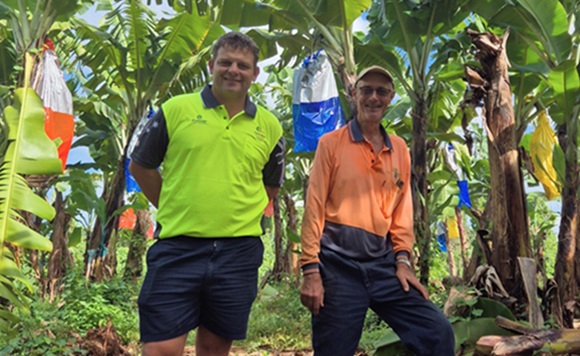
Banana farmers making land management changes to improve water quality to the Reef

Martine joined the Wet Tropics Waterways team as a Science Technical Officer in early 2024. She is an environmental scientist and ecologist and has worked on water quality and aquatic ecology projects as a consultant and in private industry for over 20 years. She is using her experience in statistical programming and database development to develop new systems for the Report Card.

Richard has been the Science Technical Officer for Wet Tropics Waterways since 2016. His role involves producing the annual results for the waterway health assessment of the wet tropics region using data from a wide range of sources, to present as scores and grades, as well as developing new indicators to address knowledge and monitoring gaps. He works in collaboration with technical staff at other regional report cards.
Richard has a background in freshwater ecology research projects and environmental assessments with CSIRO, University of Queensland, Queensland Government and as a consultant. For a long time he’s been interested in freshwater aquaculture and continues this interest through farming freshwater crayfish, alongside other farming activities.

Simon has over 30 years’ experience advocating for waterways across academia, government and the private sector. He started out in marine botany with a fascination for seagrass, mangroves and macroalgae, and has gone on to lead major environmental initiatives both in Australia and overseas. He has established report cards in eight countries.
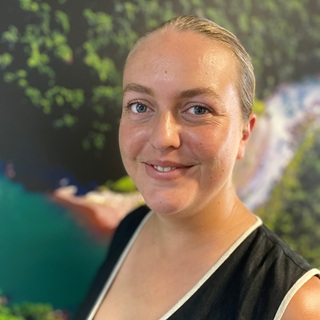
Rowan is a conservation scientist with a background in wildlife science and tropical ecology. She holds a Bachelor of Wildlife Science from the University of Queensland and has recently completed a Master of Tropical Biology and Conservation at James Cook University.
Rowan brings experience in science communication, with a strong interest in connecting people with conservation outcomes. In her role with Wet Tropics Waterways, she supports initiatives that combine scientific knowledge with community outreach to help protect the Wet Tropics and Great Barrier Reef catchments, and to strengthen collaboration between researchers, stakeholders, and the wider community.