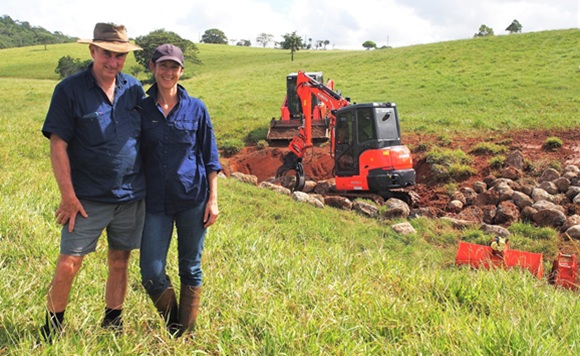
Turning the Tide on Erosion
Graziers on the Tablelands are doing their bit to reduce sediment runoff


“Jasper flushed out the main Barron River flow, and immediately adjacent to our infrastructure at the Kuranda Weir,” Patrick Curtis says. He’s the environmental specialist at Cleanco, which manages the Barron River hydro-electric station.
“The sheer amount of water which flowed through the Barron River during the flooding in December 2023 left little to no sign of the weed.”
Cleanco has been part of a local taskforce which includes Djabugay Rangers, Yungaburra Landcare, Kuranda Riverboat, FNQRoC, the Tablelands and Mareeba councils, Cairns and Far North Environment Centre (CAFNEC) and the Queensland Parks and Wildlife Service. It monitors and removes Amazon frogbit found across Wet Tropics waterways.
Patrick says Cleanco is continuing to regularly monitor the river despite the all-clear.
“We are keeping an eye out in and around our infrastructure,” he says. “Other frogbit groups including Yungaburra Landcare and Tablelands Regional Council are monitoring it in the upper catchments and have seen some resurgence of frogbit but are doing an excellent job of controlling it.”
Amazon frogbit is a decorative aquarium plant that’s native to Central and South America. Declared a pest regionally, it can’t be bought or sold in the Far North. But fish lovers can still order it online for their aquariums.
It enters waterways when people illegally dump aquarium contents into drains, and it spreads through the water’s flow and on the wind, choking waterways and threatening native species. It can even attach to birds or watercraft, quickening the spread.
For the Djabuguy Rangers, Amazon frogbit also diminishes the cultural values of creeks and rivers that are important Bulurru (Storywaters).
“The creeks may involve a story from the sacred time of creation and include laws or totems, but the Elders are telling us that these cultural values can easily be eroded by Amazon frogbit,” Djabugay Bulmba Ranger Coordinator Darryl Hunter says.
“It is quick to take hold and spread, and very difficult to get rid of, so we continue to monitor for signs of its return. This takes coordinated community action and ongoing funding.”
AMAZON FROGBIT – HOW YOU CAN HELP
FIND OUT MORE
Graziers on the Tablelands are doing their bit to reduce sediment runoff
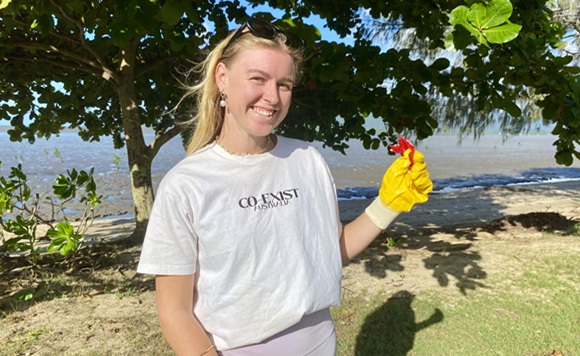
Co-exist Cairns is a new environmental (ad social) group for 18-30 year olds.
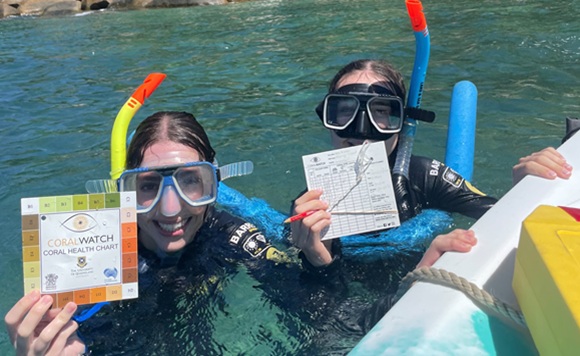
Co-exist Cairns is a new environmental (ad social) group for 18-30 year olds.

Martine joined the Wet Tropics Waterways team as a Science Technical Officer in early 2024. She is an environmental scientist and ecologist and has worked on water quality and aquatic ecology projects as a consultant and in private industry for over 20 years. She is using her experience in statistical programming and database development to develop new systems for the Report Card.

Richard has been the Science Technical Officer for Wet Tropics Waterways since 2016. His role involves producing the annual results for the waterway health assessment of the wet tropics region using data from a wide range of sources, to present as scores and grades, as well as developing new indicators to address knowledge and monitoring gaps. He works in collaboration with technical staff at other regional report cards.
Richard has a background in freshwater ecology research projects and environmental assessments with CSIRO, University of Queensland, Queensland Government and as a consultant. For a long time he’s been interested in freshwater aquaculture and continues this interest through farming freshwater crayfish, alongside other farming activities.
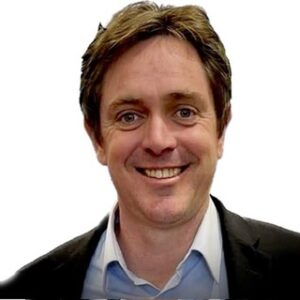
Simon has over 30 years’ experience advocating for waterways across academia, government and the private sector. He started out in marine botany with a fascination for seagrass, mangroves and macroalgae, and has gone on to lead major environmental initiatives both in Australia and overseas. He has established report cards in eight countries.
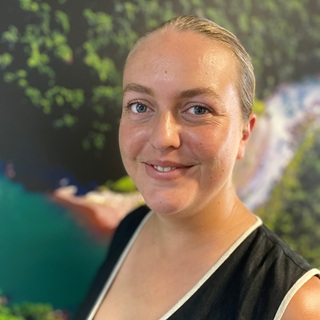
Rowan is a conservation scientist with a background in wildlife science and tropical ecology. She holds a Bachelor of Wildlife Science from the University of Queensland and has recently completed a Master of Tropical Biology and Conservation at James Cook University.
Rowan brings experience in science communication, with a strong interest in connecting people with conservation outcomes. In her role with Wet Tropics Waterways, she supports initiatives that combine scientific knowledge with community outreach to help protect the Wet Tropics and Great Barrier Reef catchments, and to strengthen collaboration between researchers, stakeholders, and the wider community.