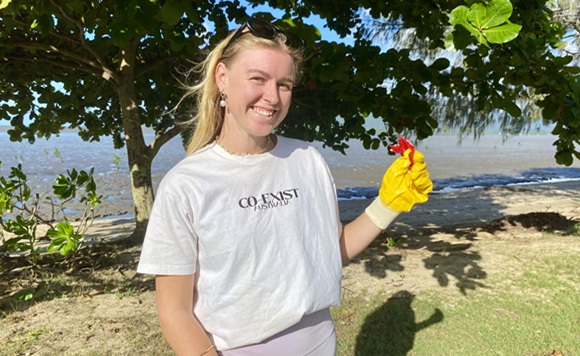
Co-exist Cairns: Next Generation of Coastal Carers
Co-exist Cairns is a new environmental (ad social) group for 18-30 year olds.


Michelle Martens clearly remembers the first time she saw East Trinity Reserve.
“A bund wall separated the reserve from Trinity Inlet,” the soil scientist says. “Outside the wall there were healthy mangroves but the ground inside was coated in rust-red iron deposits that smothered everything except the acid-tolerant melaleuca trees.”
“The soils, creeks and drains were highly acidic.”
That was back in the Year 2000. The Queensland Government had bought the land – a 940-hectare backdrop to Cairns on the other side of Trinity Inlet – three decades after it was drained and tidal-gated for sugar cane farming.
The changes exposed soils to the air that were naturally high in iron sulfide. They reacted with oxygen to release sulfuric acid along with iron, aluminium and other metals. And rain washed the acid and metals from the soil into creeks and Trinity Inlet. It led to mangroves dying, fish kills and unsuccessful cane farming.
Michelle was a land resource officer straight out of university back then and she joined an East Trinity team that has, over the decades, worked with land managers and scientists including Traditional Owners, rangers, geochemists, hydrologists and biologists.
Scientists from the Queensland Government devised a method called Lime-Assisted Tidal Exchange to neutralise the soil (rather than bringing in a mind-boggling 21,000 truckloads of lime). They modified the floodgates so that they no longer stopped the tide, instead letting the right amount of water in on every tide to keep the acidified soils wet. And they treated tidal water with hydrated lime to neutralise extra acidity and make sure the outgoing tide didn’t take iron and other metals with it.
Permanently wetting the soils created conditions that stopped new acid production and also allowed soil bacteria to neutralise acidity within the soil itself.
“Seeing the first tiny mangrove in an iron-stained drain three years after remediation work started was exciting,’’ Michelle says. “And finding seagrass growing in areas that used to be highly acidic is one of my favourite examples of how this site has transformed to a healthy estuarine environment.”
Twenty-five years since restoration work started, the area remains a managed wetland system. But there is no longer any need to treat it with hydrated lime – a major milestone for a dedicated team of land managers who monitor the quality of the water on an ongoing basis.
“Before remediation work began, an estimated 3000 tonnes of sulfuric acid had been flowing into Trinity Inlet annually from the Firewood Creek catchment,’’ Michelle says. “We’ve stopped that from happening. The reserve is now a national demonstration site supporting research and conservation.
“As a whole, the wetland is full of life – with healthy mangroves, fish and also crocodiles. And the restored wetland has brought Traditional Owners back on Country.”
Mandingalbay Yidinji Traditional Owner Vic Bulmer, who manages East Trinity Reserve with others from his mob in partnership with the Queensland Government, says the area was once a food bowl for his ancestors.
“What happened was devastating. Who’d want to see 970 hectares of land become a wasteland? Restoring Country, seeing marine life, bird life and botanical life come back… it’s rewarding.
“There is a very healthy fish population again – from barras and grunter to mangrove jacks. Corridors have been created so that fish can move up through here, having rests on the way, and can spawn inside this area.
“There are 82 species of mangroves, and seagrass in some channels. We have eco tours running and we’re building up capacity for our next venture which includes new infrastructure for more ecotourism.
“We also have a junior ranger program. I have seven grandkids. Bringing this land back is for our future generations.”
Co-exist Cairns is a new environmental (ad social) group for 18-30 year olds.
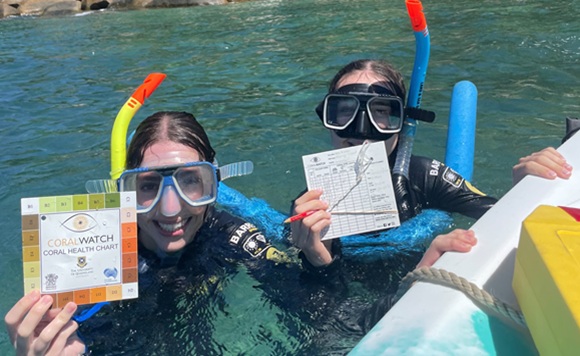
Co-exist Cairns is a new environmental (ad social) group for 18-30 year olds.
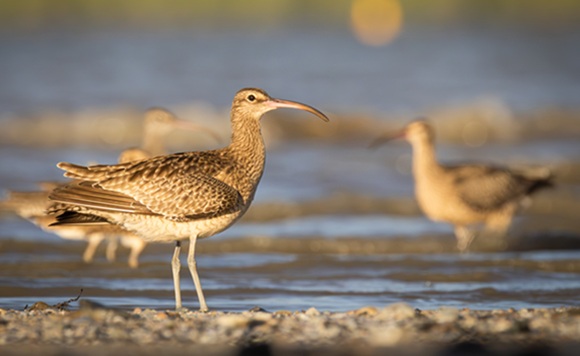
Whimbrels migrate thousands of miles to feed along the Cairns Esplanade each year.

Martine joined the Wet Tropics Waterways team as a Science Technical Officer in early 2024. She is an environmental scientist and ecologist and has worked on water quality and aquatic ecology projects as a consultant and in private industry for over 20 years. She is using her experience in statistical programming and database development to develop new systems for the Report Card.

Richard has been the Science Technical Officer for Wet Tropics Waterways since 2016. His role involves producing the annual results for the waterway health assessment of the wet tropics region using data from a wide range of sources, to present as scores and grades, as well as developing new indicators to address knowledge and monitoring gaps. He works in collaboration with technical staff at other regional report cards.
Richard has a background in freshwater ecology research projects and environmental assessments with CSIRO, University of Queensland, Queensland Government and as a consultant. For a long time he’s been interested in freshwater aquaculture and continues this interest through farming freshwater crayfish, alongside other farming activities.
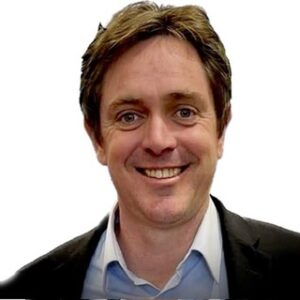
Simon has over 30 years’ experience advocating for waterways across academia, government and the private sector. He started out in marine botany with a fascination for seagrass, mangroves and macroalgae, and has gone on to lead major environmental initiatives both in Australia and overseas. He has established report cards in eight countries.
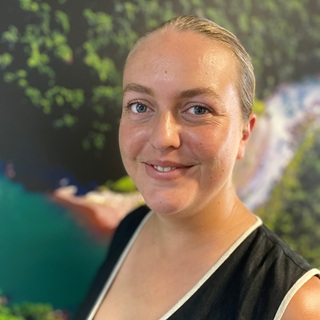
Rowan is a conservation scientist with a background in wildlife science and tropical ecology. She holds a Bachelor of Wildlife Science from the University of Queensland and has recently completed a Master of Tropical Biology and Conservation at James Cook University.
Rowan brings experience in science communication, with a strong interest in connecting people with conservation outcomes. In her role with Wet Tropics Waterways, she supports initiatives that combine scientific knowledge with community outreach to help protect the Wet Tropics and Great Barrier Reef catchments, and to strengthen collaboration between researchers, stakeholders, and the wider community.