Riparian Revegetation in the Mulgrave
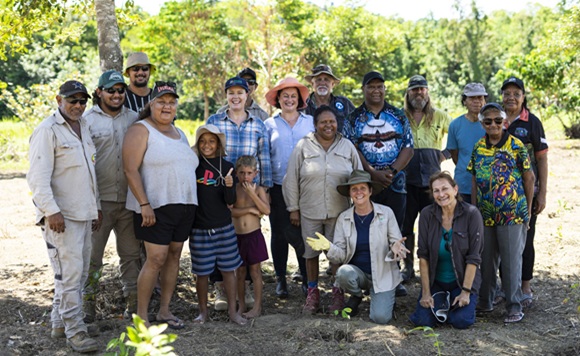
Community partners working together to revegetate riparian areas


From drone surveys and camera trapping to water quality monitoring… Indigenous rangers are increasingly blending cutting edge technology and cultural knowledge to help restore and protect Country.
Across the Wet Tropics, there are more than 20 Rainforest Aboriginal Peoples groups, many with ranger programs at different stages of development. The Queensland Government’s Reef Assist Traditional Owner Grants Program is helping, with grants that are opening up career pathways, particularly for young people.
In the Gordonvale area, the funding has been used to start a junior Jawajawa ranger program.
“We had a lot of interest in our ranger program, so we took the opportunity to pilot a one year traineeship,” Jasmine Clubb from Dulabed and Malanbarra Yidinji Aboriginal Corporation (DMY) says.
“Young people think being a ranger is cool. They learn land management skills but it’s also about empowerment and creating meaningful career pathways.
“We’ve seen how working on Country and reconnecting with culture has strengthened confidence and self identity.”
DMY was one of eight Traditional Owner groups in the Wet Tropics to receive funding through the program – a $2 million initiative underneath the Reef Assist program, which has supported 11 groups from the Wet Tropics to the Burnett Mary.
For the Babinda based Madjaybana Rangers, the grant opened doors to new scientific partnerships and skills development beyond traditional land management.
Anthony Satini says the team worked alongside scientists to design a water quality monitoring program in the Russell River, measuring nutrients, pesticides and sediment levels.
“We selected a range of sites — some pristine, others degraded,’’ he says. “It is interesting to see how the science lined up with our cultural knowledge.
“Working alongside scientists is helping us to build skills. We’ve had plant identification training from botanists and worked with bird experts on surveys. It all adds to what we can do as rangers.”
In Malanda, the Ngadjon Jii Noongyanbudda Rangers have recruited and trained new rangers while delivering restoration projects along the North Johnstone River. They are helping to reduce sediment runoff and weeds, and to create wildlife corridors.
“One site is behind the Malanda cheese factory,” Natalie Foster says. “Bega Group stepped up and covered the cost of 1000 trees, as well as ongoing maintenance.”
“We’re a fairly new team, so this work allowed us to upskill rangers in conservation practices like nursery propagation, as well as project planning and reporting.
“It has been a big learning curve, but there’s a strong network among ranger groups and we’re able to support each other.”
The Reef Assist Traditional Owner Grants Program is funded through the Queensland Government’s Queensland Reef Water Quality Program.
Community partners working together to revegetate riparian areas
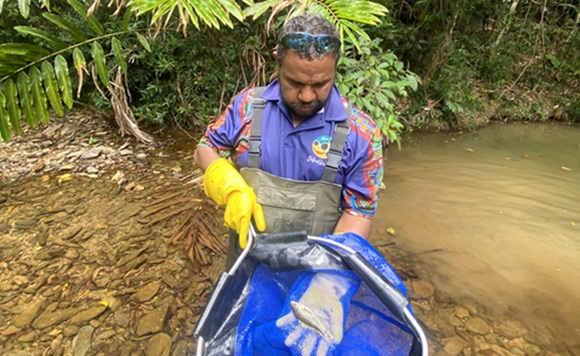
Scientists are in a race to save one of Australia's rarest freshwater fish species
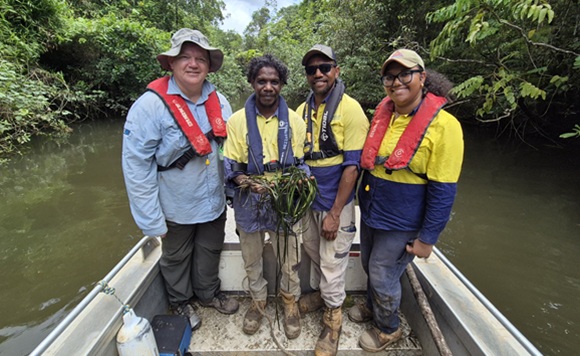
Scientists and rangers are working together to restore native eel grass in the Russell

Martine joined the Wet Tropics Waterways team as a Science Technical Officer in early 2024. She is an environmental scientist and ecologist and has worked on water quality and aquatic ecology projects as a consultant and in private industry for over 20 years. She is using her experience in statistical programming and database development to develop new systems for the Report Card.

Richard has been the Science Technical Officer for Wet Tropics Waterways since 2016. His role involves producing the annual results for the waterway health assessment of the wet tropics region using data from a wide range of sources, to present as scores and grades, as well as developing new indicators to address knowledge and monitoring gaps. He works in collaboration with technical staff at other regional report cards.
Richard has a background in freshwater ecology research projects and environmental assessments with CSIRO, University of Queensland, Queensland Government and as a consultant. For a long time he’s been interested in freshwater aquaculture and continues this interest through farming freshwater crayfish, alongside other farming activities.

Simon has over 30 years’ experience advocating for waterways across academia, government and the private sector. He started out in marine botany with a fascination for seagrass, mangroves and macroalgae, and has gone on to lead major environmental initiatives both in Australia and overseas. He has established report cards in eight countries.
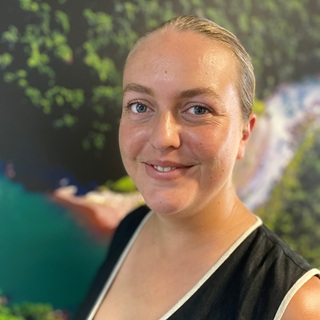
Rowan is a conservation scientist with a background in wildlife science and tropical ecology. She holds a Bachelor of Wildlife Science from the University of Queensland and has recently completed a Master of Tropical Biology and Conservation at James Cook University.
Rowan brings experience in science communication, with a strong interest in connecting people with conservation outcomes. In her role with Wet Tropics Waterways, she supports initiatives that combine scientific knowledge with community outreach to help protect the Wet Tropics and Great Barrier Reef catchments, and to strengthen collaboration between researchers, stakeholders, and the wider community.