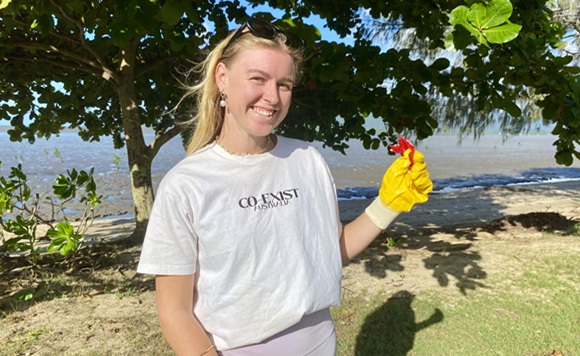
Co-exist Cairns: Next Generation of Coastal Carers
Co-exist Cairns is a new environmental (ad social) group for 18-30 year olds.

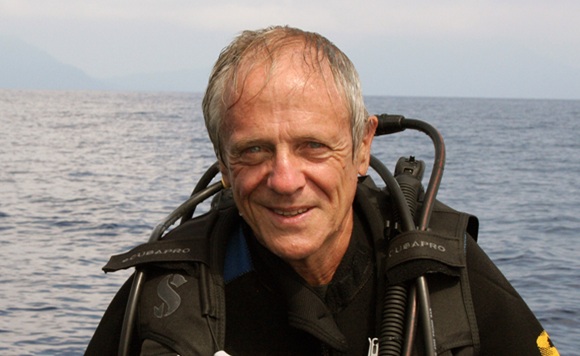
When John ‘Charlie’ Veron was a kid, he had an octopus as a pet for about a year – back when it wasn’t known that the Sydney blue-ringed octopus was one of the most deadly creatures in the ocean.
‘Occie’ would come out of a cave in Charlie’s aquarium when he was called and would crawl up his arm to feed on meat snacks. So began a deep curiosity for all creatures that led a schoolteacher to call him ‘Charles Darwin’. The name stuck – well at least the first part – and so did his fascination with nature.
Charlie became the first full-time researcher on the Great Barrier Reef and he has since studied most of the world’s major reefs. Now in his 80s, he and his wife Mary, who is also a researcher, are compiling ‘Corals of the World’, an open-access website on coral identification. He’s also a visionary, with Great Barrier Reef Legacy, in developing Australia’s first coral biobank, at Port Douglas, to preserve coral biodiversity for future generations.
What was your first impression of the Great Barrier Reef?
I was 22 or 23 years old and it was mind-boggling for me – life changing. It was more alive than anything I had experienced before. I would stay on the reef all day long, until I was absolutely exhausted.
Best experience on the Reef:
After so many years, what is most interesting to me now isn’t the chocolate box type pretty reefs, it’s the more unusual habitats. Things like inshore reefs and mangrove habitats where you see completely different corals.
What changes have you seen over the years?
The damage from coral bleaching. The first time I saw a mass bleaching was while working in Japan in 1987. I came across a bay that was really isolated. There were no people, no roads, no nothing, and all the corals were white. I thought ‘something like this has been noticed on parts of the Great Barrier Reef’. That’s when I first realised there was a connection between climate change and bleaching of corals.
Is the coral biobank a way to help futureproof the reef?
Yes. It backs up the living biodiversity of corals, for reef research and restoration efforts. The goal is to complete the collection of all 415 species and to safeguard them for the future. Preserving coral biodiversity buys us time – for science to advance, for conservation solutions to scale and for global action to curb greenhouse gas emissions so that ocean conditions can recover, giving corals a real chance not just to survive but to flourish.
How important is coral to the Reef?
Coral is home to about 70 per cent of all marine species at some point of their life cycle. And you’ve only got to swim over a reef to see why – there are lots of little fish everywhere but as you swim towards them they’ll disappear into the coral. They’re protected by it and down deeper there are tiny larvae of everything. If coral dies, or turns to rubble, all that protection goes. And it’s not just about the marine world. The oceans are the lungs of Earth, absorbing carbon dioxide from the atmosphere and regulating the temperature of air and water.
Tell us about your website ‘Corals of the World’…
It details every species of coral in the world – its taxonomy, diversity and distribution. It’s my lifetime’s work, and everyone else’s. At the moment, we are producing an expanded version, that’ll hopefully be available this year. (Visit www.coralsoftheworld.org)
Come and see the Forever Reef project:
179 of 415 coral species have so far been collected for the Great Barrier Reef Legacy’s living coral biobank. To learn more about taking a tour of the ‘coral ark’, or adopting a coral, visit www.foreverreef.org
Co-exist Cairns is a new environmental (ad social) group for 18-30 year olds.
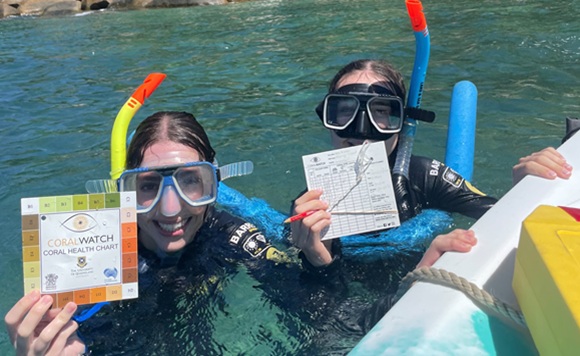
Co-exist Cairns is a new environmental (ad social) group for 18-30 year olds.
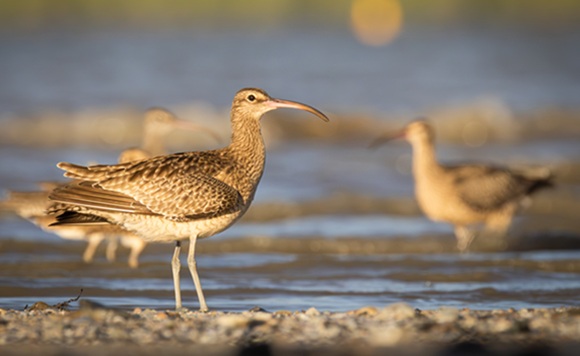
Whimbrels migrate thousands of miles to feed along the Cairns Esplanade each year.

Martine joined the Wet Tropics Waterways team as a Science Technical Officer in early 2024. She is an environmental scientist and ecologist and has worked on water quality and aquatic ecology projects as a consultant and in private industry for over 20 years. She is using her experience in statistical programming and database development to develop new systems for the Report Card.

Richard has been the Science Technical Officer for Wet Tropics Waterways since 2016. His role involves producing the annual results for the waterway health assessment of the wet tropics region using data from a wide range of sources, to present as scores and grades, as well as developing new indicators to address knowledge and monitoring gaps. He works in collaboration with technical staff at other regional report cards.
Richard has a background in freshwater ecology research projects and environmental assessments with CSIRO, University of Queensland, Queensland Government and as a consultant. For a long time he’s been interested in freshwater aquaculture and continues this interest through farming freshwater crayfish, alongside other farming activities.
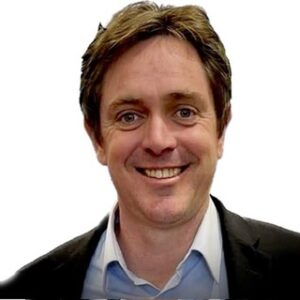
Simon has over 30 years’ experience advocating for waterways across academia, government and the private sector. He started out in marine botany with a fascination for seagrass, mangroves and macroalgae, and has gone on to lead major environmental initiatives both in Australia and overseas. He has established report cards in eight countries.
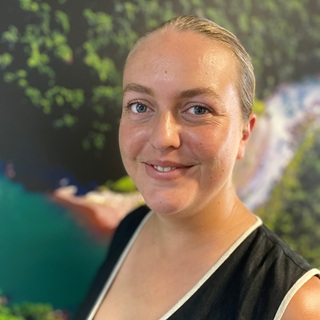
Rowan is a conservation scientist with a background in wildlife science and tropical ecology. She holds a Bachelor of Wildlife Science from the University of Queensland and has recently completed a Master of Tropical Biology and Conservation at James Cook University.
Rowan brings experience in science communication, with a strong interest in connecting people with conservation outcomes. In her role with Wet Tropics Waterways, she supports initiatives that combine scientific knowledge with community outreach to help protect the Wet Tropics and Great Barrier Reef catchments, and to strengthen collaboration between researchers, stakeholders, and the wider community.