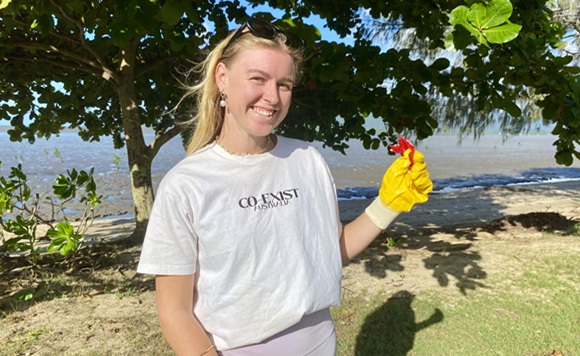
Co-exist Cairns: Next Generation of Coastal Carers
Co-exist Cairns is a new environmental (ad social) group for 18-30 year olds.

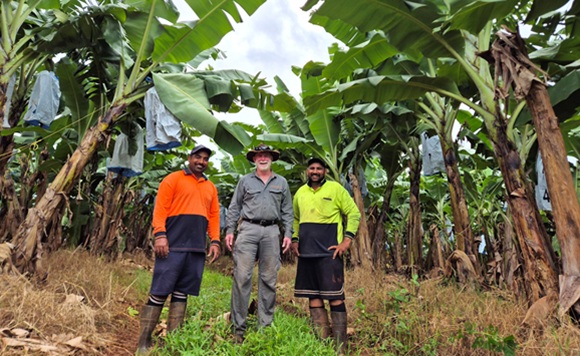
As a kid, Mark Gallagher remembers “soil as bare as bitumen” between rows on his family’s first banana farm. His parents, Pat and Patricia, bought the 77 hectares of former cattle farming land in the 1960s and started growing bananas the traditional way.
“In those days bare ground was still the practice,’’ Mark says. “But it made no sense in this environment – with hilly terrain, high rainfall and a 12-month crop that keeps you continually travelling through the rows.
“Questioning why things were done a certain way kept us looking for better solutions.”
The Gallagher family would go on to become one of Australia’s biggest banana plantation owners – and a frontrunner in changes to banana farming practices ranging from ground cover and paddock design to reducing chemical inputs by trialling biological products.
With land beside the North Johnstone River and Rankine Creek, they also revegetated, creating strips of forest between farming land and waterways.
Over the years, Mark estimates 100,000 trees have been planted along river and creek banks and in unfarmable gullies, with seedlings from his home nursery and Tablelands environment group TREAT.
“Fifty years ago, no one was thinking ‘BMP’ (Best Management Practice),’’ he says.
“We were just doing what we thought would support the business of growing bananas and also safeguarding the environment.”
Mark says one of the biggest environmental changes they made was starting to allow native grasses and weeds to grow back under the banana canopies – a standard practice in banana farming these days.
“We’d only slash it back where the tractor runs were, and we’d use that as additional mulch for the trees,’’ he says. “Keeping the grass cover has reduced soil movement, runoff and erosion, and it also helped our soil profile.”
The family also contoured large areas of their steeper cleared land.
“It has spread out the flow of water in heavy rain and taken the energy out of it,’’ he says. “And it also makes the paddocks easier to work. Grassing the headlands and having riparian vegetation complements that. It’s continuing to slow down water coming off the land.”
Farming between Innisfail and Milla Millaa, with a backdrop of rainforest and mountains, he says the environment was always front of mind.
“This is a unique part of the world and the effects of our actions don’t always stop at our boundaries. The small things matter, especially in a high rainfall environment.”
Mark and his brothers, Michael and Robert and their families, sold their farming land last year but their legacy of sustainable farming continues through Jagjeet Singh, an employee who bought the original farm with his family.
The last year has been a transitional one, with Mark still on the land most days. Jagjeet says Mark’s ongoing support has been invaluable, along with everything he has learnt on the land over the years.
The Singhs have 150 acres under bananas and are now planning to replant the other 100 acres, which has been fallow for almost a year. They are also working with extension officers from the Australian Banana Growers Council, who will be taking aerial footage of the fallow paddocks to help plan for planting in a way that’ll make the best use of the land while also preventing erosion.
Jagjeet says he has changed, with the land, during his 10 years at Wadda Plantation.
“Your viewpoints on things alter when you see the results – of things like using chemicals and fertilisers more wisely and having ground cover,’’ he says.
“Walking through the grass with banana bunches, I used to only be thinking it was making it harder. But if you don’t have the ground cover you’re not protecting the land and you lose the good insects and, potentially, the most important thing, the soil.
“We can see the systems that were developed over 58 years of farming are working – from good drainage to good plantings. With the fertile soil and these systems, we’ve had a smooth transition. I love this land, this environment.”
Co-exist Cairns is a new environmental (ad social) group for 18-30 year olds.
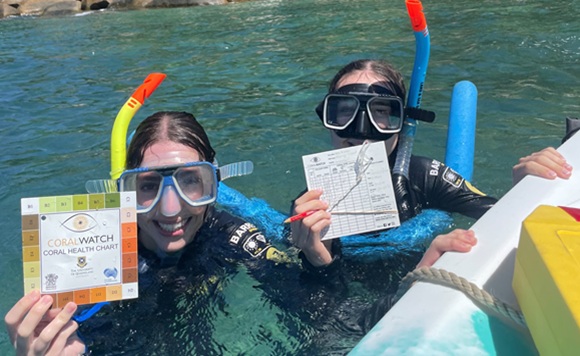
Co-exist Cairns is a new environmental (ad social) group for 18-30 year olds.
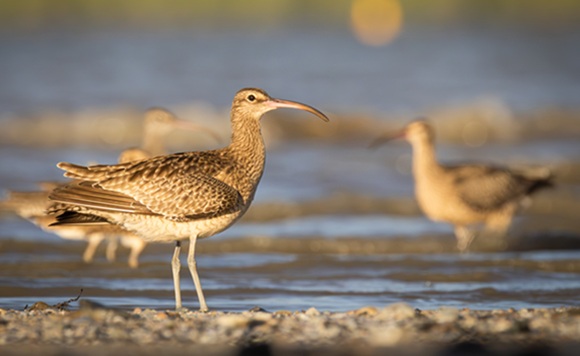
Whimbrels migrate thousands of miles to feed along the Cairns Esplanade each year.

Martine joined the Wet Tropics Waterways team as a Science Technical Officer in early 2024. She is an environmental scientist and ecologist and has worked on water quality and aquatic ecology projects as a consultant and in private industry for over 20 years. She is using her experience in statistical programming and database development to develop new systems for the Report Card.

Richard has been the Science Technical Officer for Wet Tropics Waterways since 2016. His role involves producing the annual results for the waterway health assessment of the wet tropics region using data from a wide range of sources, to present as scores and grades, as well as developing new indicators to address knowledge and monitoring gaps. He works in collaboration with technical staff at other regional report cards.
Richard has a background in freshwater ecology research projects and environmental assessments with CSIRO, University of Queensland, Queensland Government and as a consultant. For a long time he’s been interested in freshwater aquaculture and continues this interest through farming freshwater crayfish, alongside other farming activities.
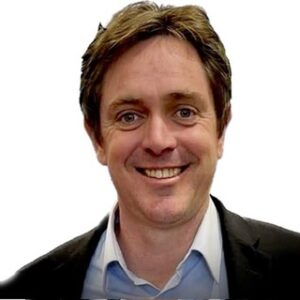
Simon has over 30 years’ experience advocating for waterways across academia, government and the private sector. He started out in marine botany with a fascination for seagrass, mangroves and macroalgae, and has gone on to lead major environmental initiatives both in Australia and overseas. He has established report cards in eight countries.
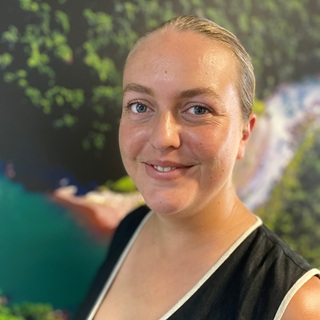
Rowan is a conservation scientist with a background in wildlife science and tropical ecology. She holds a Bachelor of Wildlife Science from the University of Queensland and has recently completed a Master of Tropical Biology and Conservation at James Cook University.
Rowan brings experience in science communication, with a strong interest in connecting people with conservation outcomes. In her role with Wet Tropics Waterways, she supports initiatives that combine scientific knowledge with community outreach to help protect the Wet Tropics and Great Barrier Reef catchments, and to strengthen collaboration between researchers, stakeholders, and the wider community.