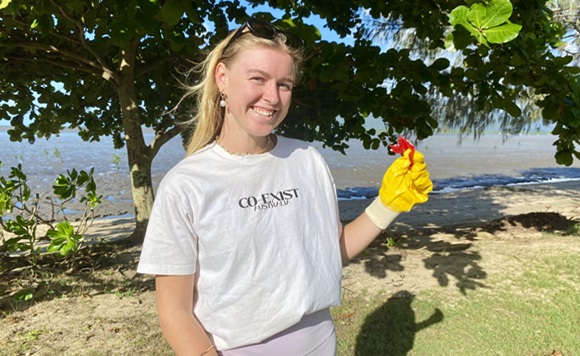
Co-exist Cairns: Next Generation of Coastal Carers
Co-exist Cairns is a new environmental (ad social) group for 18-30 year olds.

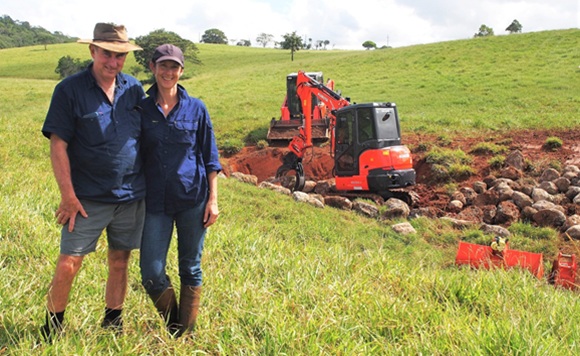
Every wet season, landholders lose valuable topsoil when it’s washed off the land and into creeks and rivers. Now graziers are combining tree-plantings with engineered structures to solve an age-old problem in our high rainfall region.
Seven years ago, Owen Rankine took a chance on three ‘Zuni bowls’ to fix his erosion problems. The bowls are rock structures that stop eroded gullies from getting even bigger during rain events, and they were the first to be built on farms in the Wet Tropics region.
“The concept made sense,’’ Owen says as he looks out over a Zuni bowl surrounded by pasture. “And the bowls have done exactly what they were supposed to do. They’ve slowed down the water, dispersed it across the land and given the grass a chance to grow over bare dirt.
“They’ve held up really well over some solid wet seasons.”
Zuni bowls, named after the Zuni Valley’s Native American Pueblo people, are built at vertical drops in gullies to act as erosion-busters. The new bowls were part of a bigger project coordinated by Terrain NRM to improve pasture, land and the water flowing down creeks on the Tablelands.
Owen and his partner Rona Starczewska run about 400 head of beef cattle in the Malanda region. As part of the same project, they fenced of their waterways and installed a dam-to-troughs watering system that’s powered by a solar pump.
They’ve also joined a recent Emrie Creek tree-planting initiative where hundreds of native trees have been planted on four neighbouring properties through a Tablelands Regional Council program.
Owen says the changes are steadily helping both his beef cattle and the environment. He’s now planning for erosion control work further upstream.
“We’ve seen a big turnaround from previous wet seasons when gully erosion was getting worse each event and topsoil was washing away. With the cattle completely out of our creeks now and with less bare ground in the gully area, the water running off hills is clear about 90 per cent of the time.”
The Petersen family
Trevor Petersen also runs a beef cattle farm on steep hilly land near Malanda. He and his wife Jean and parents Ken and Connie have two creeks winding through their property that eventually flow into the North Johnstone River, and when floods washed out an old cattle-crossing and swept away a section of creek bank, he also wanted to make changes.
Both creeks have now been completely fenced off from cattle, the creek crossing has been remodelled and the family has installed an off-stream solar-powered water supply system for cattle. Hundreds of trees and grasses were also planted along the creek.
“This is a steep area and over time it was eroding away,’’ Trevor says. “Now we’ve got a nice little green corridor that’s a kilometre wide. The trees are great wind breaks for the cattle, and the soil isn’t getting washed away anymore.
“Improving our creeks has helped in many ways – our pastures are better which improves animal nutrition, we don’t have cattle slipping down the banks anymore and less soil is washing away. We are seeing more birds and platypuses.”
Fast Facts:
Graziers worked with Terrain NRM as part of the Upper Johnstone Integrated Project, funded by the Queensland Government’s Natural Resources Investment Program, and with the Tablelands Regional Council as part of the Riparian Restoration on Private Land project, funded by the Australian Government to enable Reef Guardian Councils to deliver projects and activities identified in their Reef Action Plans.
Co-exist Cairns is a new environmental (ad social) group for 18-30 year olds.
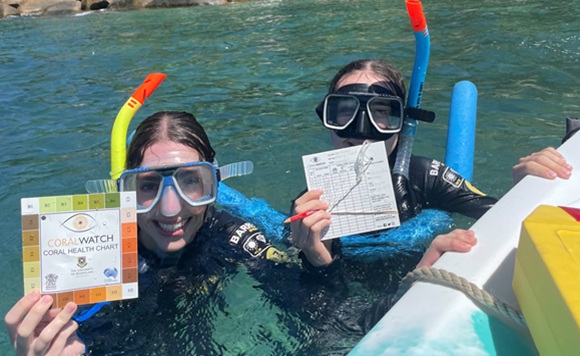
Co-exist Cairns is a new environmental (ad social) group for 18-30 year olds.
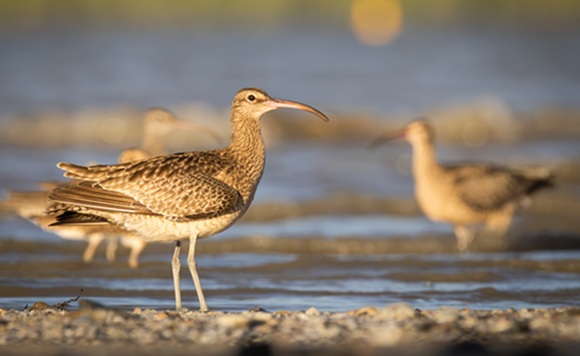
Whimbrels migrate thousands of miles to feed along the Cairns Esplanade each year.

Martine joined the Wet Tropics Waterways team as a Science Technical Officer in early 2024. She is an environmental scientist and ecologist and has worked on water quality and aquatic ecology projects as a consultant and in private industry for over 20 years. She is using her experience in statistical programming and database development to develop new systems for the Report Card.

Richard has been the Science Technical Officer for Wet Tropics Waterways since 2016. His role involves producing the annual results for the waterway health assessment of the wet tropics region using data from a wide range of sources, to present as scores and grades, as well as developing new indicators to address knowledge and monitoring gaps. He works in collaboration with technical staff at other regional report cards.
Richard has a background in freshwater ecology research projects and environmental assessments with CSIRO, University of Queensland, Queensland Government and as a consultant. For a long time he’s been interested in freshwater aquaculture and continues this interest through farming freshwater crayfish, alongside other farming activities.
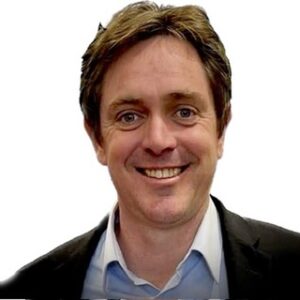
Simon has over 30 years’ experience advocating for waterways across academia, government and the private sector. He started out in marine botany with a fascination for seagrass, mangroves and macroalgae, and has gone on to lead major environmental initiatives both in Australia and overseas. He has established report cards in eight countries.
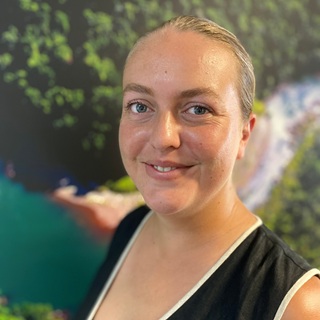
Rowan is a conservation scientist with a background in wildlife science and tropical ecology. She holds a Bachelor of Wildlife Science from the University of Queensland and has recently completed a Master of Tropical Biology and Conservation at James Cook University.
Rowan brings experience in science communication, with a strong interest in connecting people with conservation outcomes. In her role with Wet Tropics Waterways, she supports initiatives that combine scientific knowledge with community outreach to help protect the Wet Tropics and Great Barrier Reef catchments, and to strengthen collaboration between researchers, stakeholders, and the wider community.