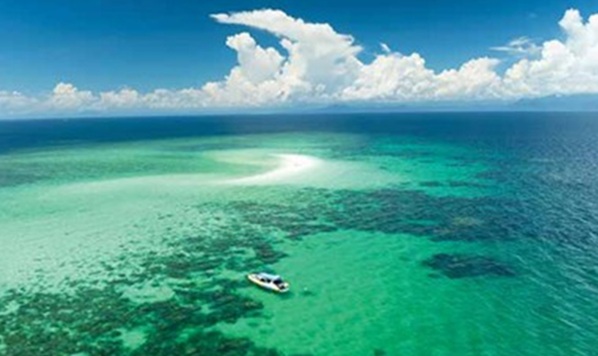
50 years of protecting the reef.
Establishing the Great Barrier Reef Marine Park in 1975 was a game changer
Healthy waterways underpin our lifestyles and livelihoods. When waterways thrive, so do we.
Community action helping to keep waterways resilient
Action by landholders and local communities is helping to maintain waterway health across the Wet Tropics, with conditions holding steady at ‘good’ to ‘moderate’ despite increasing climate pressures. The latest Wet Tropics Waterway Health Report Card shows that ongoing efforts to improve land management, restore habitats and reduce runoff are playing a critical role in protecting rivers, estuaries and the Great Barrier Reef downstream.
Wet Tropics Waterways Chair Dr Simon Costanzo said the relatively stable results reflect years of collaboration and investment across the region.
“The fact that grades have remained steady, despite repeated floods, storms and marine heatwaves, reflects the combined efforts of landholders, communities, governments and industry,” Dr Costanzo said.
“Across the region, people are taking action—improving farming practices, restoring riparian vegetation, and participating in clean-up and rehabilitation projects—and together it’s making a difference.”
Based on 11 years of monitoring Dr Costanzo said the report card is providing valuable insights into long-term trends.
“With more than a decade of consistent, independent monitoring, we can look beyond seasonal fluctuations and better understand how our waterways are faring over time. So far, they seem to be holding ground, which highlights how important it is for everyone to stay focused on taking action,” he said.
While the overall picture is one of resilience, the report also highlights the ongoing challenges posed by extreme weather events. Heavy rainfall and widespread flooding in the southern Wet Tropics increased sediment and nutrient runoff that extended into coastal waters.
Rainfall totals for February 2025 exceeded two metres in the lower Herbert region, triggering significant flooding around Ingham.
“This pushed low-salinity flood waters onto inshore coral reefs, impacting coral condition,” Dr Costanzo said.
This year’s report card also highlights the strong link between land use and waterway health, with notable improvements in the Mossman catchment following a major shift in agricultural activity.
Dr Costanzo said the change followed the loss of an industry that had supported the Mossman community for generations.
“Following the closure of the Mossman mill, sugarcane harvest declined by more than 50 per cent, and with it the amount of fertiliser and pesticide applied across the catchment,” Dr Costanzo said.
“Pesticide risk in the Mossman catchment has shifted from ‘moderate’ to ‘very low’ while dissolved inorganic nitrogen (fertiliser) has improved from ‘poor’ to ‘good’ over the past two years.
“This reflects the close link between land use practices and the condition of rivers, estuaries and the reef downstream.”
He said the future health of the catchment will depend on how land use continues to evolve, with alternative crops being trialled and grazing expanding.
“Whatever replaces sugarcane, working closely with growers and the community to manage it well will be critical for sustaining both livelihoods and healthy waterways,” he said.
Minister for the Environment and Tourism Andrew Powell said the report card showed the value of long-term partnerships between communities, industry, and government to protect the health of Wet Tropics waterways and the Great Barrier Reef.
“Nobody loves the Reef more than Queenslanders, and these results are encouraging because they show the positive impact of practical, on-ground action to improve and protect water quality,” Minister Powell said.
“The findings reinforce why the Crisafulli Government is investing a record $330.5 million to improve Great Barrier Reef water quality and support action across Reef catchments, because healthy waterways are essential to a healthy Reef and to protecting these natural assets for future generations.”
The Wet Tropics Waterway Health Report Card has been released annually by Wet Tropics Waterways as part of the superseded Reef 2050 Water Quality Improvement Plan (now replaced by the Reef 2050 Catchment Water Quality Strategy), a joint Australian and Queensland Government initiative to protect the Great Barrier Reef.
The report draws on scientific monitoring from multiple organisations and is independently reviewed by an expert scientific panel.
Wet Tropics Waterways is a partnership supported by the Australian and Queensland governments, local councils, industry, community groups and stakeholders, including host organisation Terrain NRM.

Establishing the Great Barrier Reef Marine Park in 1975 was a game changer

150 cane farmers are participating in a project to boost productivity and water quality

Read about some of our region's rare and unusual native fish species

Martine joined the Wet Tropics Waterways team as a Science Technical Officer in early 2024. She is an environmental scientist and ecologist and has worked on water quality and aquatic ecology projects as a consultant and in private industry for over 20 years. She is using her experience in statistical programming and database development to develop new systems for the Report Card.

Richard has been the Science Technical Officer for Wet Tropics Waterways since 2016. His role involves producing the annual results for the waterway health assessment of the wet tropics region using data from a wide range of sources, to present as scores and grades, as well as developing new indicators to address knowledge and monitoring gaps. He works in collaboration with technical staff at other regional report cards.
Richard has a background in freshwater ecology research projects and environmental assessments with CSIRO, University of Queensland, Queensland Government and as a consultant. For a long time he’s been interested in freshwater aquaculture and continues this interest through farming freshwater crayfish, alongside other farming activities.

Simon has over 30 years’ experience advocating for waterways across academia, government and the private sector. He started out in marine botany with a fascination for seagrass, mangroves and macroalgae, and has gone on to lead major environmental initiatives both in Australia and overseas. He has established report cards in eight countries.
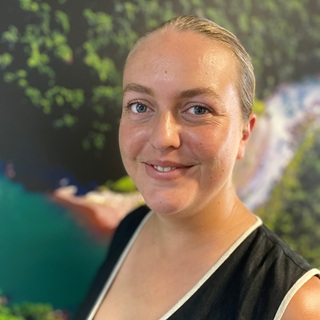
Rowan is a conservation scientist with a background in wildlife science and tropical ecology. She holds a Bachelor of Wildlife Science from the University of Queensland and has recently completed a Master of Tropical Biology and Conservation at James Cook University.
Rowan brings experience in science communication, with a strong interest in connecting people with conservation outcomes. In her role with Wet Tropics Waterways, she supports initiatives that combine scientific knowledge with community outreach to help protect the Wet Tropics and Great Barrier Reef catchments, and to strengthen collaboration between researchers, stakeholders, and the wider community.