50 years of protecting the reef.
Establishing the Great Barrier Reef Marine Park in 1975 was a game changer
Healthy waterways underpin our lifestyles and livelihoods. When waterways thrive, so do we.
The insect larvae, snails and worms living in our creeks are a great indicator of waterway health and a group of Kuranda locals are now seeking them out.
Lance Neville and Tapio Lindderhaus are dipping nets into a shallow, fast-moving section of Jum Rum Creek and peering at the contents intently. Behind them, others are scooping beetles, worms and fly nymphs out of water trays and recording their type.
Then they’re returned to the environment. It’s a Sunday macroinvertebrate identification session that’s bringing Kuranda locals together and giving dragon, damsel and caddisflies the kind of respect that’s usually reserved for iconic Wet Tropics species like cassowaries and green tree frogs.
These backboneless critters are fantastic indicators of waterway health, and Kuranda Envirocare volunteers have been surveying creeks each week for two-and-a-half months, following up on trial survey sessions last year.
“Because species like mayflies and caddisflies are highly sensitive to pollution in the water they can help us to detect subtle changes,’’ Kuranda Envirocare’s Cathy Retter says.
The group has been taking water samples from 13 creeks in the Kuranda region, west of Cairns, for the last three years and recording everything from temperature to oxygen levels and turbidity. The data will help to alert us to emerging problems in the future, and it’ll also be used to better protect the critically endangered Kuranda tree frog and other rainforest species.
“So far we haven’t seen big differences in the creeks,’’ Cathy says. “But from our frog monitoring over 10 years we’ve seen significant differences in the number of Kuranda tree frogs at creek breeding sites. The numbers at sites can range from two to 15.
“We know very little about what components of stream health impact frogs in this region, or in Australian streams more broadly. We are hoping that macroinvertebrate monitoring in six of our monitored creeks will provide more data.”
The current monitoring will set up a baseline – which Cathy says is now more important than ever given the large-scale disturbance to critical habitat caused by flooding after Cyclone Jasper in December 2023.
“We are surveying the number of different species of macroinvertebrates and the total number of macroinvertebrates that live in the water for at least part of their life cycle. Some are extremely sensitive to pollution and can show us subtle changes and if there are lots of a certain type of macroinvertebrate and none of others, that’s also an indicator.”
Kuranda tree frogs only have 13 monitored breeding sites, and the overall population is concerningly small. The females may only breed three or four times in their life. These critically endangered frogs live in rainforest trees and breed in shallow, fast moving sections of creeks. Threats to egg clutches and tadpoles include water quality and larger predatory fish.
The macroinvertebrate project is funded through the Queensland Government’s ‘Engaging Science’ grants.
FUN FACTS
Macroinvertebrates aren’t just great indicators of waterway health. They’re also awesome because they:

Establishing the Great Barrier Reef Marine Park in 1975 was a game changer

150 cane farmers are participating in a project to boost productivity and water quality

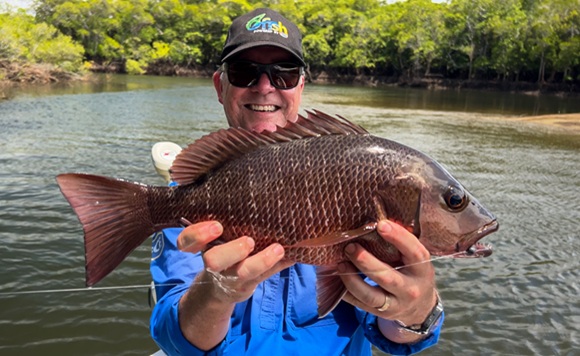
Read about some of our region's rare and unusual native fish species

Martine joined the Wet Tropics Waterways team as a Science Technical Officer in early 2024. She is an environmental scientist and ecologist and has worked on water quality and aquatic ecology projects as a consultant and in private industry for over 20 years. She is using her experience in statistical programming and database development to develop new systems for the Report Card.

Richard has been the Science Technical Officer for Wet Tropics Waterways since 2016. His role involves producing the annual results for the waterway health assessment of the wet tropics region using data from a wide range of sources, to present as scores and grades, as well as developing new indicators to address knowledge and monitoring gaps. He works in collaboration with technical staff at other regional report cards.
Richard has a background in freshwater ecology research projects and environmental assessments with CSIRO, University of Queensland, Queensland Government and as a consultant. For a long time he’s been interested in freshwater aquaculture and continues this interest through farming freshwater crayfish, alongside other farming activities.
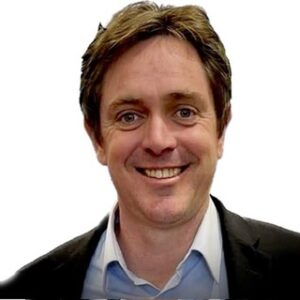
Simon has over 30 years’ experience advocating for waterways across academia, government and the private sector. He started out in marine botany with a fascination for seagrass, mangroves and macroalgae, and has gone on to lead major environmental initiatives both in Australia and overseas. He has established report cards in eight countries.
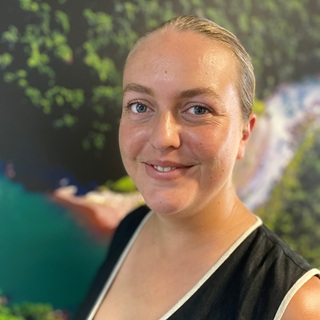
Rowan is a conservation scientist with a background in wildlife science and tropical ecology. She holds a Bachelor of Wildlife Science from the University of Queensland and has recently completed a Master of Tropical Biology and Conservation at James Cook University.
Rowan brings experience in science communication, with a strong interest in connecting people with conservation outcomes. In her role with Wet Tropics Waterways, she supports initiatives that combine scientific knowledge with community outreach to help protect the Wet Tropics and Great Barrier Reef catchments, and to strengthen collaboration between researchers, stakeholders, and the wider community.