50 years of protecting the reef.
Establishing the Great Barrier Reef Marine Park in 1975 was a game changer
Healthy waterways underpin our lifestyles and livelihoods. When waterways thrive, so do we.
Conservation and landcare organisations across the Wet Tropics have formed an alliance to coordinate and scale up their activities to protect and repair landscapes.
The Wet Tropics is the only place on the planet with two interconnected World Heritage Areas – the Wet Tropics Forest and the Great Barrier Reef. These two ecosystems have a symbiotic relationship, with forests serving as a natural sponge, collecting and cleansing rainfall and releasing it slowly into streams and rivers.
However, both ecosystems are at risk from climate change and significant landscape restoration is needed across the region.
To scale up and coordinate forest restoration, over thirty organisations have joined forces by establishing the Wet Tropics Restoration Alliance.
Kylie Freebody, Coordinator of the Alliance, says it was instigated to enable and support the restoration industry to scale up their efforts to protect, connect and restore critical ecosystems to address the climate emergency.
“The Wet Tropics is comprised of rainforests, wet sclerophyll, dry woodlands, mangroves and swamps. Since European settlement there has been extensive clearing of forest areas so rather than being one big, connected ecosystem, the region is made up of large, fragmented areas of habitat that are disconnected by the road network, powerlines and farmland,” she says.
“It’s not just about planting trees, we need to be strategic. Focusing and coordinating our efforts to protect, reconnect and buffer existing forest areas, will make it more resilient to threats like climate change, pests and weeds.”
Around 48 per cent of the two million hectares of Wet Tropics bioregion is protected in the World Heritage Area. It is bordered by thousands of small land holdings owned and managed by private landholders, many of which have remnant forest that isn’t protected but could play a vital role in improving landscape functionality.
“Our partners work with landholders in priority rehabilitation areas and, where possible, support them with grants to restore, rehabilitate and protect the forest on their properties.”
Established in 2022, the purpose of the Restoration Alliance is to share knowledge and information about innovation in landscape repair, showcase different projects and provide opportunities for networking to help build capacity to scale up restoration work across the region.
“There are many groups and individuals in the Wet Tropics who are passionate and committed to conservation. If we work together strategically, we will be much more effective,” Kylie says.
The benefits of forest restoration are numerous including carbon sequestration, better water quality, flood mitigation, improved habitat for threatened species and refuge for wildlife migrating from hotter drier areas.
“Planting forests in the Wet Tropics is expensive, particularly rainforest, because trees are typically planted at higher densities. This requires labour intensive and costly manual maintenance to eliminate the competing grasses and weeds. So, we are looking at new ways to bring investment into the region so that the on-ground groups can get busy, and we can create jobs for the future. However, preserving the forest that already exists is the most cost-effective strategy.”

Establishing the Great Barrier Reef Marine Park in 1975 was a game changer

150 cane farmers are participating in a project to boost productivity and water quality

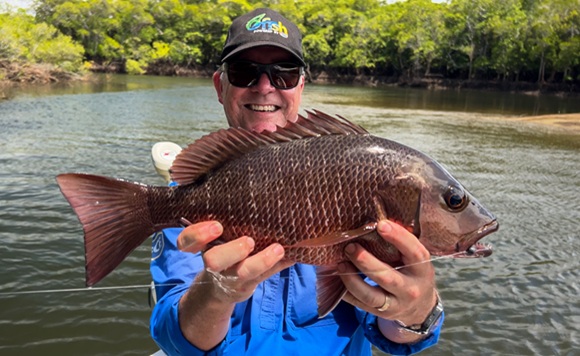
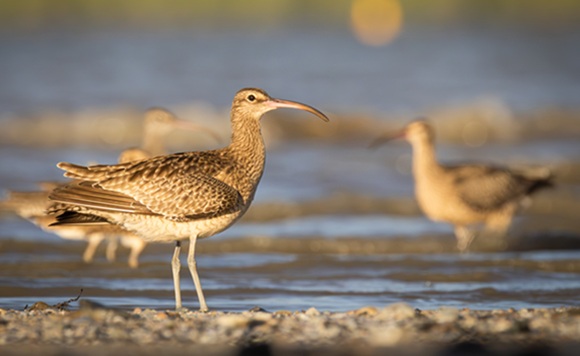
Read about some of our region's rare and unusual native fish species

Martine joined the Wet Tropics Waterways team as a Science Technical Officer in early 2024. She is an environmental scientist and ecologist and has worked on water quality and aquatic ecology projects as a consultant and in private industry for over 20 years. She is using her experience in statistical programming and database development to develop new systems for the Report Card.

Richard has been the Science Technical Officer for Wet Tropics Waterways since 2016. His role involves producing the annual results for the waterway health assessment of the wet tropics region using data from a wide range of sources, to present as scores and grades, as well as developing new indicators to address knowledge and monitoring gaps. He works in collaboration with technical staff at other regional report cards.
Richard has a background in freshwater ecology research projects and environmental assessments with CSIRO, University of Queensland, Queensland Government and as a consultant. For a long time he’s been interested in freshwater aquaculture and continues this interest through farming freshwater crayfish, alongside other farming activities.

Simon has over 30 years’ experience advocating for waterways across academia, government and the private sector. He started out in marine botany with a fascination for seagrass, mangroves and macroalgae, and has gone on to lead major environmental initiatives both in Australia and overseas. He has established report cards in eight countries.
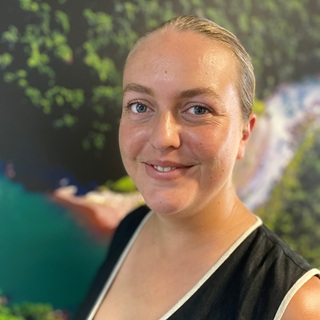
Rowan is a conservation scientist with a background in wildlife science and tropical ecology. She holds a Bachelor of Wildlife Science from the University of Queensland and has recently completed a Master of Tropical Biology and Conservation at James Cook University.
Rowan brings experience in science communication, with a strong interest in connecting people with conservation outcomes. In her role with Wet Tropics Waterways, she supports initiatives that combine scientific knowledge with community outreach to help protect the Wet Tropics and Great Barrier Reef catchments, and to strengthen collaboration between researchers, stakeholders, and the wider community.