
Yungaburra’s platypus.
Improving water quality and platypus habitat at Yungaburra's Petersens Creek

Forests, particularly along rivers and creeks, help filter out sediment and pollutants before they reach the ocean. In regions like the Wet Tropics, where rainfall is intense and waterways are short and steep, stabilising the land is crucial for reducing runoff that can damage coral reefs.
That’s why the Queensland Government’s Reef Assist program is funding projects that restore wetlands, plant native vegetation and strengthen riverbanks. These efforts are improving catchment health and also creating ‘green jobs and training opportunities.
Greening the Mulgrave River
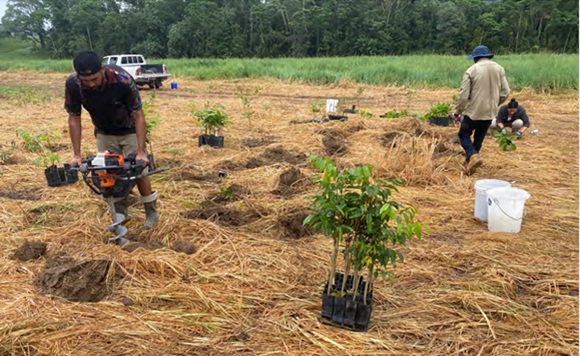
One of the current Reef Assist projects is revegetation work along the Mulgrave River near Gordonvale. It’s being delivered by the Madjaybana Rangers in partnership with Mulgrave Landcare and its diverse network of volunteers. They’re planting native trees along a section of river where cane paddocks meet mangroves, close to the river’s mouth.
The seedlings are growing on the edge of a cane paddock. Mulgrave Landcare’s Rachel Platte says it’s marginal farming land, with soils that are becoming increasingly salty.
“We work with farmers on creating buffers between waterways and cane land to stabilise riverbanks and regenerate the landscape,’’ she says.
“This is a brackish area in an old cane paddock, a little section in a loop behind mangroves that would have been covered in mangroves and rainforest many years ago. Madjaybana Rangers have planted thousands of trees, and we’ve also had public tree-planting days where we can all connect as one community.”
Mulgrave Landcare volunteers collect native seeds and grow seedlings in their volunteer-run nursery. Their latest Reef Assist project builds on a 10,000-tree plant-out on the same landholder’s property, where other types of erosion control work have also been happening. These projects add to more than 30 years of Mulgrave Landcare tree-planting initiatives.
“We love working with landholders. Growing green areas between waterways and farmland helps farmers, the land and our waterways, including the ocean.”
The Mulgrave project is one of six in the Wet Tropics region as part of the Reef Assist program.
Mulgrave Landcare images:
Fast facts: Reef Assist Achievements in the Wet Tropics
The $33.5 million Reef Assist program is funded through the Queensland Government’s Queensland Reef Water Quality Program. The Reef Assist program delivers environmental projects and creates regional jobs for Queenslanders across the Great Barrier Reef catchment from Cape York to Bundaberg.
Improving water quality and platypus habitat at Yungaburra's Petersens Creek

Littoral rainforest is a threatened ecological community along our coastlines

Martine joined the Wet Tropics Waterways team as a Science Technical Officer in early 2024. She is an environmental scientist and ecologist and has worked on water quality and aquatic ecology projects as a consultant and in private industry for over 20 years. She is using her experience in statistical programming and database development to develop new systems for the Report Card.

Richard has been the Science Technical Officer for Wet Tropics Waterways since 2016. His role involves producing the annual results for the waterway health assessment of the wet tropics region using data from a wide range of sources, to present as scores and grades, as well as developing new indicators to address knowledge and monitoring gaps. He works in collaboration with technical staff at other regional report cards.
Richard has a background in freshwater ecology research projects and environmental assessments with CSIRO, University of Queensland, Queensland Government and as a consultant. For a long time he’s been interested in freshwater aquaculture and continues this interest through farming freshwater crayfish, alongside other farming activities.
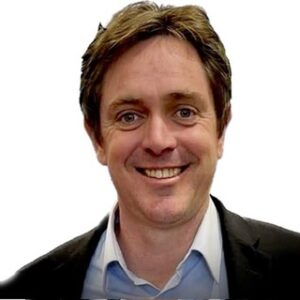
Simon has over 30 years’ experience advocating for waterways across academia, government and the private sector. He started out in marine botany with a fascination for seagrass, mangroves and macroalgae, and has gone on to lead major environmental initiatives both in Australia and overseas. He has established report cards in eight countries.
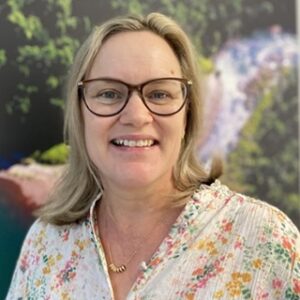
Louise joined Wet Tropics Waterways as Executive Officer in 2025.
Louise Hateley is an environmental scientist with over 20 years of experience in natural resource management, water quality, and catchment modelling across government, research, and community sectors. She has held senior scientific and project coordination roles with the Department of Natural Resources, Mines and Energy and Terrain NRM, leading projects focused on GBR catchment health, waterway management, and sustainable land use. With a record of published research, stakeholder engagement, and project delivery, Louise combines scientific expertise with practical leadership to drive initiatives that protect the Wet Tropics and support community collaboration.