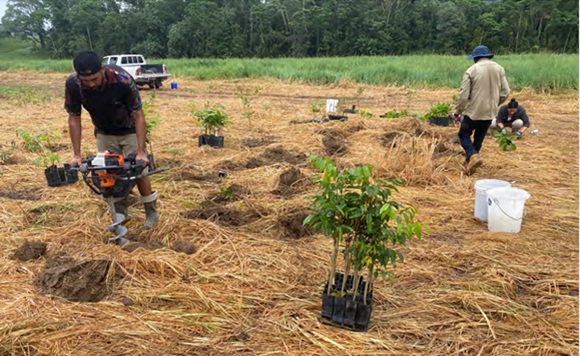
Reef Assist 2.0: Planting seeds and opportunities.
Community groups are restoring riverbanks to help filter water runoff

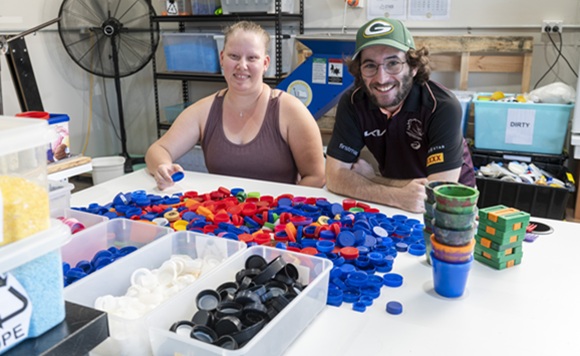
Piles of red, blue, yellow and white plastic bottle tops surround a team of people at the Precious Plastic FNQ workshop in Cairns.
It’s bottle top sorting time, before shredding and then ‘cooking’ using moulds to create products ranging from plant pots and hair combs to blocks for Jenga game set blocks.
“The future is hopefully raw materials like bricks, boards and plastic beams for park benches,’’ Bailey Stevenson says. He’s the Service Coordinator for Precious Plastic FNQ, a disability support service recovering plastics that would otherwise end up as landfill or litter.
The organisation has been building up over five years and now has a collection point for businesses and individuals and a team of about 15 people whose roles range from washing and drying bottle tops and sorting them into plastic types and colours to operating the machines, running an online shop and selling products at community events.
“We are loving filling a gap in the market,’’ Bailey says. “This is recycling that no one else is doing in northern Australia. It’s work that benefits our clients – they’re learning new skills, problem-solving and teamwork and in 18 months four clients have already been employed outside our organisation. What makes it even better is it’s also work that benefits the environment.”
Precious Plastic FNQ client Telena Wraith has been making and selling products for two and-a-half years and she’s also a mentor for newcomers.
“I’ve learnt about how much plastic is wasted every day and how important it is to recycle,’’ she says. “We don’t want to see plastic going into our waterways and killing fish and turtles.”
Bailey says both he and the clients are loving working in the environment sector.
“It’s a great fit. Living in Cairns, we are three steps away from natural wonders in almost any direction. Plastic waste is a threat and it’s up to all of us to help.
“This time the disability community is leading the conversation. We are showing people how to recycle better… and it’s great to hear our guys at the markets talking about things like the importance of recycling right and re-using items, the dangers of microplastics and the ways we can help our oceans.”
How you can help
Community groups are restoring riverbanks to help filter water runoff

Improving water quality and platypus habitat at Yungaburra's Petersens Creek

Littoral rainforest is a threatened ecological community along our coastlines

Martine joined the Wet Tropics Waterways team as a Science Technical Officer in early 2024. She is an environmental scientist and ecologist and has worked on water quality and aquatic ecology projects as a consultant and in private industry for over 20 years. She is using her experience in statistical programming and database development to develop new systems for the Report Card.

Richard has been the Science Technical Officer for Wet Tropics Waterways since 2016. His role involves producing the annual results for the waterway health assessment of the wet tropics region using data from a wide range of sources, to present as scores and grades, as well as developing new indicators to address knowledge and monitoring gaps. He works in collaboration with technical staff at other regional report cards.
Richard has a background in freshwater ecology research projects and environmental assessments with CSIRO, University of Queensland, Queensland Government and as a consultant. For a long time he’s been interested in freshwater aquaculture and continues this interest through farming freshwater crayfish, alongside other farming activities.
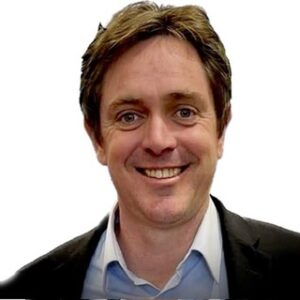
Simon has over 30 years’ experience advocating for waterways across academia, government and the private sector. He started out in marine botany with a fascination for seagrass, mangroves and macroalgae, and has gone on to lead major environmental initiatives both in Australia and overseas. He has established report cards in eight countries.
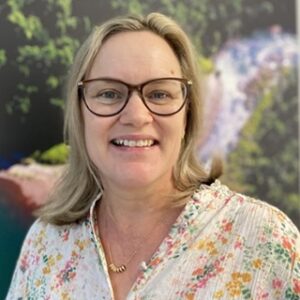
Louise joined Wet Tropics Waterways as Executive Officer in 2025.
Louise Hateley is an environmental scientist with over 20 years of experience in natural resource management, water quality, and catchment modelling across government, research, and community sectors. She has held senior scientific and project coordination roles with the Department of Natural Resources, Mines and Energy and Terrain NRM, leading projects focused on GBR catchment health, waterway management, and sustainable land use. With a record of published research, stakeholder engagement, and project delivery, Louise combines scientific expertise with practical leadership to drive initiatives that protect the Wet Tropics and support community collaboration.