
Pest fish.
Pet fish can become pest fish if they escape into our local waterways and disrupt finely balanced ecosystems.
Healthy waterways underpin our lifestyles and livelihoods. When waterways thrive, so do we.
Trees and plants along rivers, creeks and water bodies are important for stabilising streambanks and preventing sediment runoff.
Streambank erosion is an issue in the Wet Tropics due to the combination of heavy rainfall and significant clearing of riparian zones for urban and agricultural development, particularly in the lower catchments.
All estuaries in the Wet Tropics Waterway Health Report Card score poorly for ‘riparian extent’, which gives an indication of how much vegetation there is along rivers and creeks.
Riparian vegetation is important for waterway health for a number of reasons including:
1. Water Quality Regulation
Vegetation in riparian zones helps filter pollutants and sediment from surface water and groundwater running off the land into waterways. By stabilising soil, the root systems of the vegetation help reduce erosion and prevent silt build up, which improves water quality downstream.
2. Flood Mitigation
The role of these root systems in stablising soil is particularly important during heavy rainfall and flood events since it mitigates the risk of soil erosion and landslides. It also helps minimise the intensity of floods by slowing down the flow of water, which allows more time for excess water to be gradually absorbed into the ground.
3. Temperature Regulation
The shade produced by tree canopies over water helps regulate water temperature, which is crucial for fish and other aquatic species that are sensitive to temperature changes.
4. Wildlife Habitat
The wildlife corridors provided by riparian zones along waterways provide shelter, nesting, feeding, and breeding grounds for a many species of birds, insects, amphibians, and mammals. They also enable wildlife to move easily across the landscape ensuring genetic diversity and ecosystem resilience.
5. Rat reduction
It is a common misperception that trees along streambanks harbour rats, which are a pest for farmers, particularly sugarcane. However, research studies have proven that farms with more riparian vegetation have less rat problems because the trees shade out weeds and grasses, which are the preferred habitat of rats.
Read this booklet for more information: https://www.wettropicsplan.org.au/var/nrm/storage/original/application/1c651f42d2de1b96862052aee4bc0652.pdf
6. Carbon Sequestration
Trees and plants act as a carbon sink by absorbing carbon dioxide from the air and storing it in plant biomass and soil.
What’s been done?
In some erosion hotspots affected by flood damage, engineering solutions including rockwalls and pilefields have been constructed as a short-term measure to shore up heavily degraded riverbanks. These help stabilise the riverbank but the only long-term solution to preventing streambank erosion is to have dense riparian verges.
In other areas, local community conservation and landcare groups have been actively restoring riparian zones throughout the Wet Tropics by planting native species and removing invasive plants.

Pet fish can become pest fish if they escape into our local waterways and disrupt finely balanced ecosystems.

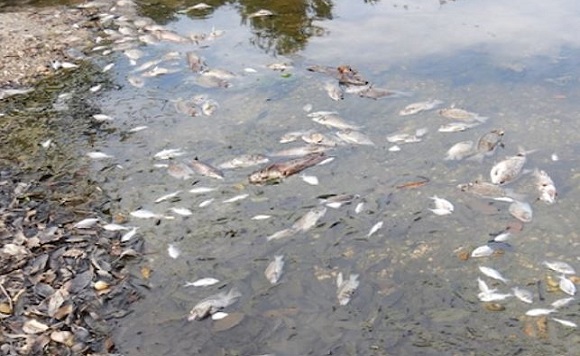
A mass die off of fish can be caused by a number of different factors and they're a reminder of the delicate balance of healthy waterways.

Nutrients, pesticides and sediment runoff from land based activities cause poor water quality for the Great Barrier Reef.

Martine joined the Wet Tropics Waterways team as a Science Technical Officer in early 2024. She is an environmental scientist and ecologist and has worked on water quality and aquatic ecology projects as a consultant and in private industry for over 20 years. She is using her experience in statistical programming and database development to develop new systems for the Report Card.

Richard has been the Science Technical Officer for Wet Tropics Waterways since 2016. His role involves producing the annual results for the waterway health assessment of the wet tropics region using data from a wide range of sources, to present as scores and grades, as well as developing new indicators to address knowledge and monitoring gaps. He works in collaboration with technical staff at other regional report cards.
Richard has a background in freshwater ecology research projects and environmental assessments with CSIRO, University of Queensland, Queensland Government and as a consultant. For a long time he’s been interested in freshwater aquaculture and continues this interest through farming freshwater crayfish, alongside other farming activities.

Simon has over 30 years’ experience advocating for waterways across academia, government and the private sector. He started out in marine botany with a fascination for seagrass, mangroves and macroalgae, and has gone on to lead major environmental initiatives both in Australia and overseas. He has established report cards in eight countries.

Louise joined Wet Tropics Waterways as Executive Officer in 2025.
Louise Hateley is an environmental scientist with over 20 years of experience in natural resource management, water quality, and catchment modelling across government, research, and community sectors. She has held senior scientific and project coordination roles with the Department of Natural Resources, Mines and Energy and Terrain NRM, leading projects focused on GBR catchment health, waterway management, and sustainable land use. With a record of published research, stakeholder engagement, and project delivery, Louise combines scientific expertise with practical leadership to drive initiatives that protect the Wet Tropics and support community collaboration.