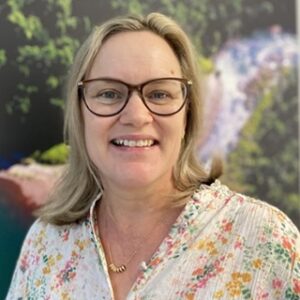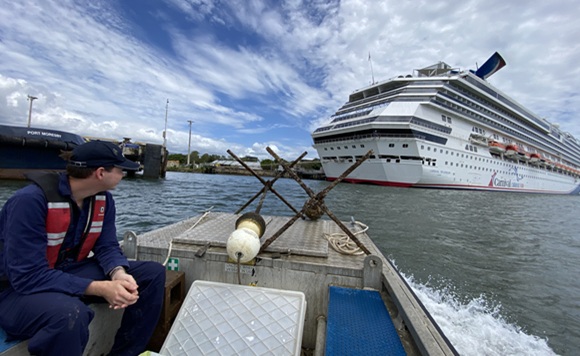
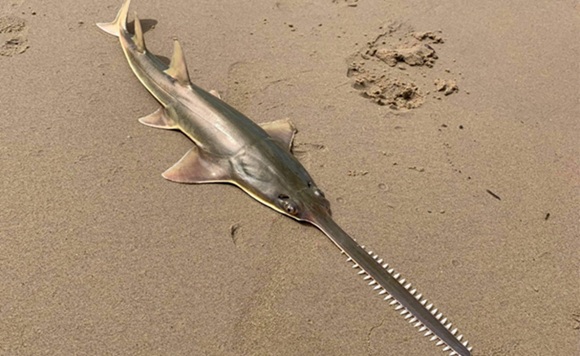
The Cairns-based scientist and the rest of her team are using a mixture of science and detective work to learn more about sawfish populations. Once seen as far south as the Sydney Harbour, sawfish are rarely spotted outside the Gulf of Carpentaria, Northern Territory and Kimberley region now. And that’s why it’s so exciting to hear they’ve been seen in Wet Tropics waters…
“We’ve received sightings from the Cairns area, Port Douglas and Hinchinbrook in recent years,’’ Barbara says.
“One confirmed sighting, from a recreational fisher, was a baby narrow sawfish that was caught and released on Cairns’s northern beaches a few years ago. It was in an area we’d always thought they might be. They don’t necessarily go for crystal clear waters – they like murky areas.
“We’ve also had a few submissions of sharks or guitarfish or sawfish along the Cairns Esplanade in the mornings. But so far we haven’t been able to identify the species, so we’re keen to see more video footage or photos.”
She credits a highly successful citizen science project with most of the sightings. Back in 2017, Sharks and Rays Australia, or SARA, which is a not-for-profit organisation that was founded by Barbara, called for people to submit possible encounters with sawfish.
Since then, they’ve had 1650 responses about either current or historical sawfish. Sixty-eight are from the Wet Tropics region and while some can’t be identified, quite a few were recent sawfish sightings.
Environmental DNA water samples have backed this up. SARA has been working with the Jabalbina Indigenous Rangers to test waters off Cairns and results indicate there are green sawfish at Port Douglas and narrow sawfish in the Cairns region. More eDNA testing will be happening later this year, this time with the Girringun Rangers in the Cardwell region.
“It seems like the narrow sawfish may be doing quite well in this region,’’ Barbara says. “They mature at about three years, grow to four metres and can come into shallow water.”
Sawfish used to also be larger animals. Sadly, their saw-like rostrum made them ‘trophy’ species the world over, and they also fell prey to fishing nets and habitat loss. Now all five sawfish species are listed as either critically endangered or endangered. And Australia’s northern waters are one of the last remaining strongholds for four of the species – the green, dwarf, freshwater and narrow sawfish.
“We have an image from a newspaper in the 1960s of a 2.8 metre dwarf sawfish hung up at the Cairns Sugar Terminal, and one of a six-metre freshwater sawfish caught at the mouth of the Mulgrave River back in 1922.
“By looking at library records across Queensland (thanks to PhD student Nikki Biskis from the University of the Sunshine Coast who is also handling the sightings), we can see there were multiple stages of population decline.
“And now we are taking DNA samples from sawfish on the walls of pubs and roadhouses. We can match DNA in a larger dataset and look at population structure and decline over the decades.
“Back then I think people thought nature had no bounds. The silver lining is that trophy taking from the past has created a scientific treasure trove.
“It is giving us much needed baseline data about the genetic diversity of sawfish before they became endangered, and this helps us to better understand genetic health in today’s populations.”
To submit a sawfish sighting, go to www.cytags.com
BEING SAWFISH SAVVY
- Sawfish are rays. They have gills underneath their bodies.
- Their rostrum, which looks like a large saw, is filled with sensory organs and detects tiny electrical signals given off by other animals, helping them to hunt.
- They live in shallow coastal waters including rivers and estuaries.
- Some species don’t reach sexual maturity for nine years, so population recovery could take decades.
Sharks And Rays Australia’s sawfish project is funded by the partnership between the Australian Government’s Reef Trust and the Great Barrier Reef Foundation. It was previously funded through a Citizen Science Grant and an Engaging Science Grant from the Queensland Government Department of Environment, Tourism, Science and Innovation, and a Small Grant from the Save Our Seas Foundation.
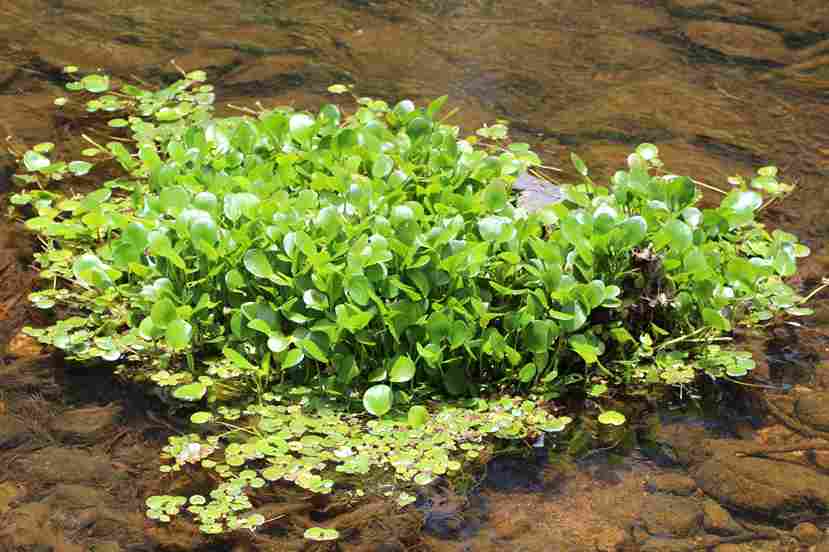
Fighting Amazon frogbit.
Aquatic weed Amazon frogbit has been spreading in the Wet Tropics
Managing urban runoff.
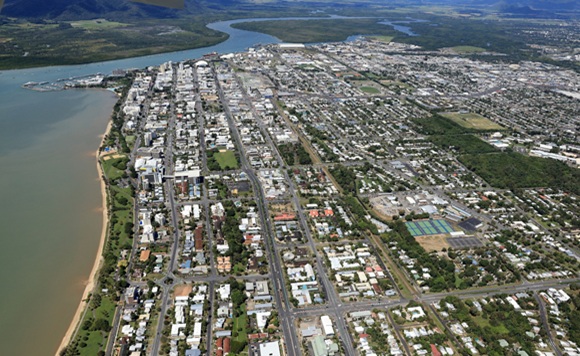
Urban runoff from towns and cities contributes a disproportionate share of pollution to the reef