
Pest fish.
Pet fish can become pest fish if they escape into our local waterways and disrupt finely balanced ecosystems.


Feral pigs were introduced to Australia in the first fleet of European settlers in 1788. They were brought over as a food source but soon escaped from farms.
Over 200 years later they’ve spread across the continent in many different habitats including the rainforests, wetlands, river systems, farmland and national park areas of the Wet Tropics.
There are estimated to be tens of millions of feral pigs across Australia and up to 10 million in Queensland. They are rapid breeders, a single sow can produce two litters a year with up to 12 piglets, and they have few natural predators.
Why are feral pigs a problem?
What Is Being Done
Councils, land managers, Traditional Owners and other organisations are collaborating on control programs.
Baiting, trapping and targeted shooting are used in priority areas to reduce pig numbers. Genetic research has shown that pigs populations tend to be localised in family groups and they tend to stick within a two kms home range, which makes it very feasible to control targeted populations.
New technology such as AI cameras is being trialled to help track pig activity to increase the efficiency of control programs.
What Needs to Be Done
As with most invasive species it is unlikely that feral pigs will be completely eradicated due to access difficulties in remote areas. Controlling feral pigs is a long-term issue that will require ongoing funding and community effort.
It also requires:
Find out more:
Pet fish can become pest fish if they escape into our local waterways and disrupt finely balanced ecosystems.

Streambank erosion, caused by poor riparian vegetation and heavy rainfall, is a source of sediment flowing to the Great Barrier Reef.
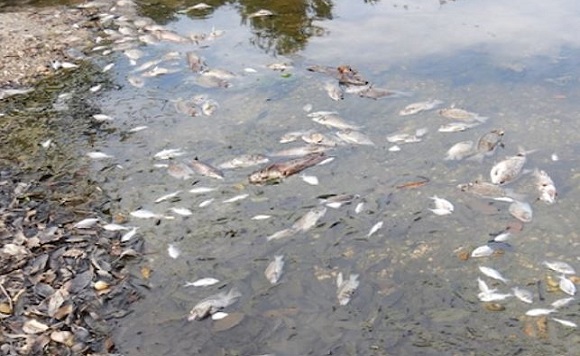
A mass die off of fish can be caused by a number of different factors and they're a reminder of the delicate balance of healthy waterways.

Martine joined the Wet Tropics Waterways team as a Science Technical Officer in early 2024. She is an environmental scientist and ecologist and has worked on water quality and aquatic ecology projects as a consultant and in private industry for over 20 years. She is using her experience in statistical programming and database development to develop new systems for the Report Card.

Richard has been the Science Technical Officer for Wet Tropics Waterways since 2016. His role involves producing the annual results for the waterway health assessment of the wet tropics region using data from a wide range of sources, to present as scores and grades, as well as developing new indicators to address knowledge and monitoring gaps. He works in collaboration with technical staff at other regional report cards.
Richard has a background in freshwater ecology research projects and environmental assessments with CSIRO, University of Queensland, Queensland Government and as a consultant. For a long time he’s been interested in freshwater aquaculture and continues this interest through farming freshwater crayfish, alongside other farming activities.
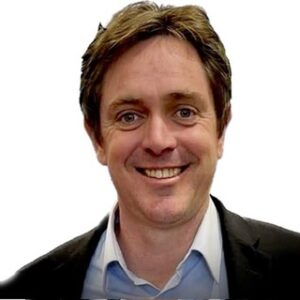
Simon has over 30 years’ experience advocating for waterways across academia, government and the private sector. He started out in marine botany with a fascination for seagrass, mangroves and macroalgae, and has gone on to lead major environmental initiatives both in Australia and overseas. He has established report cards in eight countries.
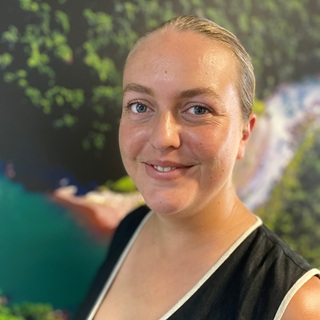
Rowan is a conservation scientist with a background in wildlife science and tropical ecology. She holds a Bachelor of Wildlife Science from the University of Queensland and has recently completed a Master of Tropical Biology and Conservation at James Cook University.
Rowan brings experience in science communication, with a strong interest in connecting people with conservation outcomes. In her role with Wet Tropics Waterways, she supports initiatives that combine scientific knowledge with community outreach to help protect the Wet Tropics and Great Barrier Reef catchments, and to strengthen collaboration between researchers, stakeholders, and the wider community.