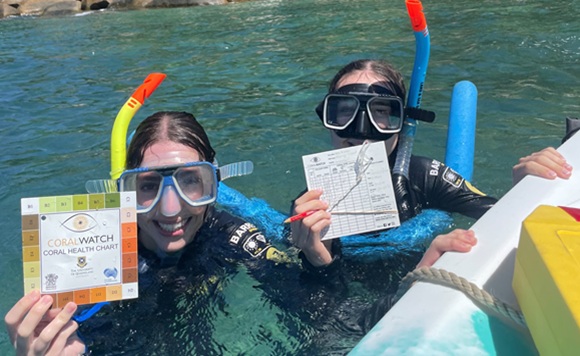
Small World Journeys
Co-exist Cairns is a new environmental (ad social) group for 18-30 year olds.

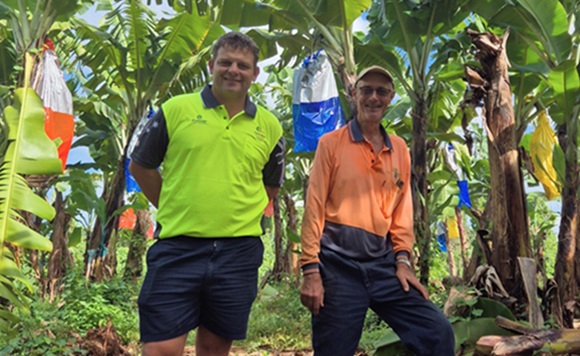
Steve Morice, who is the general manager of ABC Bananas, says erosion was worsening on some of the headlands and in paddocks.
“In the wet season, water was running over the top of a hill so fast it was eating away the headland that we were driving along below, and causing issues at the steep ends of the banana rows,’’ he says.
“We went to a workshop on soils with the Australian Banana Growers Council and they were offering to help farmers with paddock layout issues and nutrient management plans. I was a bit hesitant at first because I knew we’d probably need to knock out some bananas to solve the problem. But we gained so much from the changes that we made.”
Steve and farm manager Stephen Prior received financial help from the Banana BMP’s Best Practice Fund, which supports projects reducing nutrient, pesticide and sediment runoff.
The headland was moved to a higher point, the rows were shortened by taking bananas out of the steep sections, and the old road became a drain. On another farm, an in-paddock spoon drain was built to slow water and avoid washouts, and a concrete structure was added to stabilise a headland and prevent more erosion.
“It was a win for everything,’’ Steve says. “We lost about three acres of bananas but we’ve gained in efficiencies – tractors not getting bogged anymore and bunches not falling off trailers. And the soil isn’t washing away like it was.
“There is grass all through the spoon drain now. We’re looking at more spoon drains. Vegetation is holding the land together.”
The two Steves also worked with an extension officer from the Australian Banana Growers Council on a nutrient management plan for their farms. The free planning covers everything from farm mapping and record-keeping to setting targets for nutrient application that are specific to each farm and its needs. It includes soil and leaf-testing with farmers.
“Now we are looking at ways to unlock the phosphorous which is naturally high in our soils, so that we don’t need to add as much, and at reducing nitrogen application at certain times of year.
“It’s rewarding to see benefits. You could bury your head in the sand and keep doing what you’ve always done, or you can move forward.”
The Australian Banana Growers’ Council’s ‘Banana BMP program and Banana BMP Best Practice Fund are funded through the Queensland Government’s Queensland Reef Water Quality Program. Development of nutrient management plans has been funded by the partnership between the Australian Government’s Reef Trust and the Great Barrier Reef Foundation through the Cassowary Coast Reef Smart Farming Project.
Co-exist Cairns is a new environmental (ad social) group for 18-30 year olds.
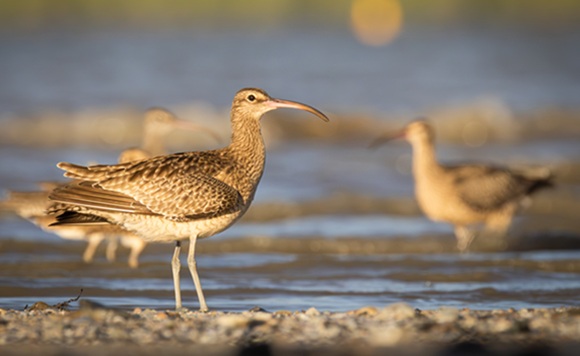
Whimbrels migrate thousands of miles to feed along the Cairns Esplanade each year.
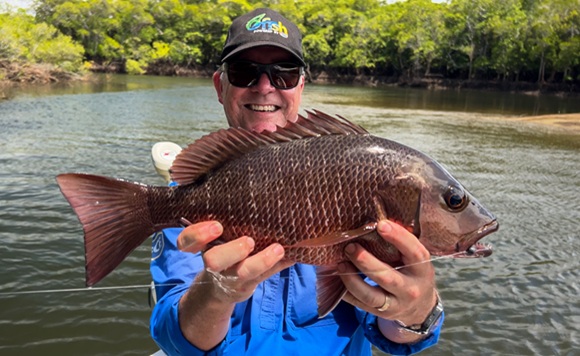
OzFish are restoring urban creeks in Cairns and discovering an amazing diversity of species.

Martine joined the Wet Tropics Waterways team as a Science Technical Officer in early 2024. She is an environmental scientist and ecologist and has worked on water quality and aquatic ecology projects as a consultant and in private industry for over 20 years. She is using her experience in statistical programming and database development to develop new systems for the Report Card.

Richard has been the Science Technical Officer for Wet Tropics Waterways since 2016. His role involves producing the annual results for the waterway health assessment of the wet tropics region using data from a wide range of sources, to present as scores and grades, as well as developing new indicators to address knowledge and monitoring gaps. He works in collaboration with technical staff at other regional report cards.
Richard has a background in freshwater ecology research projects and environmental assessments with CSIRO, University of Queensland, Queensland Government and as a consultant. For a long time he’s been interested in freshwater aquaculture and continues this interest through farming freshwater crayfish, alongside other farming activities.

Simon has over 30 years’ experience advocating for waterways across academia, government and the private sector. He started out in marine botany with a fascination for seagrass, mangroves and macroalgae, and has gone on to lead major environmental initiatives both in Australia and overseas. He has established report cards in eight countries.
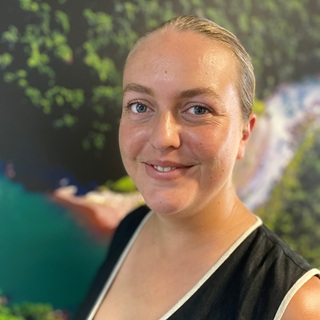
Rowan is a conservation scientist with a background in wildlife science and tropical ecology. She holds a Bachelor of Wildlife Science from the University of Queensland and has recently completed a Master of Tropical Biology and Conservation at James Cook University.
Rowan brings experience in science communication, with a strong interest in connecting people with conservation outcomes. In her role with Wet Tropics Waterways, she supports initiatives that combine scientific knowledge with community outreach to help protect the Wet Tropics and Great Barrier Reef catchments, and to strengthen collaboration between researchers, stakeholders, and the wider community.