Cane Farmers: Going the Distance
150 cane farmers are participating in a project to boost productivity and water quality
Healthy waterways underpin our lifestyles and livelihoods. When waterways thrive, so do we.
Fishing isn’t allowed in the deep volcanic waters of forest-fringed Lake Barrine, but if you visit on a Sunday, you might just see a group of spear fishers descending into the water…
These spearos are volunteers in a tilapia culling program that’s been running for more than a decade through the Queensland Parks and Wildlife Service and Cairns Underwater Association. Its focus is on limiting the ecological impact of Queensland’s most problematic aquatic pest species.
The black mangrove cichlid, or spotted tilapia, isn’t native to Australia. Its first confirmed sighting was in Lake Barrine was in 2007. Well-equipped to invade and dominate aquatic habitats – with its simple food needs, its ability to thrive in poor water conditions and its resistance to disease – this species aggressively out-competes natives for food and space, leading to declines in biodiversity.
Here to stay
Like so many other invasive species, now that tilapia is established in Australia it’s proving impossible to eradicate. But in an enclosed water body like Lake Barrine, numbers can be controlled to some degree with intensive long-term fishing.
Electrofishing, line fishing, gill netting, fish traps and artificial egg-laying strata have all been trialled over the years. None were successful in significantly or effectively reducing the population. Then along came the idea of spear-fishing…
John Doherty from the Queensland Parks and Wildlife Service says managing any kind of pest species is time intensive.
“Parks staff were initially used but you need experienced spearers to get good numbers,” he says. “That’s why we are so pleased about the ongoing involvement of the Cairns Underwater Association. They have the gear and the experience, and they bring in thousands of fish each session. Without them the program would be dead in the water.”
Ant Judge coordinates the spear fishers from the Cairns Underwater Association and says being in the water is a big part of his lifestyle.
“I love it. I spend a heap of time diving in Barrine and Eacham,’’ he says. “Waterways are integral to living in the region and it’s important to me that they’re being looked after.
“We can immediately see the impacts of culling. When the big breeders are flushed out from their nesting areas, I’ve seen native species move in straight away to eat the eggs.”
The Underwater Association is keen to expand the number of spear fishers participating, and is thrilled that a women’s group, Girls Who Spearfish, has come on board.
“With the addition of this group of talented spear fishers, we can increase cull numbers significantly,” Ant says.
The club runs identification training before culling events, so there is no bycatch. Competent spear fishers wanting to get involved are encouraged to contact the club.
True locals
Not far away, Lake Eacham was home to three types of native fish until their numbers declined with the introduction of other species. While native to Australia, these new species weren’t native to the lake and they outcompeted the original habitants. By 1987 there was only one ‘true local’ remaining, and the Lake Eacham Rainbowfish has disappeared from the lake.

150 cane farmers are participating in a project to boost productivity and water quality

Read about some of our region's rare and unusual native fish species

Banana farmers making land management changes to improve water quality to the Reef

Martine joined the Wet Tropics Waterways team as a Science Technical Officer in early 2024. She is an environmental scientist and ecologist and has worked on water quality and aquatic ecology projects as a consultant and in private industry for over 20 years. She is using her experience in statistical programming and database development to develop new systems for the Report Card.

Richard has been the Science Technical Officer for Wet Tropics Waterways since 2016. His role involves producing the annual results for the waterway health assessment of the wet tropics region using data from a wide range of sources, to present as scores and grades, as well as developing new indicators to address knowledge and monitoring gaps. He works in collaboration with technical staff at other regional report cards.
Richard has a background in freshwater ecology research projects and environmental assessments with CSIRO, University of Queensland, Queensland Government and as a consultant. For a long time he’s been interested in freshwater aquaculture and continues this interest through farming freshwater crayfish, alongside other farming activities.
Simon has over 30 years’ experience advocating for waterways across academia, government and the private sector. He started out in marine botany with a fascination for seagrass, mangroves and macroalgae, and has gone on to lead major environmental initiatives both in Australia and overseas. He has established report cards in eight countries.
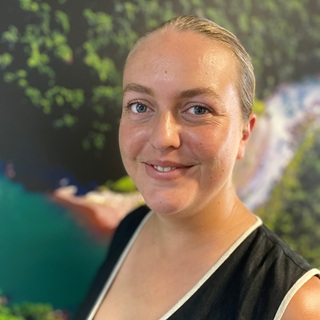
Rowan is a conservation scientist with a background in wildlife science and tropical ecology. She holds a Bachelor of Wildlife Science from the University of Queensland and has recently completed a Master of Tropical Biology and Conservation at James Cook University.
Rowan brings experience in science communication, with a strong interest in connecting people with conservation outcomes. In her role with Wet Tropics Waterways, she supports initiatives that combine scientific knowledge with community outreach to help protect the Wet Tropics and Great Barrier Reef catchments, and to strengthen collaboration between researchers, stakeholders, and the wider community.