50 years of protecting the reef.
Establishing the Great Barrier Reef Marine Park in 1975 was a game changer
Healthy waterways underpin our lifestyles and livelihoods. When waterways thrive, so do we.
There are plenty of spots on the major rivers that are popular with kayakers, rafters and stand up paddleboarders. We asked professional photographer Paul Curtis from NQ Wildscapes to take readers a bit further off the beaten track for some river drifting adventure ideas…
Adventure 1: Danbulla | Drift length: 3km | Drift time: 2 hours
Getting there: Head for Tinaroo Falls Dam Road (if coming via Atherton) or Danbulla Road via the Gillies Range. Take the Kauri Creek Road turn off (1.4km from the day-use area). About 6km up the road you’ll find a sign-posted access point to the creek, and carpark.
Drift info: Kauri Creek rises between the peaks of Mt Edith and Haig and has a reasonable flow for most of the year. If you’re drifting in dry season, adults may need to walk some sections.
Kauri Creek has a mostly sandy bottom and drops very little in altitude over the 3km distance, apart from a short rocky section you encounter after about half an hour. (This section is about 200 metres long, but it could be tricky for small kids or after rain when the rocks are slippery.)
Other things to know: This adventure will need a car shuffle, or a drop-off. Expect small patches of lawyer cane. In case of emergency, the walking track and road is never far away.
Adventure 2: Henrietta | Drift length: 3km | Drift time: 6 hours from Henrietta Creek campground (with lots of stops for wildlife appreciation!)
Getting there: Access is off the Palmerston Highway. Start your drift from the Henrietta Creek campground, or Gooligans day-use area for a shorter drift.
Drift info: Henrietta Creek has a rocky bottom – booties or waterproof sandals are recommended as well as a “support” paddle or stick for slippery shallow sections.
After a few hours you’ll be close to the top of Wallicher Falls. There is plenty of warning before the falls – walking track markers either side of the creek, just before a rock barrage. Here, you will need to ‘dismount’ and walk to the track entrance on the left, approximately 100 metres before the falls. Follow the track for a few metres before another short trail descends to the right to the bottom of the falls where you can drift right under the waterfall!
From here it’s another hour downstream to the top of Tchupala Falls. 100 metres before the creek disappears over the falls, a short scramble up the bank to the walking track on the right will take you to the carpark.
There is great scenery and you might even see platypus and cassowaries.
Other things to know: If you won’t have the energy to walk the 3km back to the campground, you’ll need to arrange a car shuffle!
Adventure 3: Mossman | Back Cover Bliss drift snorkelling
If you prefer to take the thinking out of the equation, join a river drift snorkelling tour with Back Country Bliss. Expect full immersion, family-friendly fun as you swim, snorkel and float down the gorgeous Mossman River.

Establishing the Great Barrier Reef Marine Park in 1975 was a game changer

150 cane farmers are participating in a project to boost productivity and water quality

Read about some of our region's rare and unusual native fish species

Martine joined the Wet Tropics Waterways team as a Science Technical Officer in early 2024. She is an environmental scientist and ecologist and has worked on water quality and aquatic ecology projects as a consultant and in private industry for over 20 years. She is using her experience in statistical programming and database development to develop new systems for the Report Card.

Richard has been the Science Technical Officer for Wet Tropics Waterways since 2016. His role involves producing the annual results for the waterway health assessment of the wet tropics region using data from a wide range of sources, to present as scores and grades, as well as developing new indicators to address knowledge and monitoring gaps. He works in collaboration with technical staff at other regional report cards.
Richard has a background in freshwater ecology research projects and environmental assessments with CSIRO, University of Queensland, Queensland Government and as a consultant. For a long time he’s been interested in freshwater aquaculture and continues this interest through farming freshwater crayfish, alongside other farming activities.

Simon has over 30 years’ experience advocating for waterways across academia, government and the private sector. He started out in marine botany with a fascination for seagrass, mangroves and macroalgae, and has gone on to lead major environmental initiatives both in Australia and overseas. He has established report cards in eight countries.
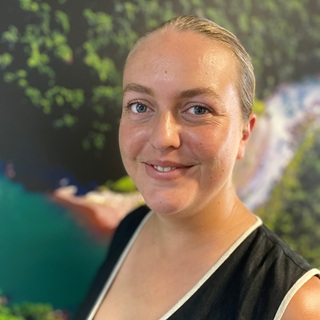
Rowan is a conservation scientist with a background in wildlife science and tropical ecology. She holds a Bachelor of Wildlife Science from the University of Queensland and has recently completed a Master of Tropical Biology and Conservation at James Cook University.
Rowan brings experience in science communication, with a strong interest in connecting people with conservation outcomes. In her role with Wet Tropics Waterways, she supports initiatives that combine scientific knowledge with community outreach to help protect the Wet Tropics and Great Barrier Reef catchments, and to strengthen collaboration between researchers, stakeholders, and the wider community.