Cane Farmers: Going the Distance
150 cane farmers are participating in a project to boost productivity and water quality
Healthy waterways underpin our lifestyles and livelihoods. When waterways thrive, so do we.
Marine debris is a growing global issue and a major threat to our marine plants and animals.
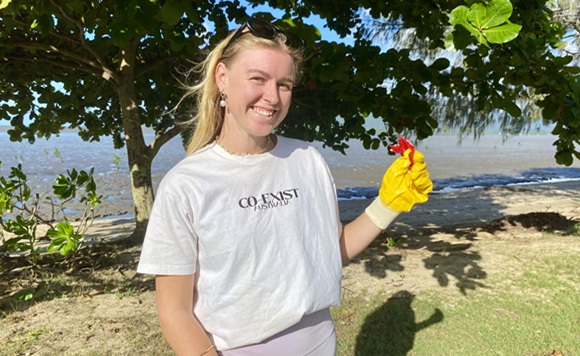
Dedicated volunteers and groups in the Wet Tropics clean up tonnes of marine litter each year, but Tangaroa Blue Foundation’s Heidi Tait says it’s critical that we also address the source.
“If all we ever do is clean up, we’re never going to solve the problem.”
Last year in the Wet Tropics alone there were 17 clean up events and 24 monitoring events where hundreds of volunteers notched up 2061 hours of volunteer time – that’s about 90 days of rubbish collection and data entry.
ReefClean, launched in 2019, is tackling marine debris across the Great Barrier Reef region through community clean-ups, monitoring, data analysis and source reduction activities.
Data collected during clean-up events is logged in the Australian Marine Debris Initiative (AMDI) Database and provides a comprehensive oversight of marine debris trends.
Clean-up volunteers and organisations have historically collected data in different ways and the AMDI database provides a methodology to collect data in a comparable, standardised way.
“It’s quality data that can be used in decision–making by community groups through to government departments,” says Heidi.
“Knowing what is impacting different areas means that through the ReefClean program we can work with those communities on a source reduction plan that’s appropriate for their area, and that they have the capacity for. When you’ve got buy-in from communities, source reduction plans really work.”
Twenty-one source reduction campaigns across six plans were rolled out in the Great Barrier Reef region last year. Campaigns aim to reduce the amount of litter moving into the environment by stopping it at the source. In the Wet Tropics, campaigns targeted cigarette butt litter, general litter in public spaces, dog poo and associated plastic bags, and fishing-related debris.
The campaigns are already having an impact.
Through a partnership with the Gunggandji-Mandingalbay Yidinji Peoples Prescribed Body Corporate Aboriginal Corporation, new bins with educational signage were installed by rangers at Yarrabah. Data collected before and after installation shows a decline in the amount of land-based litter.
Similarly, when cigarette butt bins were installed with educational signage at the Innisfail boat ramp, cigarette litter decreased by 74%.
Since ReefClean started, clean up events around the Wet Tropics have logged a whopping 11.5 tonnes of marine debris.
It’s expected that through ReefClean’s holistic approach, underpinned by the scientifically robust AMDI Database, we will expect to see less litter and ongoing behavioural change across the Wet Tropics and wider Great Barrier Reef region.
The program will run until the end of 2023.
ReefClean is delivered by Tangaroa Blue Foundation with project partners Reef Check Australia, Capricornia Catchments, Eco Barge Clean Seas, OceanWatch Australia, South Cape York Catchments, Australian Microplastics Assessment Project (AUSMAP) and Whitsunday Catchment Landcare. It is funded by the Australian Government’s Reef Trust.
What is marine debris?
Marine debris is rubbish that finds its way into the marine environment. In the Wet Tropics, rubbish can make its way to the Great Barrier Reef through stormwater drains, during severe weather events, from international waters, and through accidental or deliberate littering from shipping or boating activities.

150 cane farmers are participating in a project to boost productivity and water quality

Read about some of our region's rare and unusual native fish species

Banana farmers making land management changes to improve water quality to the Reef

Martine joined the Wet Tropics Waterways team as a Science Technical Officer in early 2024. She is an environmental scientist and ecologist and has worked on water quality and aquatic ecology projects as a consultant and in private industry for over 20 years. She is using her experience in statistical programming and database development to develop new systems for the Report Card.

Richard has been the Science Technical Officer for Wet Tropics Waterways since 2016. His role involves producing the annual results for the waterway health assessment of the wet tropics region using data from a wide range of sources, to present as scores and grades, as well as developing new indicators to address knowledge and monitoring gaps. He works in collaboration with technical staff at other regional report cards.
Richard has a background in freshwater ecology research projects and environmental assessments with CSIRO, University of Queensland, Queensland Government and as a consultant. For a long time he’s been interested in freshwater aquaculture and continues this interest through farming freshwater crayfish, alongside other farming activities.
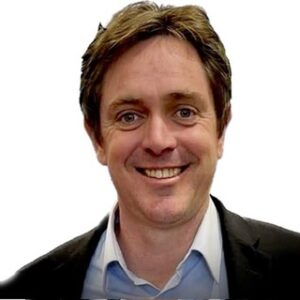
Simon has over 30 years’ experience advocating for waterways across academia, government and the private sector. He started out in marine botany with a fascination for seagrass, mangroves and macroalgae, and has gone on to lead major environmental initiatives both in Australia and overseas. He has established report cards in eight countries.
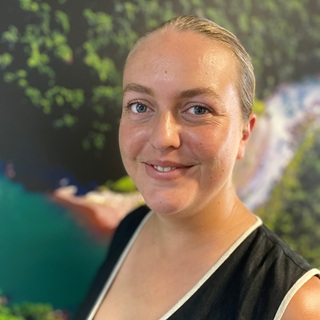
Rowan is a conservation scientist with a background in wildlife science and tropical ecology. She holds a Bachelor of Wildlife Science from the University of Queensland and has recently completed a Master of Tropical Biology and Conservation at James Cook University.
Rowan brings experience in science communication, with a strong interest in connecting people with conservation outcomes. In her role with Wet Tropics Waterways, she supports initiatives that combine scientific knowledge with community outreach to help protect the Wet Tropics and Great Barrier Reef catchments, and to strengthen collaboration between researchers, stakeholders, and the wider community.