50 years of protecting the reef.
Establishing the Great Barrier Reef Marine Park in 1975 was a game changer
Healthy waterways underpin our lifestyles and livelihoods. When waterways thrive, so do we.
Cairns local Phil Laycock says you don’t need much to enjoy fishing – a hand line, a hook and a packet of prawns is just fine. Read on to find out about his five favourite fishing spots that he loves going back to, time and time again.
With some careful planning and patience, you can navigate a long way upstream at a certain time of year. Phil likes to start his fishing day up in the freshwater and drift down towards the river mouth, casting lures.
What’s there
Sooty grunters, jungle perch and barramundi are the targets in the upper freshwater and mid river sections. Mangrove jack begin to appear in the lower sections, and at the mouth whiting and flathead are common. Queenfish and trevally school in the river mouths in September and October and provide great sport.
Find beautiful mangroves, good coral life and seagrass, and you can explore up the Mowbray and Mossman rivers all the way to the mountains.
What’s there
Jungle perch in the freshwater river headwaters; mangrove jack and barramundi in the estuary mazes; coral trout inshore or even sight fish a trevally.
One of the most diverse fisheries in the Wet Tropics and very popular with locals and visitors alike.
What’s there
Lure fish for mangrove jack in the mangroves, fly cast on the sand flats for the prized permit, soak a prawn along the channel edges for javelin, or set a pot for a tasty mud crab… Hinchinbrook really does have it all. Take care and choose deeper channels to navigate where possible, to avoid animal strike.
The net-free zone provides fishing tourism opportunities for Cairns, showing that fish are worth more in a photo than in a net.
What’s there
Barramundi and threadfin salmon on the beaches. Handle them carefully as threadfin are fragile. Keep one to eat. If you catch another one, let it go. Abide by the closed seasons that protect fish when they’re spawning and don’t target barra at this time (Nov 1 – Feb 1).
Back in the 70s, Saltwater Creek meandered through land that was transitioning from cane and cattle to residential. It looks different these days but Phil says it still provides habitat for a lot of fish.
What’s there
Expect to see lots of tilapia. They’re a pest fish. Humanely kill and dispose of them by either burying the carcass above the high-water mark nearby or by placing it in a bin. The system still has tarpon, jungle perch, mangrove jack, barramundi and javelin fish as you get further down, but a lot of the fish Phil caught as a kid can’t make it up to the headwaters anymore because of the now fragmented, concrete-lined parts of the creek.
If you are keeping a fish for eating, be humane. Act quickly after pulling it out of the water, using the percussive stunning or spiking methods.
For those you let go, here are some easy things to do:

Establishing the Great Barrier Reef Marine Park in 1975 was a game changer

150 cane farmers are participating in a project to boost productivity and water quality

Read about some of our region's rare and unusual native fish species

Martine joined the Wet Tropics Waterways team as a Science Technical Officer in early 2024. She is an environmental scientist and ecologist and has worked on water quality and aquatic ecology projects as a consultant and in private industry for over 20 years. She is using her experience in statistical programming and database development to develop new systems for the Report Card.

Richard has been the Science Technical Officer for Wet Tropics Waterways since 2016. His role involves producing the annual results for the waterway health assessment of the wet tropics region using data from a wide range of sources, to present as scores and grades, as well as developing new indicators to address knowledge and monitoring gaps. He works in collaboration with technical staff at other regional report cards.
Richard has a background in freshwater ecology research projects and environmental assessments with CSIRO, University of Queensland, Queensland Government and as a consultant. For a long time he’s been interested in freshwater aquaculture and continues this interest through farming freshwater crayfish, alongside other farming activities.

Simon has over 30 years’ experience advocating for waterways across academia, government and the private sector. He started out in marine botany with a fascination for seagrass, mangroves and macroalgae, and has gone on to lead major environmental initiatives both in Australia and overseas. He has established report cards in eight countries.
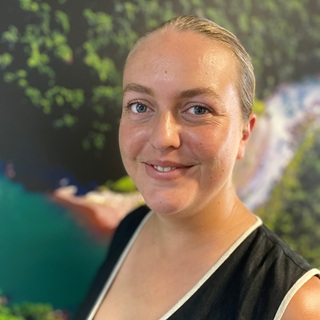
Rowan is a conservation scientist with a background in wildlife science and tropical ecology. She holds a Bachelor of Wildlife Science from the University of Queensland and has recently completed a Master of Tropical Biology and Conservation at James Cook University.
Rowan brings experience in science communication, with a strong interest in connecting people with conservation outcomes. In her role with Wet Tropics Waterways, she supports initiatives that combine scientific knowledge with community outreach to help protect the Wet Tropics and Great Barrier Reef catchments, and to strengthen collaboration between researchers, stakeholders, and the wider community.