50 years of protecting the reef.
Establishing the Great Barrier Reef Marine Park in 1975 was a game changer
Healthy waterways underpin our lifestyles and livelihoods. When waterways thrive, so do we.
Climate change is the greatest threat to the Great Barrier Reef and to corals worldwide. While a global response is needed, every little bit helps. Here’s how our councils are taking action.
Reef Guardian Councils are reducing their greenhouse gas emissions, helping to reduce climate change impacts on the iconic Great Barrier Reef. Actions include adopting clean energy, changing street lighting to LED, using landfill gas for energy production, recycling organic waste and developing policies and strategies that support emissions reductions.
Climate Actions by Councils in our region:
Cairns Regional Council
In the past decade Cairns Regional Council has reduced its greenhouse gas emissions by 46.5 per cent from 2007/08 levels through landfill gas management, wastewater treatment, energy efficiency and rooftop solar systems.
Cassowary Coast Regional Council
This council is installing solar systems on its major buildings, implementing a recycling program and a compost bin rebate program, raising awareness about reducing waste and holding native tree give-away days for residents.
Douglas Shire Council
In addition to supporting the Plastic Free Places program, Douglas Shire Council is instigating circular economy initiatives to reuse waste materials. The council has a recycling program and a community waste education program to reduce the source of waste. It is also supporting a small-scale food composting trial.
Hinchinbrook Shire Council
The southernmost council in the Wet Tropics is working with ecoBiz to identify actions to reduce energy consumption including solar energy and a waste management program with options for reuse and recycling.
Mareeba Shire Council
Largely based in dry country, Mareeba Shire Council is implementing fire management plans including cool burns to reduce wildfire risk and to limit carbon emissions. The council is also installing solar panels and looking to establish a buy-back shop to reduce waste.
Tablelands Regional Council
Tablelands Regional Council is developing a climate risk strategy to direct action towards a low carbon economy, and is a partner in the Land Restoration Fund pilot program, Permanent Tropical Reforestation with Native Conifers, Riparian and High Biodiversity Rainforest Plantings, which seeks to demonstrate how carbon farming activities can sequester or abate greenhouse gas emissions, alongside environmental, social and economic, and First Nations co-benefits.
Wujal Wujal Aboriginal Shire Council
Located in the Daintree, Wujal Wujal opened a new recycling centre in 2020 that includes a container deposit facility. It is planning to install a glass crushing machine to convert bottles into construction materials, which will reduce ‘waste miles’ and create local jobs.
Yarrabah Aboriginal Shire Council
This small shire southeast of Cairns is upgrading its waste transfer system and working on using a recycling centre in Cairns. It is also undertaking a solar microgrid feasibility study.
Find out more
The Reef Guardian Councils program is a collaborative stewardship arrangement between local governments in the Great Barrier Reef catchment and the Reef Authority.

Establishing the Great Barrier Reef Marine Park in 1975 was a game changer

150 cane farmers are participating in a project to boost productivity and water quality

Read about some of our region's rare and unusual native fish species

Martine joined the Wet Tropics Waterways team as a Science Technical Officer in early 2024. She is an environmental scientist and ecologist and has worked on water quality and aquatic ecology projects as a consultant and in private industry for over 20 years. She is using her experience in statistical programming and database development to develop new systems for the Report Card.

Richard has been the Science Technical Officer for Wet Tropics Waterways since 2016. His role involves producing the annual results for the waterway health assessment of the wet tropics region using data from a wide range of sources, to present as scores and grades, as well as developing new indicators to address knowledge and monitoring gaps. He works in collaboration with technical staff at other regional report cards.
Richard has a background in freshwater ecology research projects and environmental assessments with CSIRO, University of Queensland, Queensland Government and as a consultant. For a long time he’s been interested in freshwater aquaculture and continues this interest through farming freshwater crayfish, alongside other farming activities.
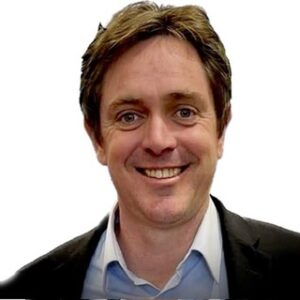
Simon has over 30 years’ experience advocating for waterways across academia, government and the private sector. He started out in marine botany with a fascination for seagrass, mangroves and macroalgae, and has gone on to lead major environmental initiatives both in Australia and overseas. He has established report cards in eight countries.
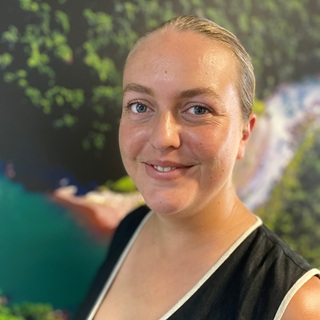
Rowan is a conservation scientist with a background in wildlife science and tropical ecology. She holds a Bachelor of Wildlife Science from the University of Queensland and has recently completed a Master of Tropical Biology and Conservation at James Cook University.
Rowan brings experience in science communication, with a strong interest in connecting people with conservation outcomes. In her role with Wet Tropics Waterways, she supports initiatives that combine scientific knowledge with community outreach to help protect the Wet Tropics and Great Barrier Reef catchments, and to strengthen collaboration between researchers, stakeholders, and the wider community.