Cane Farmers: Going the Distance
150 cane farmers are participating in a project to boost productivity and water quality
Healthy waterways underpin our lifestyles and livelihoods. When waterways thrive, so do we.
Most people are wary of being too near the water’s edge in parts of the Wet Tropics. Others, however, make a living out of getting up close and personal. And it makes for great stories…
Brodie Maloney says life can get a “bit hairy” sometimes but there’s a lot to love about his work.
Based in Cairns, his company Top End Crocodile Services works with the crocodile farm industry across northern Australia, including collecting eggs and relocating crocs. The work varies by state, with differing laws and regulations, and in Queensland his jobs are mainly survey work for councils or private landholders.
“I get called if there’s a suspected croc somewhere it’s not supposed to be, or if the croc is making things unsafe,’’ he says. “It’s a hands-off approach – I identify what species it is and how big it is. The removal work is done by the Department of Environment and Science.”
Collecting wild eggs in the Northern Territory is a whole different story – with Brodie being lowered from a helicopter onto active nests, often with an aggressive nesting female close by.
“It can get a bit hairy! There’s always a degree of risk, whether it’s at a zoo or in the wild,” he says. “But so long as people are croc wise, they’re not hard to avoid.
“Crocs are amazing creatures and worthy of protection. There’s still a lot we don’t know about them. Very little research has been done on their role in the ecosystem as an apex predator – there definitely needs to be more.”
Dr Matt Brien heads up a team of 30 in the Queensland Department of Environment and Science’s Northern Wildlife Operations unit. Operating from Mackay to the Torres Strait, team members work on croc management, education, research and monitoring activities, and ultimately trying to reduce the risk to people from crocodiles.
From a management perspective, their focus is ‘salties’. “You’d be hard pressed to get a freshie to bite you unless you actually stepped on it,’’ he says.
The mighty estuarine or saltwater crocodile is found in both salt and freshwater, despite its name, and can be found up to 100km inland. The largest of all living crocodilians, males reach up to and over 1000kg and six metres in length – however this is the exception to the rule.
“Those really big guys are the basketballer version of crocodiles. We get a disproportionately high number of calls for those kind of sightings, but we usually have to use the ‘reduce by 2 metres rule’ when we get calls about six-metre crocs. A typical male is generally four to five metres and 400-500 kilograms.”
Matt’s team often hears from landholders whose livestock or working dogs have been taken by crocs.
“We also get calls from barra farms. Being on the inlets, it’s hard to stop crocodiles getting in and out. Any self-respecting crocodile wants to take advantage of an easy barra meal.”
Since being hunted almost to extinction, which led to their protection in the 1970s, estuarine crocodile numbers have been recovering slowly but steadily. The current population is estimated at between 25,000 and 30,000. Matt says our region is almost at carrying capacity, so the population isn’t expected to grow much more.
“The Northern Territory has a croc population of between 80–100,000. The average density is five crocs in the water per kilometre, compared to one croc per kilometre in Queensland. We don’t have as much viable habitat or carrying capacity as the NT and we don’t have the same large expanses of swampland habitat that crocs prefer for nesting territory.”
Since 1971 there have been 40 attacks in Queensland. Sixteen have been fatal. The number of non-fatal attacks has increased since the 1990s – to just over one per year – and it’s reflective of the increase in both human and crocodile populations. There has been no increase in fatal attacks, which is likely due to the management program.
Matt says 90 per cent of all croc attacks on people are on local males aged between 20 and 50. Enough said! Be croc-wise and report crocodile sightings to the Queensland Department of Environment and Science by using the QWildlife app or by calling 1300 130 372.
Did you know? Crocs are great at picking up on intent.
While working for America’s University of Florida, Dr Matt Brien removed many crocodiles from golf courses. The team used fishing rods to cast a large travel hook over the animal and pull it out – but over time crocodiles learnt to pick up on intent, and the difference between a golf club and a fishing line. “If the crocs saw people hopping out of a buggy with a club – no worries. If it was a fishing rod, and even if we were dressed like golfers, the crocs would be out of there in an instant!”

150 cane farmers are participating in a project to boost productivity and water quality

Read about some of our region's rare and unusual native fish species

Banana farmers making land management changes to improve water quality to the Reef

Martine joined the Wet Tropics Waterways team as a Science Technical Officer in early 2024. She is an environmental scientist and ecologist and has worked on water quality and aquatic ecology projects as a consultant and in private industry for over 20 years. She is using her experience in statistical programming and database development to develop new systems for the Report Card.

Richard has been the Science Technical Officer for Wet Tropics Waterways since 2016. His role involves producing the annual results for the waterway health assessment of the wet tropics region using data from a wide range of sources, to present as scores and grades, as well as developing new indicators to address knowledge and monitoring gaps. He works in collaboration with technical staff at other regional report cards.
Richard has a background in freshwater ecology research projects and environmental assessments with CSIRO, University of Queensland, Queensland Government and as a consultant. For a long time he’s been interested in freshwater aquaculture and continues this interest through farming freshwater crayfish, alongside other farming activities.
Simon has over 30 years’ experience advocating for waterways across academia, government and the private sector. He started out in marine botany with a fascination for seagrass, mangroves and macroalgae, and has gone on to lead major environmental initiatives both in Australia and overseas. He has established report cards in eight countries.
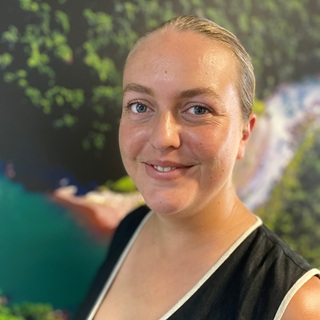
Rowan is a conservation scientist with a background in wildlife science and tropical ecology. She holds a Bachelor of Wildlife Science from the University of Queensland and has recently completed a Master of Tropical Biology and Conservation at James Cook University.
Rowan brings experience in science communication, with a strong interest in connecting people with conservation outcomes. In her role with Wet Tropics Waterways, she supports initiatives that combine scientific knowledge with community outreach to help protect the Wet Tropics and Great Barrier Reef catchments, and to strengthen collaboration between researchers, stakeholders, and the wider community.